 Vietnamnet.vn

 Podcast


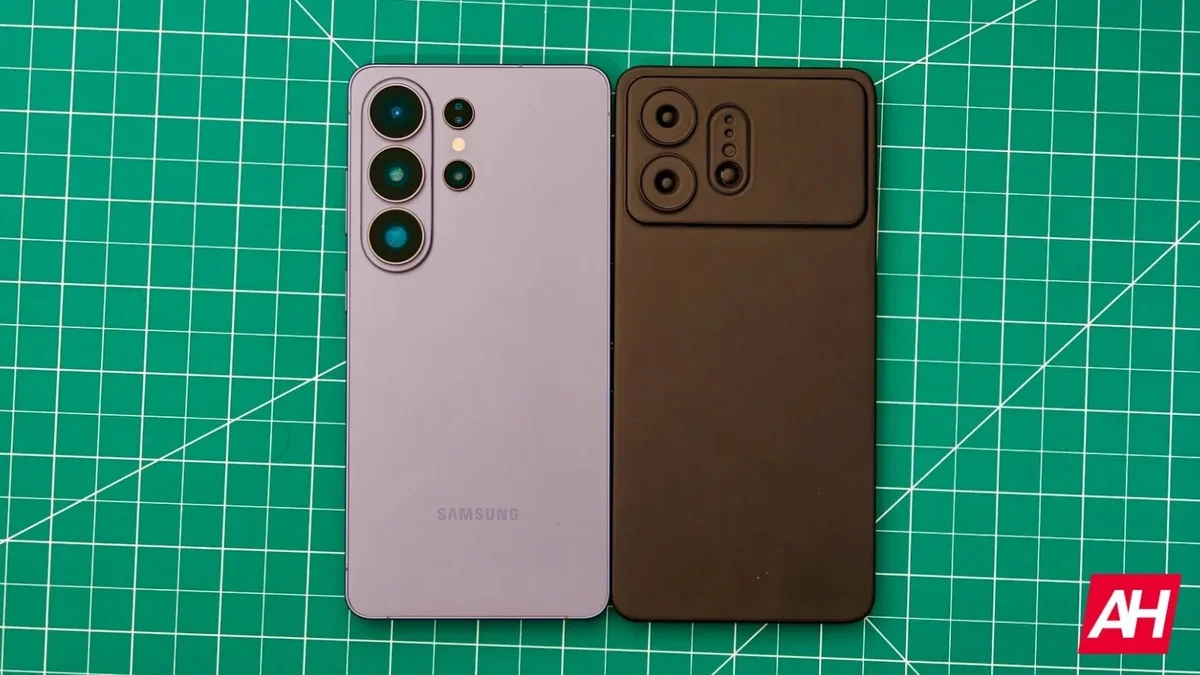
A newly leaked dummy model of the Samsung Galaxy S27 Ultra has raised questions about the company's design direction, with its appearance seemingly borrowing elements from rival smartphones.
The Galaxy S27 Ultra reportedly adopts a camera arrangement and positioning similar to OnePlus devices, while its rear camera island resembles that of an iPhone.
The combination leaves the phone looking short on personality, particularly for a premium flagship expected to showcase Samsung's distinctive design identity.
If the leaked design proves accurate, will consumers see the Galaxy S27 Ultra as a beautiful, distinctive and genuinely special smartphone? The final verdict will have to wait until Samsung officially unveils the device.
Even so, three major hardware upgrades could persuade buyers to overlook its controversial appearance.
A 7,000mAh battery for the Galaxy S27 Ultra
A 7,000mAh battery might be an ambitious expectation, but it is exactly the kind of upgrade that could make the Galaxy S27 Ultra stand out.
Samsung's Galaxy S Ultra smartphones have traditionally featured large bodies, giving the company room to explore higher-capacity batteries.
Yet Samsung has maintained a 5,000mAh battery capacity across its top-tier flagships for seven consecutive years.
Even the Galaxy S26 Ultra, released in 2026, comes with a 5,000mAh battery. That is not necessarily inadequate, but Samsung increasingly appears to be falling behind developments elsewhere in the smartphone market.
Some competing smartphone brands have already begun experimenting with batteries offering capacities as high as 15,000mAh.
A more realistic expectation would be a 6,000mAh battery in the Galaxy S27 Ultra, which would still represent a meaningful improvement over the current 5,000mAh capacity.
Unfortunately, even that possibility appears uncertain.
Recent rumors suggest the Galaxy S27 Ultra could feature a battery capacity of just 5,500mAh to 5,700mAh.
While such an increase would be welcome, it might not deliver the substantial improvement in battery life that consumers are hoping for.
Faster charging worthy of an Ultra flagship
A larger battery becomes considerably more valuable when paired with genuinely fast charging technology.
For smartphones carrying premium labels such as Ultra or Pro Max, rapid charging should be a fundamental part of the flagship experience.
Some smartphones already support charging speeds of up to 200W. However, 100W would be a more practical target and could still transform everyday convenience.
Imagine waking up with less than 10% battery remaining. You plug in your phone, complete a few morning tasks and return to find the battery has reached around 80%.
That is the kind of fast-charging experience consumers should be able to expect from a premium flagship.
Unfortunately, the Galaxy S27 Ultra may retain the same 65W charging capability as its predecessor.
Although 65W represents a substantial improvement over the previous 45W standard, it would hardly be groundbreaking for a flagship smartphone launching in 2027.
For Samsung to make the Galaxy S27 Ultra feel like a meaningful generational upgrade, faster charging could be just as important as increased battery capacity.
Larger telephoto sensors for better zoom photography
Perhaps the most important camera improvement Samsung could introduce on the Galaxy S27 Ultra would be larger telephoto sensors.
The current Galaxy S26 Ultra features a 1/3.94-inch sensor for its 3x optical zoom camera and a 1/2.52-inch sensor for its 5x optical zoom camera.
Both sensors are relatively small for a smartphone priced at approximately $1,400.
Consumers paying that much for Samsung's highest-end Galaxy S smartphone have every reason to expect stronger zoom photography, particularly in challenging low-light conditions.
One potentially better approach would be to eliminate both existing telephoto cameras and replace them with a single 4x optical zoom camera equipped with a substantially larger sensor.
Such a configuration could allow Samsung to prioritize image quality rather than simply offering multiple cameras with different optical zoom levels.
A larger sensor could be especially beneficial for telephoto photography in poor lighting, where smaller sensors often struggle to capture sufficient light and detail.
Interestingly, recent rumors have also suggested that Samsung is exploring changes to its telephoto camera system along similar lines.
If those reports prove accurate, a redesigned zoom camera could become one of the Galaxy S27 Ultra's most compelling upgrades.
Ultimately, while the phone's rumored appearance may leave some Samsung fans disappointed, substantial improvements to battery capacity, charging speeds and telephoto photography could still make the Galaxy S27 Ultra a flagship worth waiting for.
Hai Phong

