 Vietnamnet.vn

 Podcast



On December 29, during his visit to National Data Center No. 1 at Hoa Lac Hi-Tech Park in Hanoi, General Secretary To Lam stressed the importance of turning data into a core resource for Vietnam’s development.
Joining the delegation were Central Committee members including Deputy Prime Minister Nguyen Chi Dung, Chief of the Party Central Office Pham Gia Tuc, Head of the Central Committee for Policy and Strategy Nguyen Thanh Nghi, and Minister of Finance Nguyen Van Thang. Senior officials from the Ministry of Public Security, including Minister Luong Tam Quang, also attended.
157 million data points integrated from 16 national databases
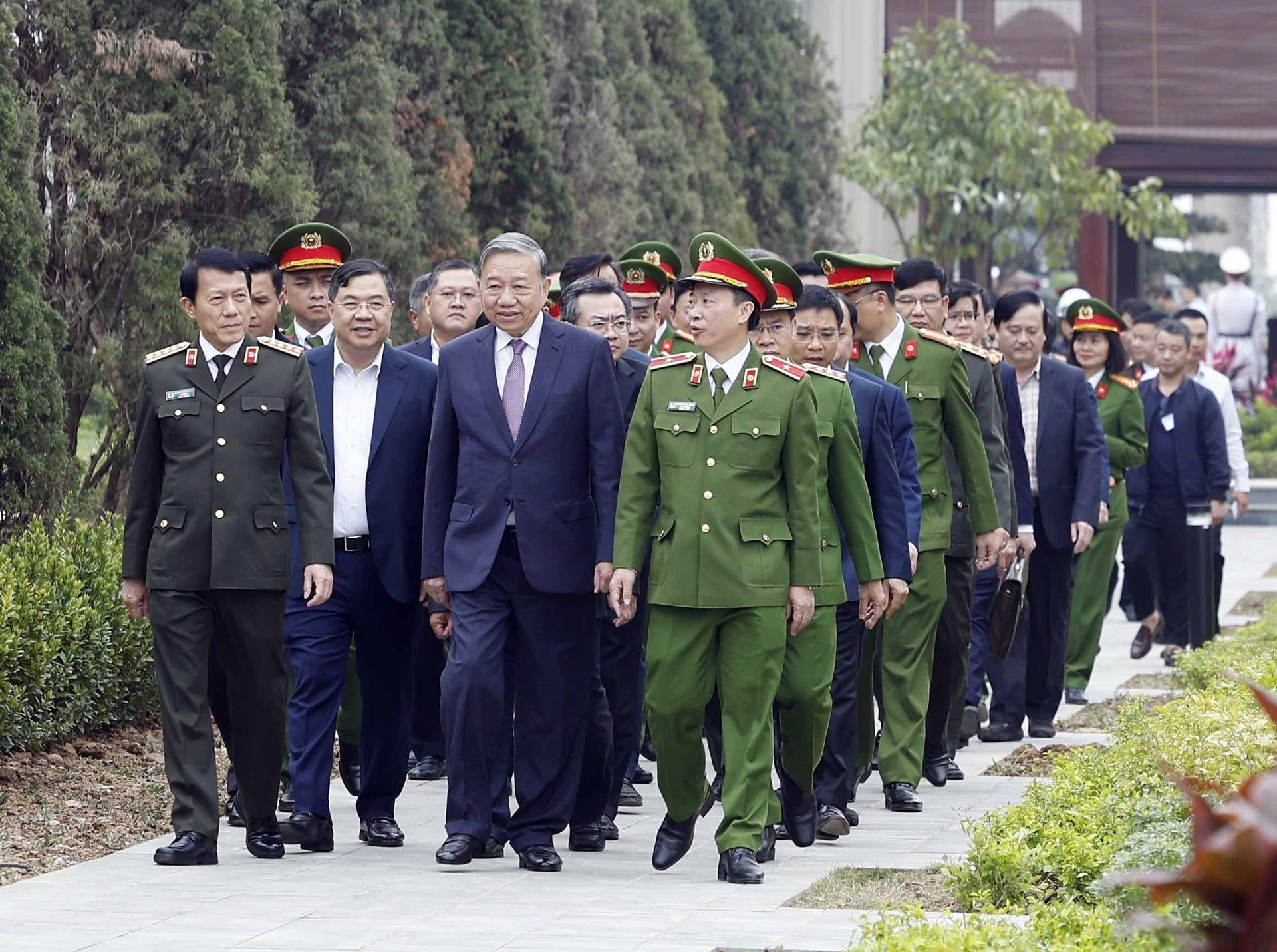
General Secretary To Lam visits National Data Center No. 1. Photo: Thong Nhat/TTXVN
The National Data Center was officially launched on February 25 and represents a significant breakthrough - it is Vietnam’s first dedicated unit under the Ministry of Public Security tasked with state management and coordination of data.
Positioned as the “brain” and “heart” of Vietnam’s digital transformation, the center has been built with remarkable urgency and commitment. Construction of its infrastructure was completed ahead of schedule, with the official opening taking place on August 18 - three months earlier than planned - following an intense around-the-clock effort.
The center has already aggregated and synchronized 157 million data records from 16 national and specialized databases, creating a valuable resource for public administration and socio-economic development.
In partnership with the Government Office, the center has helped restructure 82 administrative procedures. The National Public Service Portal is now being migrated and centrally operated from the center, serving as a “single-window gateway,” streamlining bureaucracy through integrated data for the benefit of citizens and businesses.
Recognized as a vital national security facility, the center employs a state-of-the-art 10-layer physical security system and a 24/7 cybersecurity operations center (SOC/SIEM) to ensure digital sovereignty.
As part of its innovation push, the center is also laying the groundwork to launch strategic platforms in 2026, including a national data exchange, blockchain technologies, and a virtual assistant for government use.
“We are just at the beginning,” says Vietnam’s top leader
Representing the Party, State, and Central Steering Committee for Science, Technology, Innovation, and Digital Transformation, General Secretary To Lam praised the Ministry of Public Security, related ministries, and the staff at the center for their vision, resilience, and commitment.
He emphasized that what began as a challenging and unprecedented initiative was executed with remarkable determination and creativity - overcoming institutional, technical, and human resource barriers.
The completion of the first national data center marks a foundational step in building the country’s digital infrastructure, with significant implications for accelerating Vietnam’s digital transformation in the years ahead.
To Lam affirmed that in order to realize the country’s long-term development goals, Vietnam must shift into high gear, focusing on breakthroughs in science, technology, innovation, and digital transformation.
“In this new development model, data has become a strategic resource, a new form of wealth that is crucial for national governance, economic competitiveness, and people’s well-being,” he said.
The center is not only a repository but also a tool for analysis, transformation, and service delivery. Building it means laying the foundation for a trustworthy national data infrastructure - one that fuels policymaking, governance, economic development, defense, and improved public services.
However, he cautioned that Vietnam is still in the early stages. “We have essentially built the shell of the station,” he said. “The core - data and its practical applications - remains underdeveloped.”
“To collect and store data is only the first step. The real value lies in analyzing it, creating knowledge, informing decisions, and generating tangible products and services for the people,” To Lam emphasized.
Urgent need to overcome three critical bottlenecks
He identified three major obstacles that must be addressed: poor data quality, fragmentation across ministries, and lack of innovation ecosystems based on data.
Many government data sets are not yet integrated or standardized under the principles of accuracy, completeness, cleanliness, and real-time availability. Vietnam’s ecosystem for innovation through data remains underdeveloped, and the country still lacks autonomy in core technologies and high-quality talent.
To transition from construction to value creation, To Lam proposed major strategic directions:
The National Data Center must truly become the “heart” of Vietnam’s data-driven society and economy, and the “brain” powering leadership, management, and public service.
Following the completion of this first center, the network must be expanded, forming a reliable national data infrastructure. This is a “national mission,” he stressed - not the task of any single agency. The Ministry of Public Security is responsible for overseeing data governance and managing the center’s operations.
To that end, the creation, connection, standardization, cleaning, and governance of data must be accelerated. By Q1 2026, Vietnam should have an integrated national database that connects all key data repositories and adheres to the principles of accuracy, completeness, consistency, interoperability, and shared use.
Equally important, the country must move quickly from data collection to value creation. Data should be deployed immediately in the operation of the National Public Service Portal, transforming it into a single, streamlined digital access point for all eligible public services - maximizing convenience for citizens and businesses.
He also called for the national data exchange to be launched in Q2 2026, alongside efforts to foster an innovation ecosystem tied to the center - supporting scientific research, startups, investment, and development of the digital economy.
Mr. To Lam urged investment in core technologies such as cloud computing, AI, and blockchain, and the development of common data platforms. He emphasized the importance of gradually achieving technological autonomy and reducing reliance on foreign providers.
Security is non-negotiable
The General Secretary was unequivocal in stressing the need for maximum security: “National data is a strategic asset. It is linked to our sovereignty, security, and the interests of the people.”
Cybersecurity, information security, and data protection must be enforced with absolute rigor, as a matter of “steel discipline,” especially for the armed forces. “There can be no complacency, no shortcuts. We cannot trade security for convenience or speed.”
He also highlighted the crucial role of human capital. The data center must be staffed with professionals who are not only technically skilled but also politically grounded, ethically sound, and dedicated to public service.
He called for special policies to attract and retain high-level experts - particularly for key roles such as chief architects and system designers - and encouraged partnerships with global tech giants to transfer core technologies and train the next generation of leaders.
TTXVN
.svg)
