 Vietnamnet.vn

 Podcast


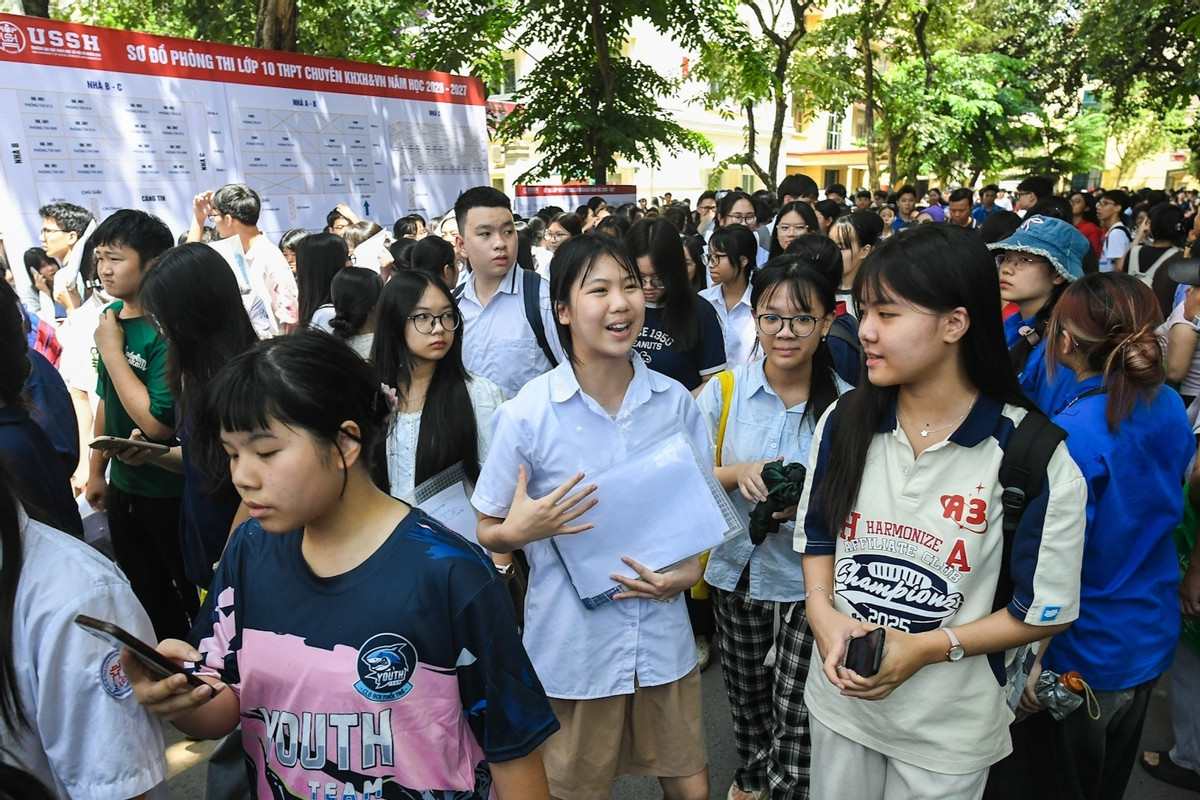
Students who have spent up to three years preparing for specialized high schools would face abrupt shifts to subject-group testing under a new proposal, sparking widespread anxiety among parents over the gifted-school entrance reform.
Having a son preparing for 10th-grade entrance exams this year in Hanoi, Nguyen Thi Kim Oanh noted that her child began researching specialized high schools during the summer after 7th grade. The proposed gifted school entrance reform has disrupted their carefully structured preparation.
After identifying their target school, mother and son selected extra tutoring classes and built a rigorous study schedule. Alongside intensive focus on his specialized subject, he steadily reinforced knowledge in mandatory prerequisite courses.
However, after reading reports that the Ministry of Education and Training plans to revise specialized 10th-grade admissions, selecting students through Natural Sciences, Social Sciences, and Foreign Languages tracks rather than individual subjects like Math, Physics, Chemistry, Biology, Literature, History, and Geography, Oanh grew deeply anxious.
“Earlier this year, proposals to reduce general 10th-grade entrance exams from three subjects down to Math and Literature already forced parents and students to adjust plans constantly. Now, proposed changes to specialized school admissions leave us even more bewildered,” Oanh said.
Targeting the Foreign Language track, Oanh noted her son might face less direct disruption than peers preparing for Physics, Chemistry, Biology, History, or Geography. For those students, years of single-subject specialization could lose advantage, forcing them to cram additional advanced subjects.
Nevertheless, she anticipates fiercer competition in Foreign Languages if students migrate away from other specialized subjects.
“For students who spent years studying a single subject in depth, pivoting to multi-subject group testing within just a few final months is extremely difficult. Students can adapt, but they need adequate time and clear official guidance,” she added.
Also raising a 9th grader in Hanoi, Mai Huong in Ha Dong explained that her son set his sights on specialized Chemistry back in 7th grade. During the first two years, he attended one weekly specialized tutoring session, increasing to two weekly sessions in 9th grade alongside regular coursework.
According to Huong, specialized exam preparation is already exhausting, demanding immense time and effort due to vast, advanced syllabi. Consequently, students require a multi-year secondary school roadmap rather than last-minute adjustments months before testing.
“Requiring students to shift from mastering one specialized subject to preparing an entire Natural Sciences or Social Sciences combination intensifies pressure, especially for those committed to an early academic track,” Huong stated.
Parents also questioned implementation feasibility given ongoing challenges in teaching integrated subjects across secondary schools.
“Integrated subjects entered school curricula roughly five years ago, yet qualified teachers capable of teaching combined tracks remain scarce. When even teachers struggle, why require students to sit integrated exams covering multiple disciplines simultaneously?” she asked.
In Hanoi, Phan Ngoc noted that if enacted this academic year, her child might abandon a dream of entering specialized Informatics nurtured since 8th grade.
Under current regulations, specialized applicants take Math, Literature, English, and their chosen specialized subject. Under the new proposal, her child could suddenly need to prepare for Physics, Chemistry, and Biology as well.
“Preparing for one specialized subject is already grueling; adding three or four extra subjects forces total schedule restructuring. With the 2012 birth cohort already large, sweeping changes leave families scrambling,” she emphasized.
Educators caution against overlooking talents
Drawing on years of specialized exam coaching, Tran Nhat Minh, a Mathematics teacher in Hanoi, acknowledged that reviewing specialized high school admission models is a noteworthy policy direction.
Under current educational orientation, specialized schools aim not merely to train single-subject competitors, but to nurture talent grounded in comprehensive knowledge, independent thinking, and practical problem-solving skills.
However, Minh stressed the critical need to accurately identify students possessing exceptional aptitude in individual disciplines.
“A student with extraordinary talent in Mathematics, Physics, or Chemistry may not excel equally across every subject in a combined track. Switching to group-based admissions could disadvantage single-subject prodigies competing against well-rounded generalists,” Minh explained.
He argued that authorities should avoid merely altering exam formats without building assessment tools capable of recognizing core competencies and specialized gifts.
Should the draft Vietnam gifted school entrance reform pass, Minh urged against immediate enforcement for cohorts already preparing under existing rules to protect student fairness.
Oanh echoed hopes that proposed changes will be deferred. With exams roughly six to seven months away, parents and students remain in limbo awaiting official guidelines to finalize study strategies.
Thuy Nga

