 Vietnamnet.vn

 Podcast



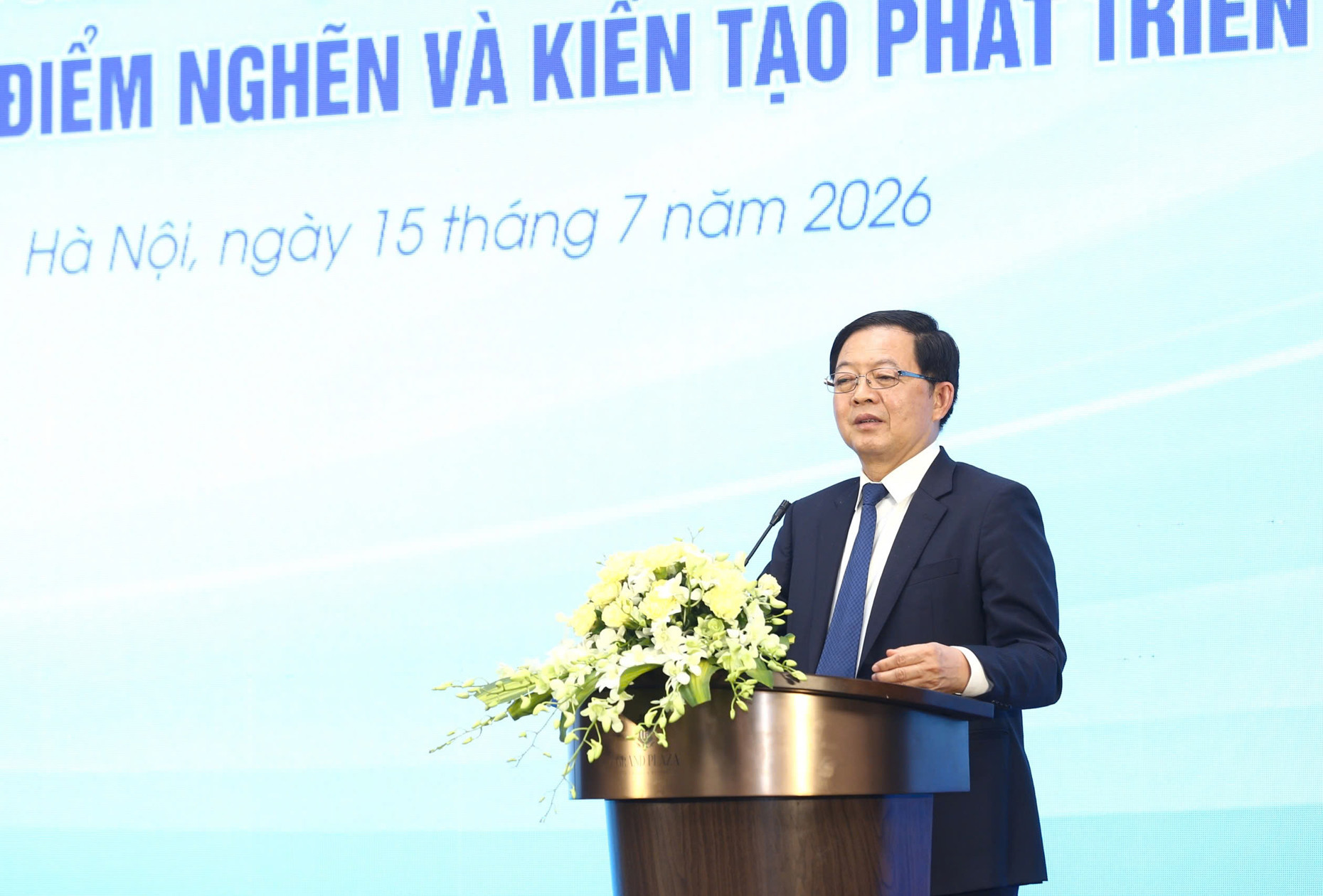
Minister of Science and Technology Vu Hai Quan said that since the Politburo issued Resolution 57, the Ministry of Science and Technology has presided over the drafting and submitted 10 laws, one National Assembly resolution, 40 decrees, 12 Government resolutions, 70 Prime Minister decisions, and 102 circulars.
However, Quan emphasized that drafting legal documents is only the beginning. The greater challenge is ensuring that regulations are widely disseminated and implemented consistently in practice.
Sci-tech as driver for double-digit growth
Dung believes the country is at a historical moment with the goal of becoming a wealthy, high-income nation by 2045. To achieve that goal, starting from 2026, Vietnam must maintain double-digit economic growth over a long period.
According to the deputy prime minister, traditional drivers such as investment or exports will not be enough to propel the economy to this growth level. The Party and the State have identified science, technology, innovation, and digital transformation as the primary drivers for this new development phase.
He emphasized that the aspiration to develop the country must be realized by refining institutions. It can be affirmed that the stage of institutional refinement and unlocking bottlenecks has basically been completed.
"In the coming time, the National Assembly will issue a resolution to resolve difficulties and obstacles in the financial mechanism to unlock development resources. This resolution accepts risks because in science and technology, doing 10 things might result in one or two failures, rather than winning in every single endeavor," he said.
Dung also noted that scientists, institutes, universities, and businesses have raised the issue that conducting science can result in success or failure.
"The Government has agreed that in the coming time, it will submit another resolution to the National Assembly regarding the mechanism for handling liability. Scientists conducting science selflessly, transparently, without self-interest, and without embezzlement, and those who fail will be exempt from liability," he said.
He went on to say that the policy is already in place, the institutions are basically refined, and the State has allocated about three percent of the budget, equivalent to 103,000 billion VND, for science, technology, and innovation. The remaining crucial task is effective implementation.
Measuring success
Dung said the measure of success in the current phase is not the number of documents issued, but how many technologies are mastered, how many new products are commercialized, and how many innovative enterprises are formed and developed.
Most importantly, it is about how science, technology, innovation, and digital transformation have contributed to the country's economic growth.
For the State, he requested continued mindset reform toward facilitating development, taking citizens and businesses as the service center; implementing legal regulations; and continuing decentralization and delegation of power associated with resource allocation while strengthening inspection and supervision.
He believes that application efficiency, commercialization capability, and impact on socio-economic development need to become important criteria for evaluating scientific research results.
Businesses: center of innovation ecosystem
He stressed that the business community needs to invest in R&D, especially as the Government has issued many preferential policies such as land rent exemptions and other support mechanisms.
Dung said businesses are the beneficiaries of policies but also must become the center of the innovation process, the place where technology is mastered, refined, and commercialized.
In addition, he emphasized the requirement to improve the efficiency of using investment resources for science and technology, especially disbursement work.
Every single dong of capital delayed in disbursement means technology is slow to be researched, products are slow to be formed, businesses lose opportunities to innovate, and growth momentum is missed.
He urged striving for 100 percent disbursement of capital sources. The progress and results of disbursement reflect one of the measures of the science, technology, innovation, and digital transformation sector.
According to the Ministry of Science and Technology, many outstanding preferential policies have been issued, such as a 10 percent preferential tax rate for 25 years, land rent exemptions, lump-sum expenditures based on results, permission to self-determine contractors, the formulation of multiple research options, preferential treatment for excellent scientists, and a risk-acceptance mechanism in research.
Thai Khang
.svg)
