 Vietnamnet.vn

 Podcast



Vietnam’s National Assembly on the morning of April 24 approved amendments and supplements to several key tax laws, including the Law on Personal Income Tax, the Law on Value Added Tax, the Law on Corporate Income Tax, and the Law on Special Consumption Tax.
The law takes effect immediately upon its passage.
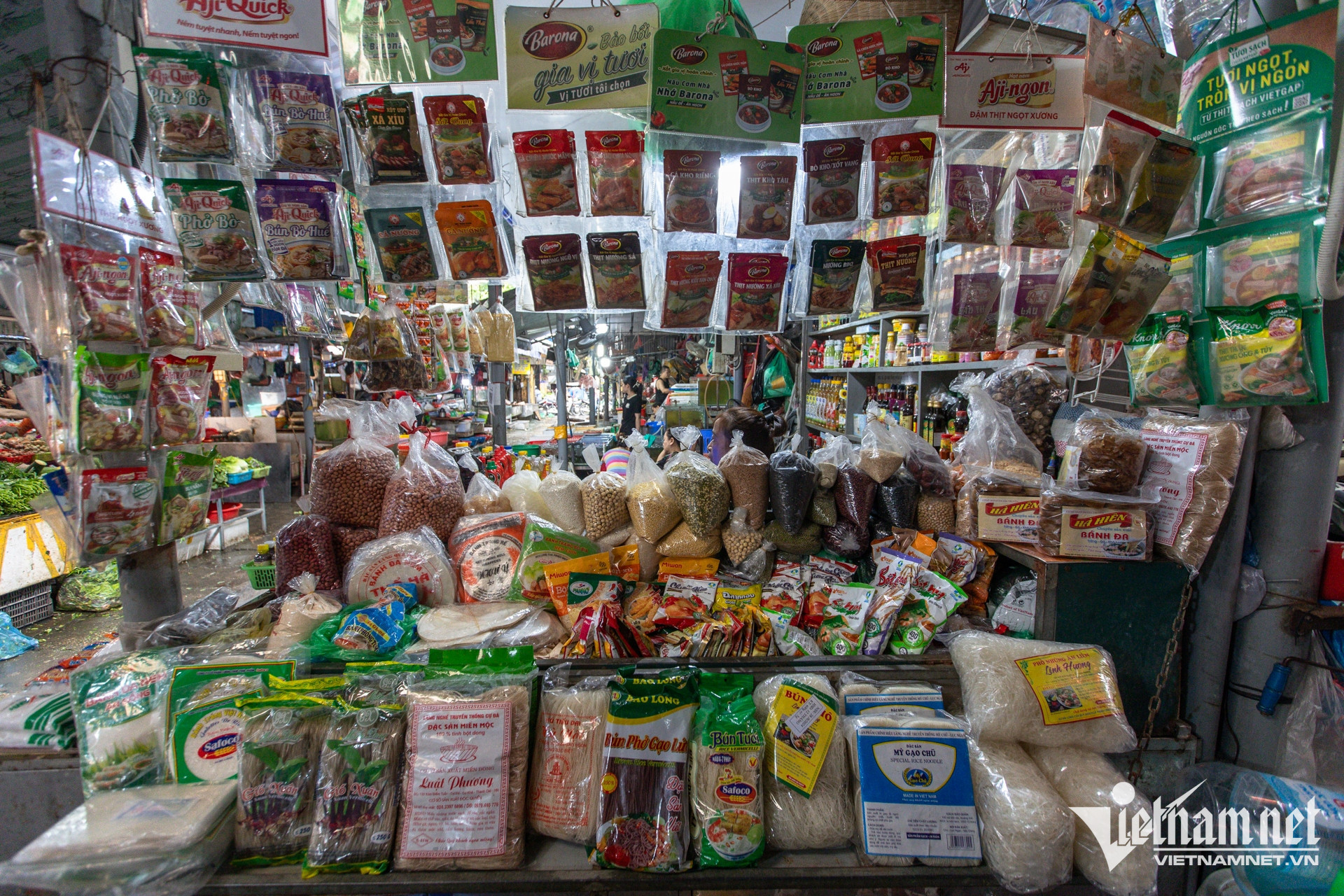
A traditional market in Hanoi. Photo: Thach Thao
One of the most notable changes is a more flexible approach to the revenue threshold that determines tax liability for individuals and household businesses. Instead of maintaining a fixed threshold of VND500 million per year (US$20,000) as previously stipulated, the National Assembly has authorized the Government to adjust this threshold.
Under the revised Clause 1, Article 7 of the 2025 Law on Personal Income Tax, resident individuals engaged in production or business activities with annual revenue below a level set by the Government will not be subject to personal income tax. The Government will determine this threshold based on macroeconomic indicators and the state budget’s balancing capacity, ensuring alignment with socio-economic conditions in each period.
Similarly, amendments to the Law on Value Added Tax stipulate that goods and services provided by individuals and household businesses with annual revenue below the Government-defined threshold will not be subject to VAT. This threshold will also be adjusted in line with macroeconomic conditions and fiscal considerations.
The revised law further states that enterprises with total annual revenue below a level set by the Government may be exempt from corporate income tax. As with other provisions, the Government will determine this threshold to reflect prevailing economic and social conditions.
According to the Government’s explanation, delegating authority to define certain highly variable elements within tax laws does not constitute the creation of new taxes. Instead, it provides a legal basis for more flexible socio-economic management while remaining consistent with the Constitution.

In response to feedback from National Assembly deputies, the Government has added criteria and principles to ensure the reasonableness and feasibility of the law. The revised draft specifies that the Government will determine revenue thresholds for personal income tax exemption, VAT exemption, and corporate income tax exemption based on macroeconomic indicators and budget capacity.
The Government also noted that current regulations already require household and individual businesses with annual revenue exceeding VND3 billion (US$120,000) to adopt an income-based tax calculation method, defined as revenue minus expenses.
In addition, the Law on Corporate Income Tax sets different tax rates based on revenue thresholds. A rate of 15 percent applies to enterprises with annual revenue not exceeding VND3 billion (US$120,000), while a rate of 17 percent applies to those with revenue above VND3 billion and up to VND50 billion (US$2 million).
Under these provisions, if the Government were to raise the tax-exempt revenue threshold beyond VND3 billion, it would need to report to the National Assembly for further amendments to ensure consistency across related laws.
Therefore, although the revised law does not specify a fixed framework, the Government is effectively limited to setting the threshold below VND3 billion per year (US$120,000) to maintain coherence within the current legal system.
Regarding the proposal to raise the tax-exempt revenue threshold for individuals, household businesses, and small enterprises to VND1 billion (US$40,000), the Government affirmed that it had carefully considered multiple factors, including potential impacts on state revenue and taxpayers.
From the Government’s perspective, the VND1 billion threshold is appropriate under current conditions, based on the principle of harmonizing benefits and sharing risks. It also takes into account administrative costs and compliance expenses for taxpayers, aiming to ensure policy efficiency.
The Government added that this threshold aligns with the revenue level at which household and individual businesses are required to use electronic invoices. The policy is expected to effectively support small businesses while continuing to encourage their transition into formal enterprises.
Tran Thuong
.svg)
