 Vietnamnet.vn

 Podcast



The proposal was presented on Wednesday afternoon as the National Assembly Standing Committee reviewed a draft law amending and supplementing several provisions of the Investment Law, including revisions to the list of conditional business sectors.
Presenting the bill, Finance Minister Ngo Van Tuan said the amendments are intended to ensure consistency across the legal framework after a number of conditional business sectors have been revised or streamlined in recent years.
The draft law also aims to foster a healthy, fair, transparent and business-friendly environment while strengthening oversight of sensitive sectors that could affect national security and public health.
Recreational use cited as a growing health risk

A key provision in the draft would add certain activities to the list of prohibited business sectors, including "the commercial sale of N2O for human inhalation outside medical purposes."
The proposal stems from growing concerns over the abuse of nitrous oxide and its harmful effects on human health.
According to the Ministry of Health, inhaling nitrous oxide outside medical settings - without a doctor's prescription or supervision by medical professionals - can cause paralysis, sensory disorders, mental health disorders, spinal cord damage and anemia.
The ministry also reported that recreational abuse of nitrous oxide can damage the nervous system and reduce fertility. It noted that the gas has a mechanism of action similar to opioids, including heroin.
Using nitrous oxide for recreational purposes may also become a gateway to illegal drug use, according to the report.
Complex enforcement challenges
The government said the illegal sale and use of laughing gas has become increasingly complicated in recent years, particularly at businesses requiring security and public order management, such as bars, karaoke venues, guesthouses and hotels, where it is often associated with the illegal use of synthetic drugs.
Previously, the 15th National Assembly adopted a resolution prohibiting gases that are harmful to human health. Since then, police have intensified efforts to prevent, investigate and handle violations related to the abuse of laughing gas, particularly at entertainment venues.
The government also noted that many countries - including the United Kingdom, the United States, Japan, the Netherlands, New Zealand and Germany - have introduced bans or strict restrictions on the commercial sale, supply and recreational use of laughing gas to protect public health and maintain public order.
Based on these considerations, the government said it is necessary to prohibit the commercial sale of N2O for human inhalation outside medical purposes.
Lawmakers call for clearer distinctions
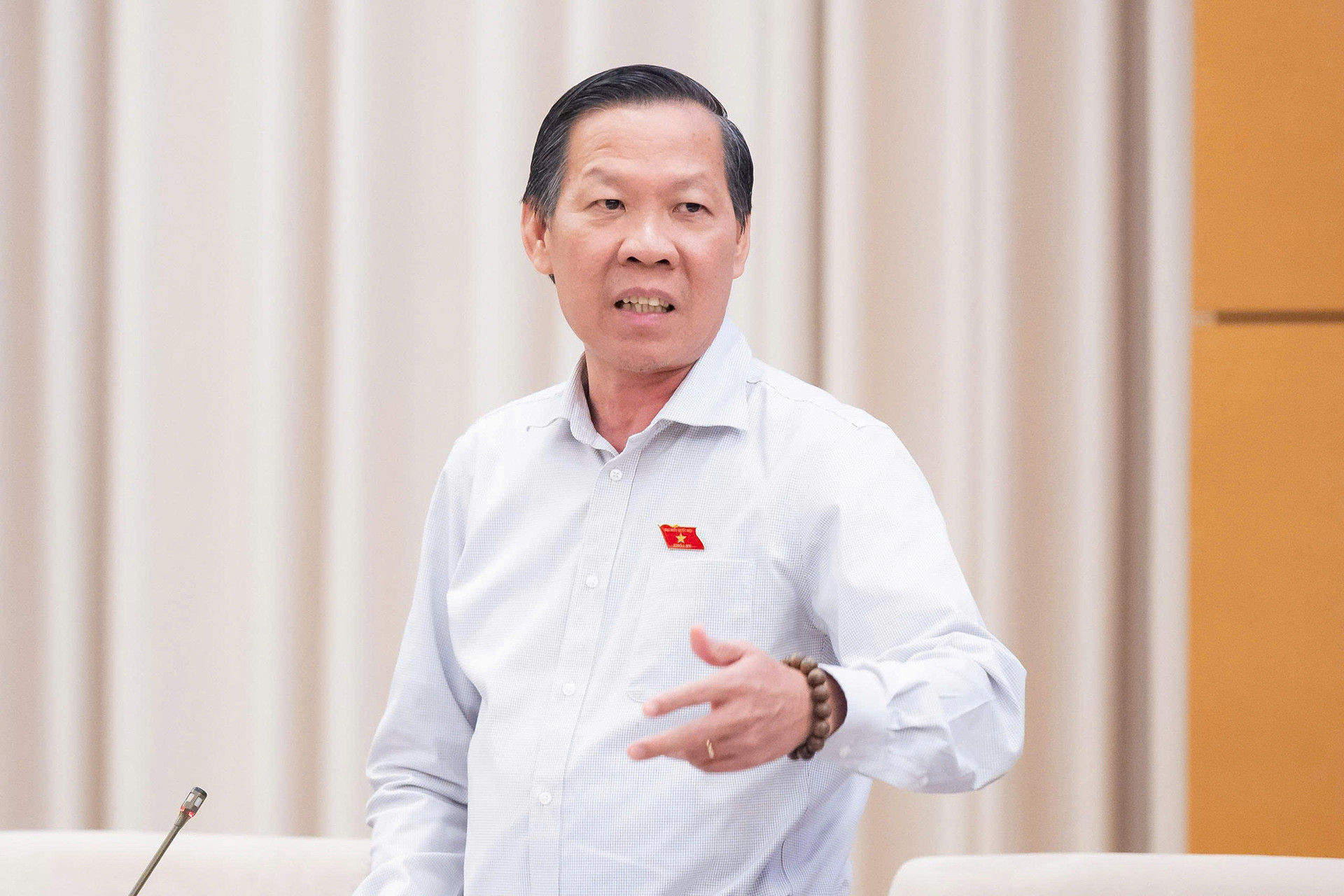
Reviewing the proposal, Phan Van Mai, chairman of the National Assembly's Economic and Financial Committee, said the majority of committee members agreed on the need for stronger measures to prevent the abuse of laughing gas in order to protect public health and maintain social order and safety.
However, many members cautioned that banning the business based on the substance's ultimate use could create difficulties in enforcement and in determining legal liability in practice.
Others pointed out that nitrous oxide is still legally used in scientific research, education, laboratory testing, inspection, food production and other technological applications.
The committee therefore recommended a comprehensive assessment of the policy's impact and called for a clear distinction between prohibited activities and legitimate uses, ensuring that lawful production, business operations and legitimate social needs are not unnecessarily affected.
Tran Thuong
.svg)
