 Vietnamnet.vn

 Podcast



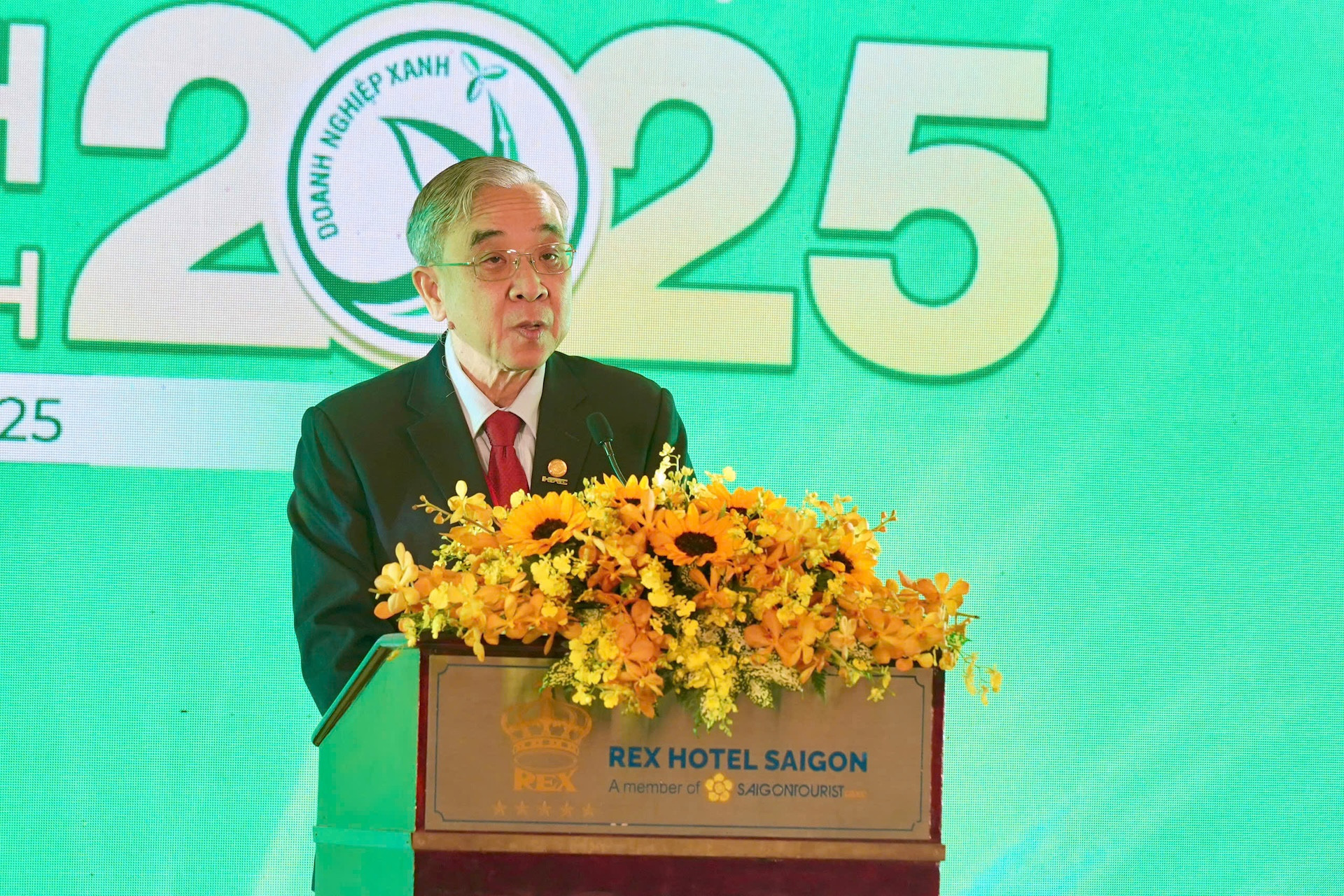
The green transformation among businesses in Ho Chi Minh City is deepening, with more companies making substantial investments in sustainable practices.
Speaking on the sidelines of the 2025 Green Business Awards held on the evening of December 22, Nguyen Ngoc Hoa, Chairman of the Ho Chi Minh City Business Association (HUBA), emphasized that the city's green business movement has become more robust, both in terms of awareness and investment.
He noted that in the past, green practices were often limited to end-stage treatments such as wastewater and waste management, or to the early stages with low-emission materials. Now, businesses are going further by integrating green principles throughout their production processes, focusing on circular economy models and adopting sustainable governance frameworks.
“Previously, green transformation was mostly driven by export-oriented businesses under pressure from international consumers. But today, domestic companies are also becoming conscious of their image and committed to sustainable development for local consumers,” he told VietNamNet.
According to the HUBA Chairman, businesses in HCMC seeking to invest in green transformation can now benefit from an incentive program under Resolution 09/2023 issued by the city's People’s Council.
Under this resolution, businesses can access subsidized loans via the Ho Chi Minh City Finance and Investment State-Owned Company (HFIC), with up to 100% or 50% of interest covered depending on the project type. The subsidy period can last up to seven years from the date the project receives official approval and after the first loan disbursement from HFIC.
The level of interest support varies by project category. For instance, companies investing in rooftop solar power systems can receive 100% interest support. Those building green-certified logistics warehouses are eligible for 50% support.
The maximum loan for each green transition project is $8 million. All economic sectors are eligible, whether state-owned enterprises, private firms, or individual business households.
According to Hoa, there is no cap on the overall support fund. HFIC, which is coordinating the loan distribution, has established strategic partnerships with nine major commercial banks nationwide. This collaboration ensures a robust funding source to assist businesses not only in green transformation but also in digital transition—part of HCMC’s strong policy commitment.
From a business perspective, Vuong Ngoc Dung, Marketing Director of Saigon Cosmetic Corporation, said restructuring production around green, eco-safe, and transparent supply chains enables businesses to penetrate modern retail networks and expand into export markets.
Similarly, Nguyen Thi Thu, Chairwoman of the Board of Directors at Anh Kim Food Manufacturing Joint Stock Company (AK Food), said that green transformation provides a foundation for enhancing production standards and product traceability. This makes it easier for companies to access demanding markets with strict requirements on food safety, environmental responsibility, and sustainable development.
The 2025 Green Business Awards was co-organized by Saigon Giai Phong Newspaper and HUBA under the direction of the Ho Chi Minh City People's Committee.
According to the organizers, over 200 businesses registered for the award program, nearly double the number from 2024.
This year, 155 businesses met the program’s criteria and were honored, including 77 manufacturing firms and 78 companies in commerce, services, and real estate.
PV
.svg)
