 Vietnamnet.vn

 Podcast



The latest case involves Hai Phong Thermal Power JSC (HND), whose board of directors recently approved a change in legal representative after CEO Duong Son Ba - who also served as the company’s legal representative - was prosecuted and placed in temporary detention by the Ministry of Public Security’s investigative agency.
Authorities are investigating allegations related to “forging documents of agencies and organizations.” Ta Cong Hoan, chairman of HND’s board, was appointed to replace Ba in the role effective May 21.
Hai Phong Thermal Power emerged in the course of a broader investigation into alleged violations involving environmental monitoring activities in multiple localities.
Earlier, investigators also prosecuted and detained Le Viet Cuong, deputy CEO of Quang Ninh Thermal Power JSC (QTP), along with several related officials.
The legal troubles have extended beyond thermal power companies to the power consulting and construction sector.
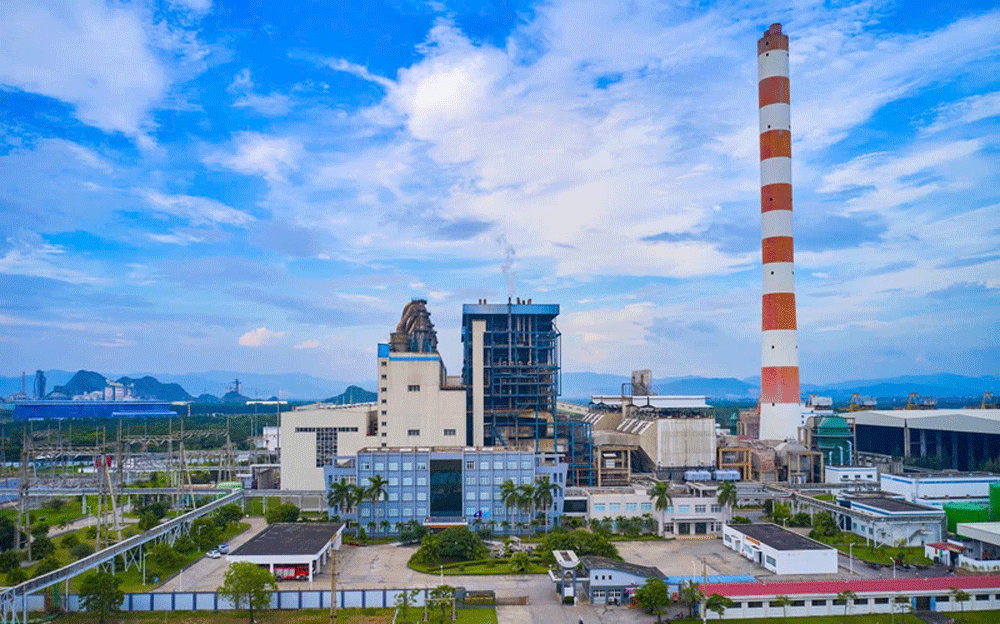
Hai Phong Thermal Power Plant produces an average of around 7.2 billion kWh of electricity each year. Photo: HND
On May 22, Power Engineering Consulting JSC 1 (TV1) disclosed unusual information regarding the prosecution and detention of Nguyen Huu Chinh, chairman of the company’s board of directors.
According to the company’s disclosure, the case arose during an investigation into a 500kV transmission project and related entities.
Before TV1, executives at Power Engineering Consulting JSC 2 (TV2) had also faced legal action. Chairman Nguyen Chon Hung and chief accountant Bui Thi Ngoc Ly were both prosecuted as part of an ongoing investigation.
The market’s biggest focus, however, has been on PC1 Group JSC (PC1). According to information released on May 16, chairman Trinh Van Tuan and six other executives were prosecuted over alleged “violations of accounting regulations causing serious consequences” and “embezzlement of assets.”
Those charged also included CEO Vu Anh Duong, several deputy CEOs and the company’s chief accountant.
Within just over two weeks, the succession of negative developments involving major power and construction companies has delivered a major shock to investors.
These companies had previously been viewed as key beneficiaries of Vietnam’s rapidly rising electricity demand and accelerating investment in energy infrastructure.
Stocks and market value plunge as investors reassess risk
Despite maintaining market capitalizations worth trillions of Vietnamese dong, shares of many companies in the power and power construction sectors have come under significant pressure following the legal cases involving senior executives.
As of May 25, Hai Phong Thermal Power’s market capitalization stood at around VND5.25 trillion (USD206 million), although the stock has recently recorded several declining sessions.
TV2 once had a market capitalization exceeding VND3 trillion (USD118 million) before entering a prolonged downturn and now stands at just over VND2 trillion (USD78.5 million). TV1’s market capitalization also exceeded VND1 trillion (USD39 million) in late March 2026.
PC1, one of the country’s largest power construction firms, has been hit the hardest. Over the past two months, its shares have fallen 44%, wiping out around VND5.5 trillion (USD216 million) in market value.
Notably, the stock declines have contrasted sharply with company earnings.
Many firms in the sector continued to report strong profit growth in 2025 and in the first quarter of this year.
Hai Phong Thermal Power posted after-tax profit of more than VND342 billion (USD13.4 million) in 2025, up 32.2% year-on-year, despite revenue declining to VND9.731 trillion (USD382 million). Shareholders’ equity at year-end reached nearly VND6 trillion (USD235 million).
TV1 also recorded a strong year, with profit exceeding VND150 billion (USD5.9 million), sharply higher than nearly VND87.5 billion (USD3.4 million) the previous year. The result was notable given the company’s equity of only around VND511 billion (USD20 million).
TV2 experienced a strong recovery cycle, with 2025 revenue reaching VND1.335 trillion (USD52.4 million) and after-tax profit climbing 48% to VND96 billion (USD3.8 million). In the first quarter of 2026 alone, after-tax profit surged 92% to VND53 billion (USD2.1 million) despite declining construction revenue.
PC1 maintained its industry-leading position, with consolidated revenue in 2025 exceeding VND13 trillion (USD510 million), up nearly 30%, while after-tax profit rose more than 90% to around VND1.356 trillion (USD53.2 million).
The company currently operates seven hydropower plants and has expanded into wind power, mining and real estate.
According to analysts, the sharp decline in power sector stocks reflects the market’s reassessment of corporate governance risks.
Previously, power companies were often viewed as defensive investments due to stable cash flow and long-term growth in electricity demand.
However, the growing number of legal cases has raised fears of a domino effect, particularly among companies involved in large-scale power construction, consulting and investment projects.
The power sector is characterized by projects worth trillions of dong, lengthy implementation timelines and multiple layers of contractors. It is also a capital-intensive industry heavily reliant on borrowing.
As authorities intensify inspections into investment projects, bidding, EPC contracts, financial activities and environmental compliance, legal risks are becoming more visible.
Market reactions are being driven not only by concerns over profitability, but also by fears of project delays, leadership changes and potential reviews of financial statements.
Even so, many experts believe the long-term outlook for Vietnam’s power sector remains positive thanks to continued growth in electricity demand, industrialization, the expansion of data centers, artificial intelligence and electric vehicles.
Vietnam’s Power Development Plan VIII is also expected to create substantial growth opportunities for companies with healthy financial foundations, transparent governance and limited dependence on financial leverage.
Manh Ha
.svg)
