 Vietnamnet.vn

 Podcast



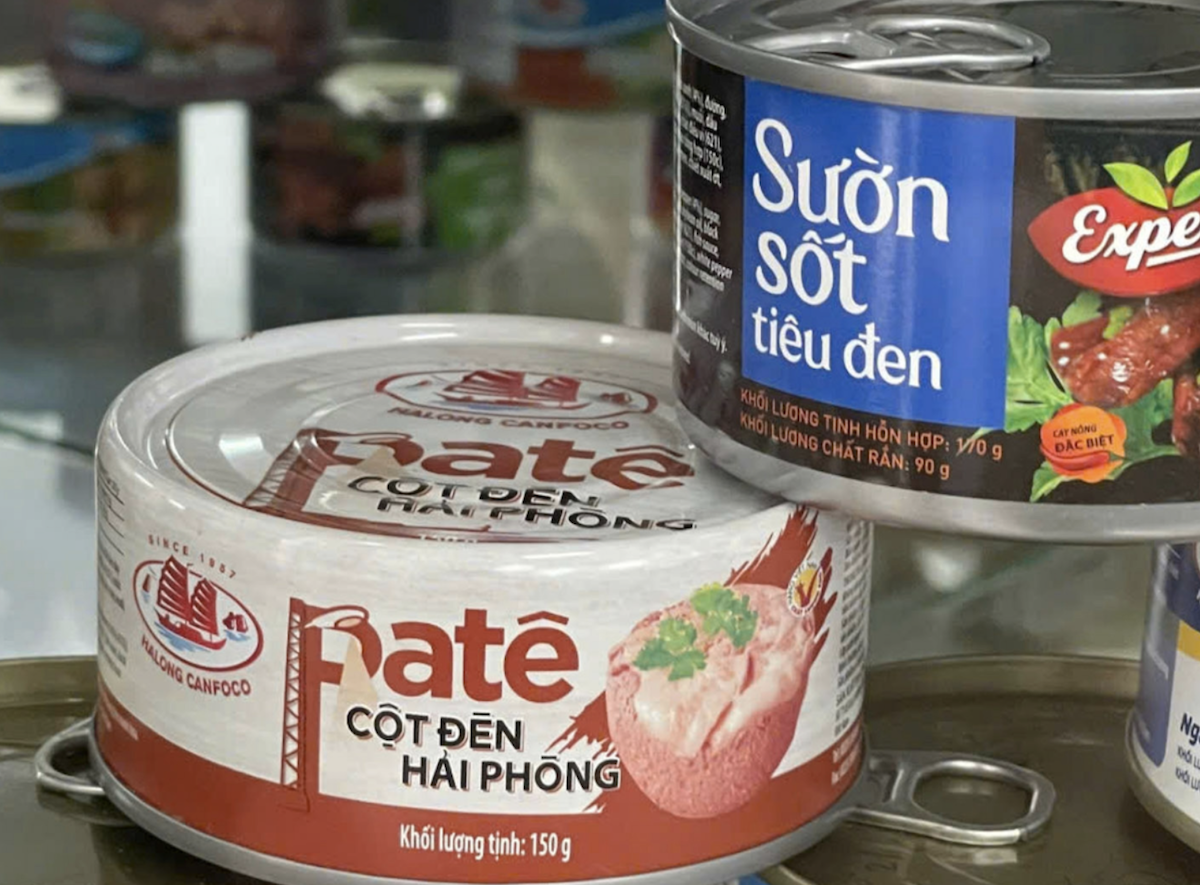
Halong Canned Food Joint Stock Corporation (Halong Canfoco) has adopted a cautious business plan for 2026 after one of Vietnam's most serious food safety scandals, as the company works to restore production and rebuild consumer confidence.
According to documents prepared for its 2026 annual general meeting, the maker of the well-known Hai Phong Lamp Post Pâté brand targets net revenue of more than VND495 billion (US$18.9 million), down roughly 25% from nearly VND664 billion (US$25.4 million) recorded in 2025.
Domestic sales are expected to fall sharply to just over VND157 billion (US$6 million), around one-third of last year's level, while exports are projected to contribute nearly VND338 billion (US$12.9 million).
Despite lower projected revenue, the company aims to post after-tax profit of more than VND12.4 billion (US$475,000), significantly higher than the VND1.62 billion (US$62,000) earned in 2025, reflecting expectations of improved operating efficiency.
However, first-quarter results highlighted the scale of the challenge. Net revenue declined 24% year-on-year to more than VND109 billion (US$4.2 million), while the company reported a net loss of nearly VND4.1 billion (US$157,000) - more than ten times deeper than the loss recorded a year earlier.
Halong Canfoco attributed the weak performance to falling export revenue and a 43% increase in interest expenses as borrowing rose. By the end of 2025, short-term debt had climbed to more than VND122 billion (US$4.7 million), while long-term borrowings increased from just over VND130 million (US$5,000) to more than VND9.2 billion (US$352,000).
The cautious business outlook comes only months after authorities uncovered about 120 tonnes of pork from animals infected with African swine fever being brought into the company's factory, with part of the meat processed into finished products.
The case led to criminal charges, with the company's chief executive and several quality control officials arrested for alleged violations of food safety regulations.
Following the incident, Halong Canfoco temporarily suspended operations at its Hai Phong factory. On June 11, its newly appointed board approved restarting production while pledging stronger quality control, greater transparency and tighter internal supervision.
Founded in 1957, Halong Canfoco is one of Vietnam's oldest food processors, producing canned meat, sterilised sausages, spring rolls and the long-established Hai Phong Lamp Post Pâté brand. Its products have been sold across Vietnam and exported to markets in Europe, Asia and Africa.
The company had already been facing declining sales before the scandal, with revenue falling from more than VND864 billion (US$33 million) in 2021 to around VND806 billion (US$30.9 million) in 2022, nearly VND742 billion (US$28.4 million) in 2023 and approximately VND682 billion (US$26.1 million) in 2024.
Halong Canfoco also experienced significant shareholder and management changes in 2025, when nearly 40% of its charter capital changed hands within a short period and several board members, including the chairman, resigned. Nguyen Anh Tuan was subsequently elected chairman.
The company had planned to raise around VND75 billion (US$2.9 million) through a share offering to finance a new factory and supplement working capital, but the food safety scandal may complicate those fundraising efforts.
In addition, Halong Canfoco's shares have been placed under supervision by the Hanoi Stock Exchange after the company failed to submit its audited 2025 financial statements on time, adding further pressure as it seeks to regain investor confidence.
While the restart of production marks an important first step, the company's long-term recovery will depend on convincing consumers that its quality control systems have been fundamentally overhauled and that similar incidents will not happen again.
With nearly seven decades of history, Halong Canfoco retains strong brand recognition, an established distribution network and extensive manufacturing experience. But in the food industry, consumer trust is among the most valuable assets - and one of the easiest to lose.
Manh Ha
.svg)
