 Vietnamnet.vn

 Podcast



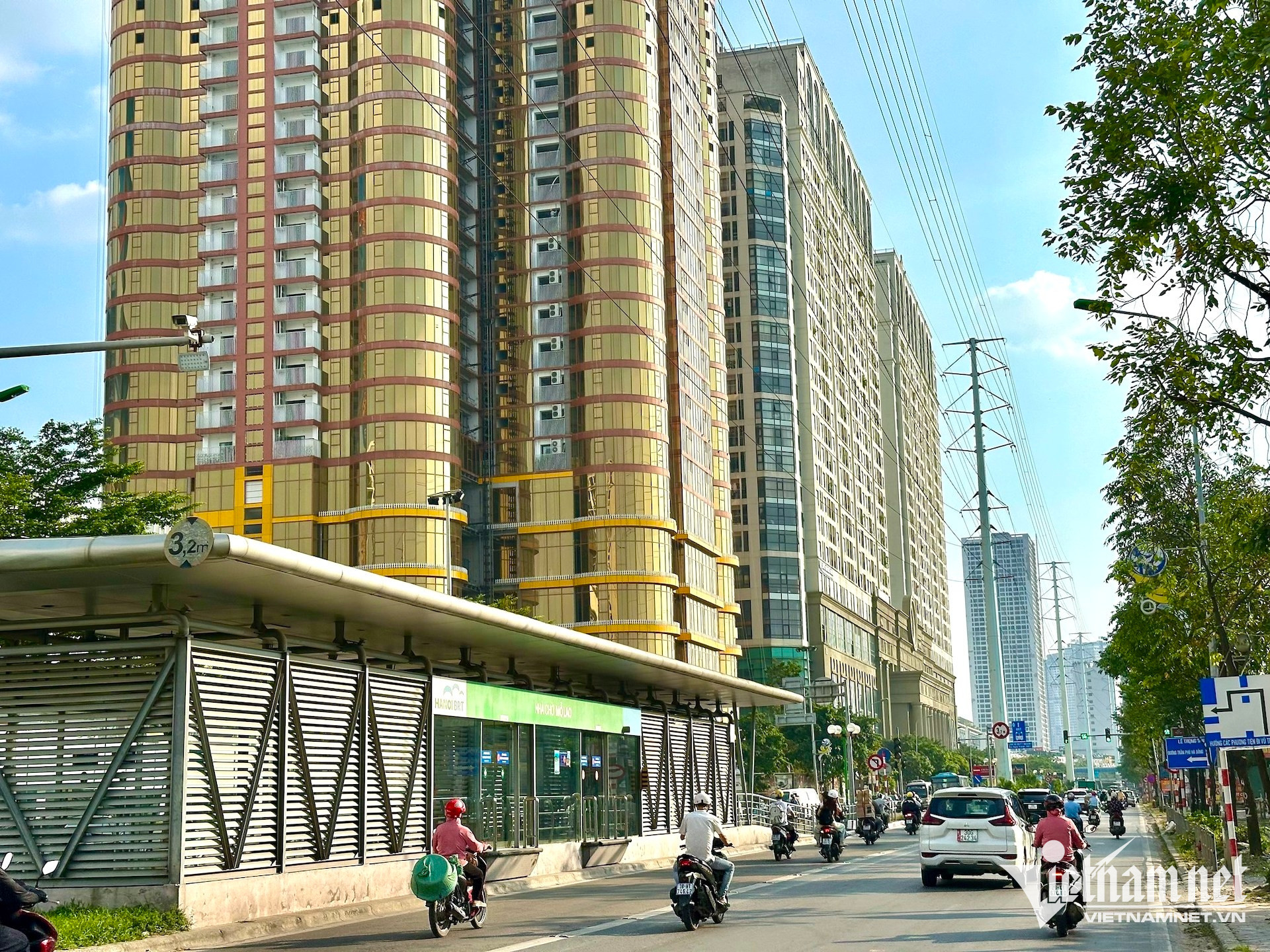
The Vietnam Association of Realtors (VARS) reports that average apartment prices in Hanoi have surpassed VND 75 million/m² (about USD 3,000/m²), putting homeownership out of reach not only for low-income residents but also for those with upper-middle incomes. This trend poses risks to the real estate market and threatens the capital’s sustainable growth.
According to VARS, the supply structure is increasingly imbalanced. Between 2018 and 2023, new apartment supply in Hanoi fell from over 20,000 units a year to only about 10,000 units. Affordable apartments (under VND 25 million/m² or about USD 1,000/m²) dropped from 35% of new supply in 2019 to complete absence by 2023.
Although supply began to recover in 2024, with about 30,000 units launched - the highest in five years - and over 10,000 units added in the first half of 2025, the imbalance persists. Luxury projects exceeding VND 100 million/m² (about USD 4,000/m²) are rising sharply, while affordable and mid-range options are vanishing. Even high-end apartments priced below VND 60 million/m² (USD 2,400/m²) are becoming rare.
In Q2 2025, Hanoi led the country in apartment price growth, with the average reaching VND 75.5 million/m² (USD 3,020/m²), up 7.7% from the previous quarter and 87.7% from 2019. However, secondary market liquidity remains weak, with transactions mostly limited to large urban complexes priced around VND 50 million/m² (USD 2,000/m²) or central luxury units.
Even young professionals earning VND 40–50 million/month (USD 1,600–2,000) hesitate to buy without family support due to high debt burdens and floating interest rates after initial promotional periods. Many prioritize quality of life and financial flexibility over decades-long mortgages for small apartments.
VARS predicts prices will keep rising in the short term due to high input costs and investor profit expectations. Many investors face little financial pressure and are unwilling to lower prices, especially as low interest rates, abundant liquidity, and strong public investment policies persist.
PV
.svg)
