 Vietnamnet.vn

 Podcast



Accumulated losses mount as bond maturity approaches
According to its periodic financial disclosure for the first half of 2026, Bong Sen Corp, a company linked to the Daeha office and Hanoi Daewoo Hotel complex, recorded an after-tax loss of more than $12 million.
The latest loss pushed its accumulated undistributed after-tax losses to more than $143 million.
As of the end of June, Bong Sen had about $182 million in outstanding bond principal. During the first six months of the year, the company also recorded more than $115 million in short-term accrued expenses that it had been unable to pay.
The company attributed the failure to make payments to the freezing of all its bank accounts during the investigation into the Van Thinh Phat case involving businesswoman Truong My Lan.
The BSECH2126003 bond was issued on October 15, 2021, with a five-year term and an annual interest rate of 15.75%.
Its outstanding principal remains about $182 million and is due on October 15, 2026, leaving Bong Sen little more than a month to address the obligation.
In addition to the bond principal, the company reported more than $115 million in short-term accrued expenses. Its disclosure did not specify that the entire amount represented unpaid bond interest.
However, with Bong Sen’s accounts frozen and the company having previously failed to meet payment obligations, pressure to secure funds for bondholders remains significant.
Bong Sen’s total liabilities stood at about $372 million at the end of June, compared with equity of around $145 million. Its liabilities-to-equity ratio rose to 2.56.
The company reported owner-contributed capital of more than $181 million, funds appropriated from after-tax profits of about $3.4 million and accumulated undistributed losses of more than $143 million.
Consolidated equity, meanwhile, stood at around $145 million. The disclosure did not provide a full breakdown explaining the difference between these figures.
Bong Sen’s second-quarter financial report showed a difference of about $104 million in its equity figures. The gap may stem from share premium or asset revaluations, including its 69.9% stake in Daeha JSC, with a par value of more than $24 million; a 30% stake in Tri Duc Real Estate Co., Ltd., worth about $6.8 million; and legal documents and land associated with a project at 152 Tran Phu in Ho Chi Minh City, covering more than 3.1 hectares.
A&C Auditing and Consulting Co., Ltd. said it was unable to obtain sufficient appropriate audit evidence to form a basis for an opinion.
As a result, the auditor disclaimed an opinion on Bong Sen Corp’s consolidated interim financial statements.
Daewoo sale emerges amid debt pressure
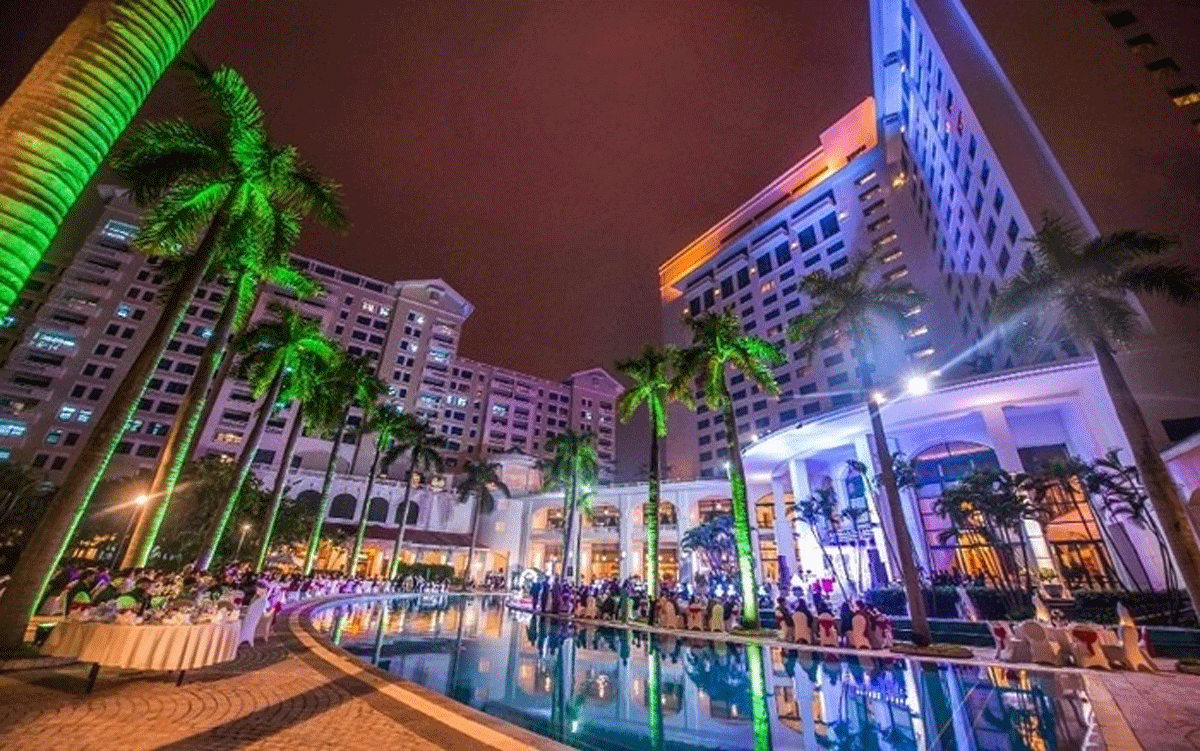
The Daeha office and Hanoi Daewoo Hotel complex is one of Bong Sen Corp’s most notable assets.
Built in 1996, the complex occupies nearly three hectares at 360 Kim Ma Street in Hanoi. The Daewoo was once among the capital’s best-known five-star hotels and has hosted numerous international leaders and dignitaries.
Shares in Daeha JSC are also among the assets securing Bong Sen’s bond.
During a trial in March 2024, Truong My Lan said her family held a controlling stake in Bong Sen, which was linked to a 93.6% ownership interest in the Hanoi Daewoo Hotel.
Lan also asked for the hotel and several other assets to be sold to help address financial consequences arising from the Van Thinh Phat case.
However, expectations of recovering a large sum from the asset face considerable uncertainty.
The Daewoo complex was once estimated to be worth more than $430 million in 2012.
In 2015, Bong Sen announced plans to spend about $138 million to acquire a 51% stake in Daeha. That proposed transaction implied an equity valuation of around $271 million, although it did not represent a direct appraisal of the entire complex.
In July 2026, the Hanoi Daewoo Hotel and Daeha office building appeared on the property market with an asking price of about $227 million.
A subsequent listing lowered the asking price to around $220 million.
These asking prices are below some valuations cited in the past. However, the figures were calculated on different bases, and an asking price does not necessarily reflect either the eventual transaction price or the complex’s current appraised value.
Several factors could explain the lower asking prices.
The remaining operating life of the project has shortened after around three decades in use, while maintaining a five-star hotel requires substantial spending on maintenance, upgrades and renovation.
Legal issues surrounding the assets in connection with the Van Thinh Phat case could also complicate a transfer and potentially limit interest from investors.
Based on outstanding principal of about $182 million and the bond’s annual interest rate of 15.75%, Bong Sen faces nominal interest costs equivalent to roughly $29 million a year.
At an extraordinary shareholders’ meeting on August 30, 2024, Bong Sen approved a plan to dispose of assets to provide funds for addressing financial consequences and meeting bond obligations.
The assets included Tran Thi Pho’s capital contribution, shares in Daeha and mortgage documents for properties at 56-66 Nguyen Hue, 61-63 Hai Ba Trung, 5 Nguyen Thiep and 93-95-97 Dong Khoi.
How quickly those assets can actually be dealt with, however, remains uncertain.
With about $182 million in bond principal due on October 15, Bong Sen faces mounting pressure to dispose of assets and secure sufficient funds to meet its obligations to bondholders.
Manh Ha
.svg)
