On the morning of December 2, Hanoi was enveloped in a dense, white haze as the air quality index (AQI) soared to 283 - categorized as “very unhealthy” and the highest recorded nationwide for the day.
According to VietNamNet’s observations, from Thang Long Bridge looking into the inner city, the entire skyline was blurred by heavy smog, drastically reducing visibility.
In Tu Liem Ward, the haze formed a thick, lingering layer. By 10 a.m., areas such as Cau Giay remained submerged in the white smog.
Major roads including Tran Duy Hung, Lang Ha, and western districts of the city were choked with fine dust, creating a visibly oppressive environment. High-rise buildings and apartment complexes were barely discernible behind the thick air.
Hanoi tops pollution levels in Vietnam on December 2
A thick smog layer covers Tu Liem Ward in Hanoi. Photo: Duc Hoang By 10 a.m., Cau Giay District was still cloaked in haze. Photo: Duc Hoang
The Northern Center for Environmental Monitoring (Ministry of Natural Resources and Environment) reported Hanoi’s AQI at 283, making it the most polluted location in Vietnam for the day.
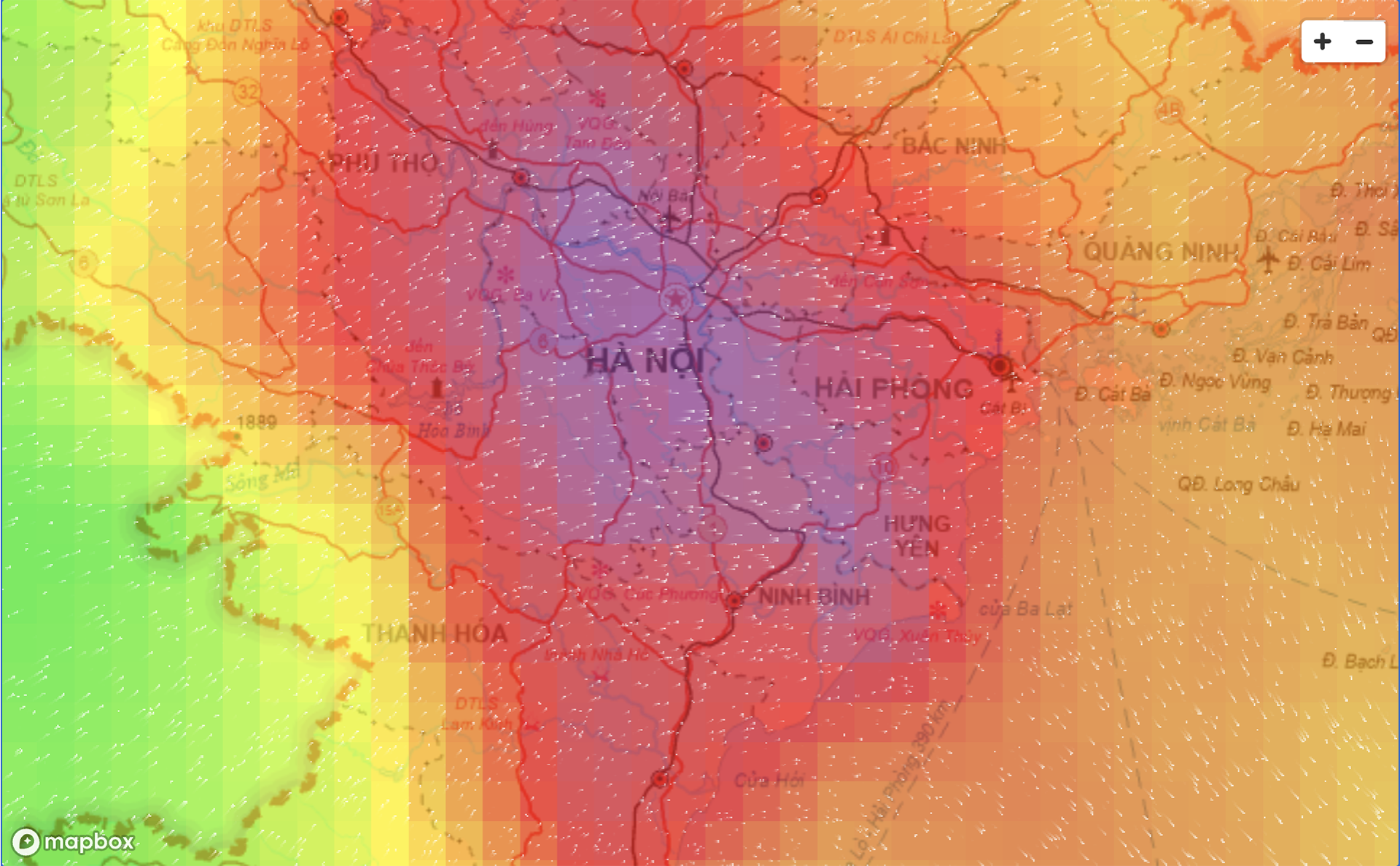
Other provinces nearby - Hung Yen, Ninh Binh, Phu Tho, and Hai Phong - also recorded poor air quality with AQI levels in the red zone, indicating unhealthy air.
Forecasts suggest that Hanoi’s AQI may drop to around 190 tomorrow (December 3), a level still considered harmful to health, particularly for sensitive groups.
Schools cancel outdoor activities, health warnings issued
In response to the worsening air, many schools across the capital canceled all outdoor events and moved activities indoors to minimize students' exposure.
Health experts strongly advised that during periods of peak pollution, the elderly, children, and individuals with respiratory conditions should avoid going outside unless absolutely necessary.
If outdoor movement is unavoidable, people are urged to wear certified masks capable of filtering PM2.5 fine dust particles. These masks must fit snugly over the nose without leaving gaps.
Protecting health during the smog crisis
Photo: Duc HoangMonitoring systems show air quality at “very unhealthy” levels. Photo: CEMAir quality at alarming levels, even in lake-adjacent areas. Photo: Duc HoangDoctors advise residents to wear PM2.5-filtering masks. Photo: Duc Hoang
At home, residents should keep doors and windows tightly closed, use air purifiers, and frequently clean nasal passages. A well-balanced diet to strengthen the immune system is also recommended.
Even areas near lakes and green spaces were not spared - the white haze settled over water surfaces and public parks, indicating how deeply the smog has permeated the urban atmosphere.
Experts attribute the current pollution spike to a combination of seasonal weather phenomena, including temperature inversion, stagnant air, and prolonged fog - conditions common between late November and early December in northern Vietnam.
Seven provinces, including Hanoi, are expected to experience continued hazardous air quality in the coming days, with authorities urging urgent response measures.
 Vietnamnet.vn

 Podcast







.svg)
