 Vietnamnet.vn

 Podcast



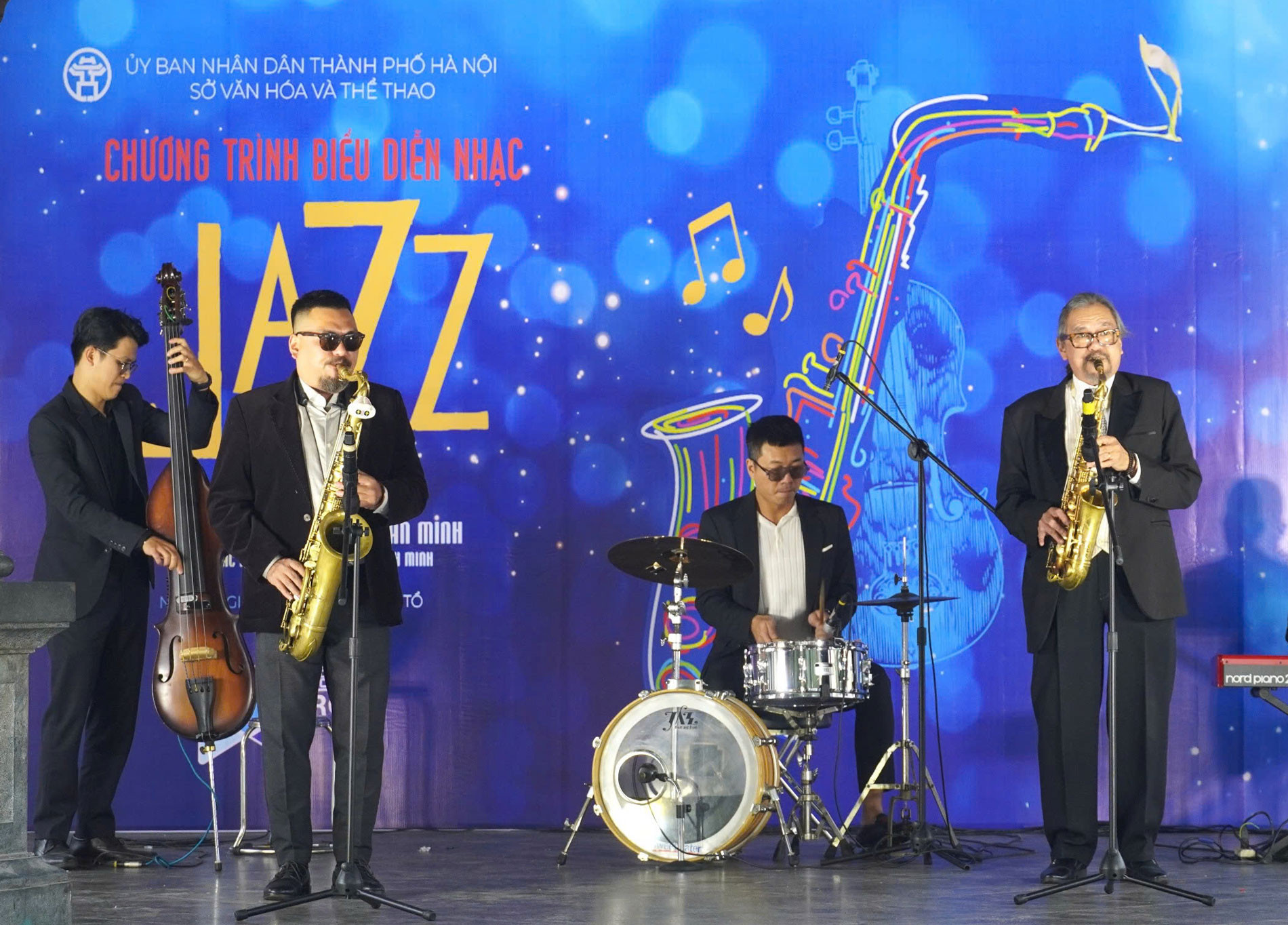
The 2026 Hanoi International Jazz Festival, or Hanoi Jazztival 2026, themed Hanoi Jazz – Melodies Without Borders, will take place from Sept. 17-19. Hanoi needs an international jazz festival not simply to add another celebration to its calendar. More importantly, it is about creating a space where heritage and contemporary culture, artists and audiences, the city and the world can meet through music’s most beautiful language: freedom, improvisation and dialogue, while helping drive the capital’s cultural industries.
When music awakens the city’s spaces
Hanoi is a city of layered heritage and improvisation, its beauty emerging from different periods of time woven together: an old tiled roof tucked beneath the shade of a tree, a French colonial villa alongside a modern glass building, and street vendors moving through streams of traffic.
That sense of imperfect order feels strangely in tune with jazz, a form of music born from improvised conversations, where a pause or even a deviation is not necessarily a mistake, but can instead become the starting point for something new.
A creative city needs to work in much the same way, not simply preserving its heritage but allowing new ideas to enter, experiment and engage in dialogue. Hanoi Jazztival 2026 was born from precisely that spirit, closely linked to Hanoi’s cultural industry development strategy and its commitments within UNESCO’s Creative Cities Network.
Perhaps the most intriguing aspect of Hanoi Jazztival is that it does not confine itself to an enclosed stage. Jazz will spill into the streets and spread across some of the city’s signature cultural spaces: the Music Garden at the Hanoi Opera House, the Octagonal House, Thang Long Song, Dance and Music Theatre, the Culture and Arts Center, the Vietnamese Women’s Museum, Thang Long Opera Hotel and jazz clubs across the city.
When jazz wanders around Hoan Kiem Lake or finds its way into old houses, heritage no longer stands still. The point is not to turn the old into something new, but to find a space where heritage and contemporary expression can regard one another with affection.
Cultural industries and urban memory
Hanoi Jazztival aims to establish Hanoi as Vietnam’s jazz hub, expand spaces for creativity and promote the capital’s image. At a deeper level, however, perhaps the festival’s greatest value lies in creating “urban memories.” People may come to a city for an event, but ultimately remember the city itself.
At their deepest level, cultural industries are built on precisely these kinds of connected experiences. Jazz may eventually become more than an event held each September and instead find its place within the rhythm of everyday life.
Then, on an autumn afternoon, amid the rush of the city, someone may choose to slow down simply because a jazz melody is drifting from the street - and, for a moment, feel Hanoi telling its own story.
Tinh Le
.svg)
