 Vietnamnet.vn

 Podcast



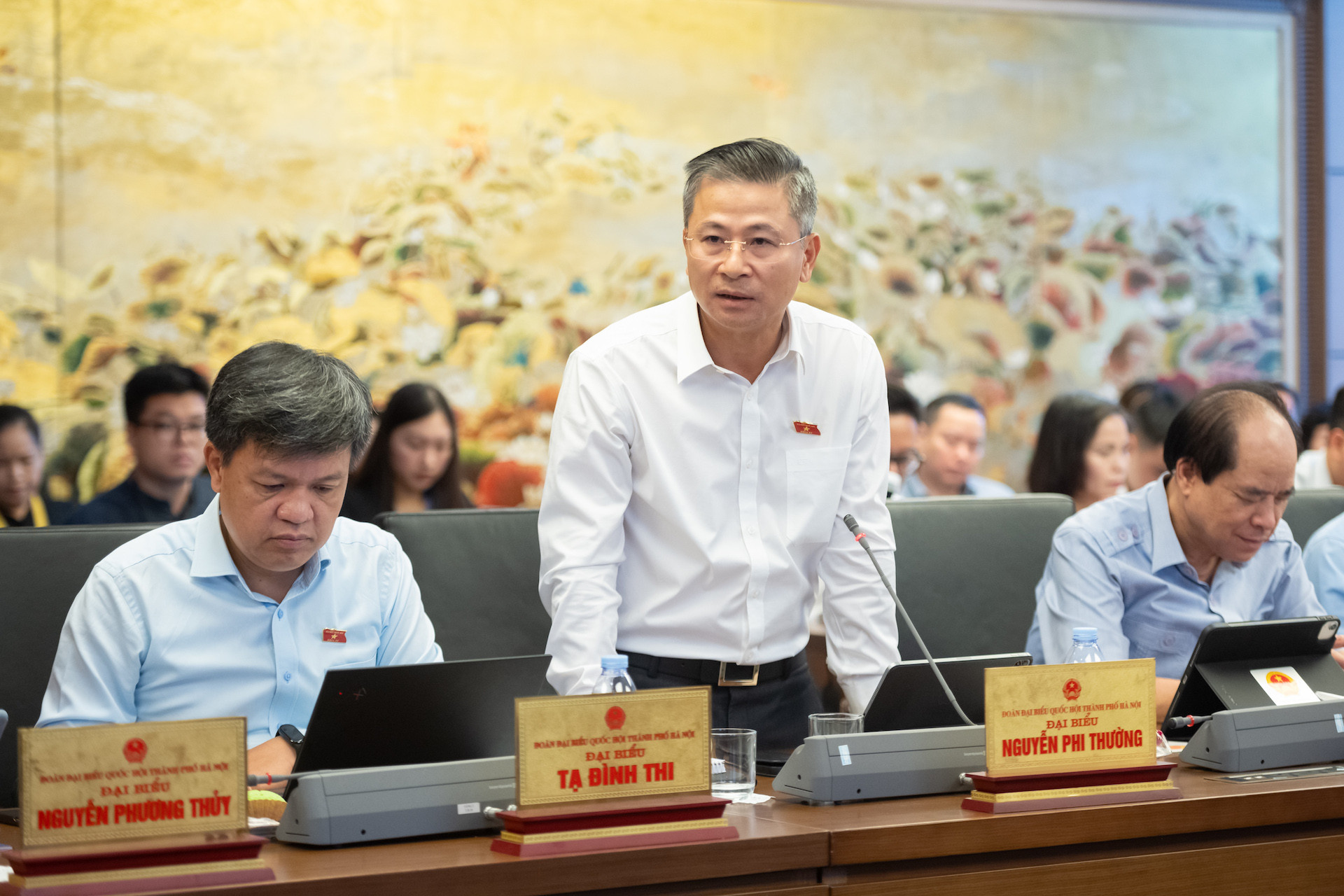
During a group discussion session on the implementation of the 2025 socio-economic development plan and the proposed 2026 development agenda, National Assembly deputy Nguyen Phi Thuong, Director of the Hanoi Department of Construction, highlighted four major concerns drawing public attention: urban flooding, pollution, traffic congestion, and living standards.
He noted that Hanoi has shown strong determination by integrating these issues into official resolutions and assigning the municipal People’s Committee to develop an urgent investment program.
“On October 20, the city’s Party Committee and People’s Committee met and approved an emergency investment list to reduce flooding risks in next year’s rainy season,” he said.
According to Thuong, Hanoi, like many other global cities, is increasingly impacted by climate change and natural disasters, resulting in severe flooding. Recent typhoons No. 10 and 11 brought rainfall levels of 500-600mm in some areas - far exceeding the capacity of the city’s drainage infrastructure.
Currently, the city’s drainage system remains incomplete. Of the total 313 km² urban area, only 77 km² within the To Lich River basin has received relatively comprehensive investment, accounting for just 25%.
The city’s primary pumping stations have a total capacity of more than 800 m³ per second, but only 165 m³ per second is currently operational, with 90 m³ per second coming from the Yen So pump station. The rest comes from auxiliary stations, representing just 20% of the total need.
As for regulating lakes, the city's plan calls for 5,400 hectares, but only 1,010 hectares - roughly 18% - have been developed so far.
Thuong stated that among the seven emergency projects, top priority is given to dredging urban rivers and lakes, especially the Nhue River.
“Hanoi plans to build 12 new regulating lakes across the city, prioritizing the left and right banks of the Nhue River to support drainage,” he said.
The city will also increase water supplementation for the To Lich River to a capacity of 5 m³ per second (above the actual demand of 3 m³ per second), to aid the Lu and Set rivers.
Besides supplying water through the Thuy Phuong canal and an underground conduit along Pham Van Dong Street (approximately 4 km), this canal system will also help drain the entire 350-hectare area of former Bac Tu Liem district.
Controlling pollution and restoring the To Lich River’s flow
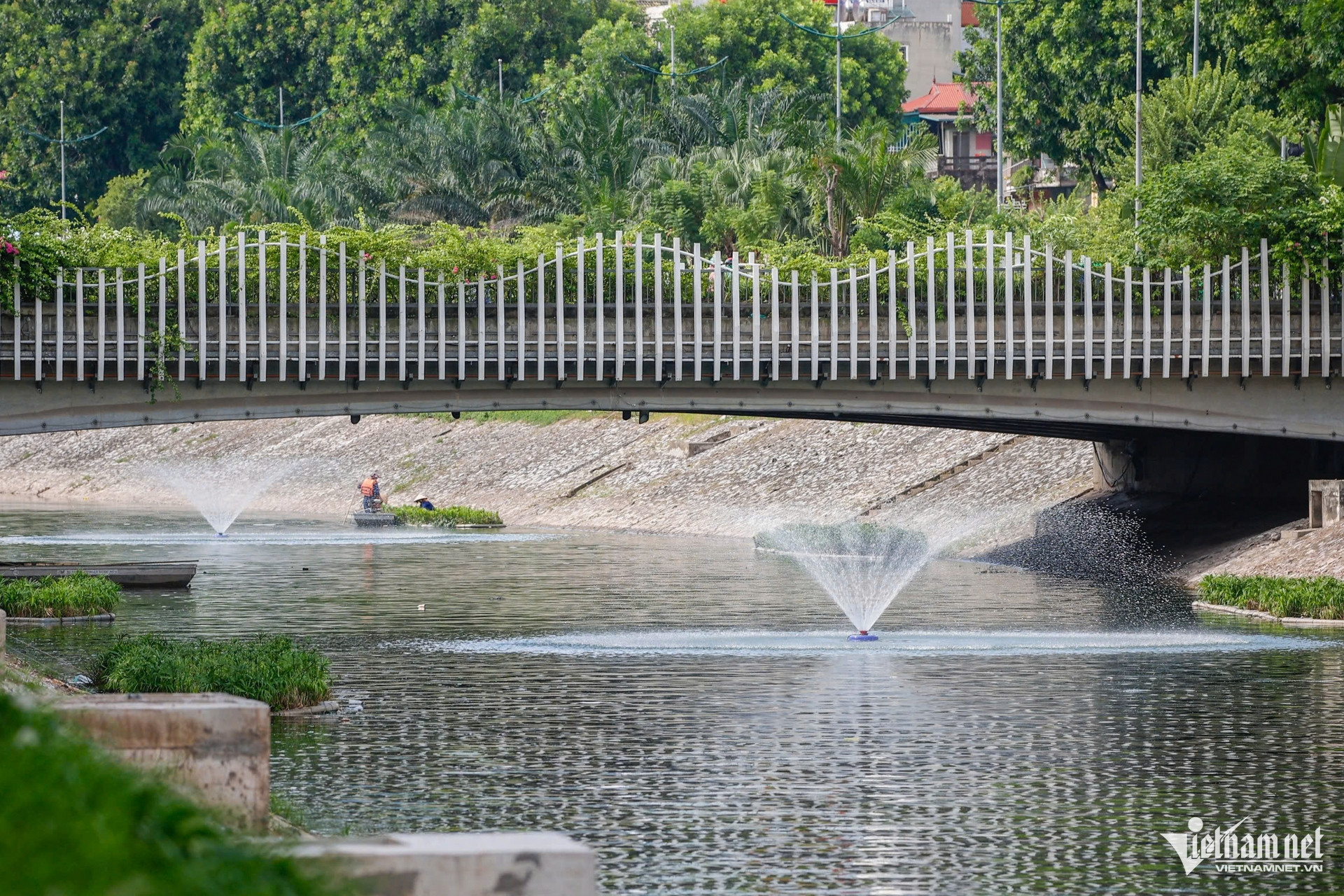
The Hanoi construction chief also revealed that along with flood prevention, the city is focusing on improving water quality in rivers and lakes. According to Nguyen Phi Thuong, Hanoi is implementing an urgent program to dredge all rivers and lakes while providing clean water to the To Lich River from the Thuy Phuong pumping station via the Thuy Phuong canal to the head of Hoang Quoc Viet Street.
“The city is also developing a water diversion system from the Da River through the Tich River to replenish the Day River and its tributaries. As a city situated among rivers, Hanoi must adopt an adaptive model,” he said.
The city will pay close attention to urban design, lake systems, underground reservoirs, and stormwater tunnels, particularly in areas where conventional solutions are not viable.
Addressing traffic congestion, Thuong noted that Hanoi currently has over 8 million vehicles, including 6.9 million motorbikes and around 1 million cars. Each year, personal vehicle ownership increases by 5-10%, while infrastructure growth lags at just 0.3%.
The current land use for transportation is 12.15%, far below the 20% standard required for developed urban areas, leading to worsening congestion.
Since the start of the year, Hanoi has launched construction on seven bridges over the Red River and one over the Duong River, along with several major arterial roads, including Urban Railway Line 2 (Nam Thang Long - Tran Hung Dao).
On December 19, the city will break ground on Urban Railway Line 05 (Van Cao - Hoa Lac), aiming to complete four new metro lines during the 2025–2030 term to improve ring road infrastructure and enhance connectivity.
Later today, Deputy Chairman of the municipal People’s Committee Duong Duc Tuan will chair a seminar on a comprehensive traffic congestion resolution proposal. Afterward, the Department of Construction and related agencies will finalize a report for review and approval by the Party Committee, People’s Committee, and Standing Committee of the City Party Committee.
“This is a major issue requiring concentrated resources, specific goals, and focused projects for rapid implementation, to improve living standards, ease infrastructure pressure, and move towards a sustainable Hanoi,” Thuong stressed.
During the group discussion, National Assembly Deputy Nguyen Anh Tri - a Hanoi resident - expressed appreciation for the city’s recent efforts and progress, but also bluntly pointed out that “in the vitality of a city, a major issue requiring focused attention is water pollution in lakes and rivers, especially the To Lich River.”
According to Tri, pollution in urban lakes has reached alarming levels.
“Most lakes emit unpleasant odors, including the expansive West Lake,” he said, adding that surface-level solutions are insufficient. He emphasized that wastewater must be treated at the source rather than allowing it to flow into lakes untreated.
Tri also proposed leveraging cooperation between the state and the public to tackle pollution.
“People with financial means can contribute - not just out of responsibility but for their own benefit of living in a clean environment,” he noted, urging the city to “intensify efforts to completely resolve water pollution.”
Thanh Hue
.svg)
