 Vietnamnet.vn

 Podcast



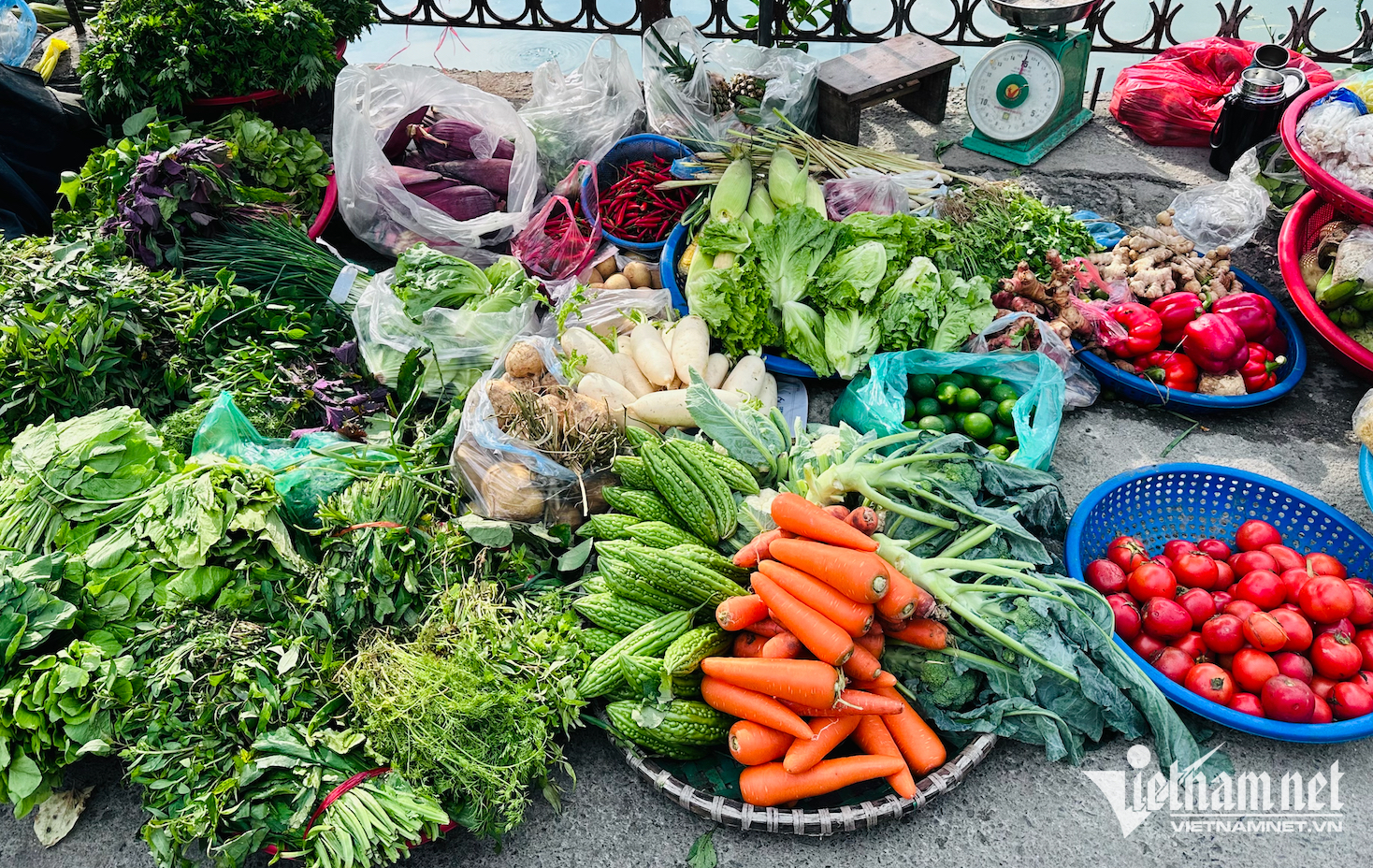
On the morning of November 17, rushing to the market before heading to work, Kieu Thi Hanh from Hai Ba Trung Ward in Hanoi bought tofu for 15,000 VND (around USD 0.60) to make a stir-fried dish. But when she got to the vegetable stall and heard that tomatoes were now priced at 70,000 VND (USD 2.80) per kilo, she reluctantly changed her dinner plan to simply fried tofu.
The family’s favorite dish - malabar spinach stir-fried with garlic - was also replaced by a soup version. A bunch of malabar spinach now costs 20,000 VND (USD 0.80), and a stir-fry would need three bunches, pushing the vegetable bill alone to 60,000 VND (USD 2.40). So she bought just one bunch for soup.
“Vegetables used to be an afterthought in the budget. I used to shop for two days' worth at once. But for the past two weeks, I’ve had to carefully calculate what greens to buy just to avoid overspending,” Hanh said. “Now we even have to ration vegetables.”
To keep prices stable for her regular dish - stuffed tofu with tomato sauce - Le Thi Trinh, who runs a home-based food business for apartment residents in Dinh Cong Ward, had to cut down on garnishes like scallions.
“Normally, I include a small bag of scallions with every order,” she explained. “But lately, not only have tomatoes tripled in price, spring onions are now 65,000 VND (USD 2.60) per kilo.”
“Tomatoes are essential for this dish. If I raise the price, I lose customers. So I’ve been absorbing the rising tomato cost myself. As for scallions, I had to quietly reduce them,” she said.
According to VietNamNet’s reporters, prices of most vegetables in Hanoi markets have skyrocketed, with many items doubling or tripling in cost. Vendors cite continuous rain and widespread flooding in key growing areas as the reason behind the supply crunch and price surge.
At Dai Tu Market in Dinh Cong, water spinach now costs 30,000 VND (USD 1.20) per bunch, mustard greens 18,000 VND (USD 0.72), amaranth and malabar spinach 20,000 VND (USD 0.80) per bunch, bok choy 50,000 VND (USD 2.00) per kilo, kohlrabi 15,000 VND (USD 0.60) each, tomatoes 70,000 VND (USD 2.80) per kilo, spring onions 65,000 VND (USD 2.60) per kilo, and winter melon and gourd both at 50,000 VND (USD 2.00) per kilo.
“Everything is so expensive now, and we have no idea when prices will return to normal,” said Binh, a vegetable vendor at the market. “This time of year usually sees lower prices because the early winter weather is ideal for growing greens. But this year, constant flooding has hit Hanoi and neighboring provinces hard, reducing output and sending prices soaring.”
“Shoppers are all hesitating and calculating what they can afford,” she added. “Some used to buy a whole kilo of tomatoes, now they’re down to just two. Others are even asking if we sell half a bunch of water spinach - it’s gotten that pricey.”
Speaking to reporters, Hoang Van Tham, Director of Chuc Son Clean Vegetables Cooperative, confirmed that the ongoing storms and floods have heavily damaged their crops.
In recent days, nighttime temperatures have dropped while daytime sun has slowed the growth of leafy greens. Some vegetables have taken a month to grow with no harvest in sight. Cabbage, for instance, is still just a cluster of small leaves after 90 days in the ground.
That, he said, is why prices have jumped so dramatically.
“Our cooperative had pre-negotiated purchase prices with partners, but due to the sudden market spike, we’ve had to raise buying prices by 70%,” Tham explained.
“Even so, we’ve had to constantly remind our members not to break their contracts and sell to outside traders,” he said. “With market prices three to four times higher, the temptation is strong. But if they sell elsewhere, we won’t have enough vegetables to meet our contracted orders.”
“We’ve signed annual supply deals with our clients. That means we must deliver the same daily volume of vegetables no matter what. The prices were locked in when we signed. So even though input costs have surged, we can’t raise our selling price. We’re losing about 300 million VND (roughly USD 12,000) every month,” Tham said.
Tam An
.svg)
