 Vietnamnet.vn

 Podcast


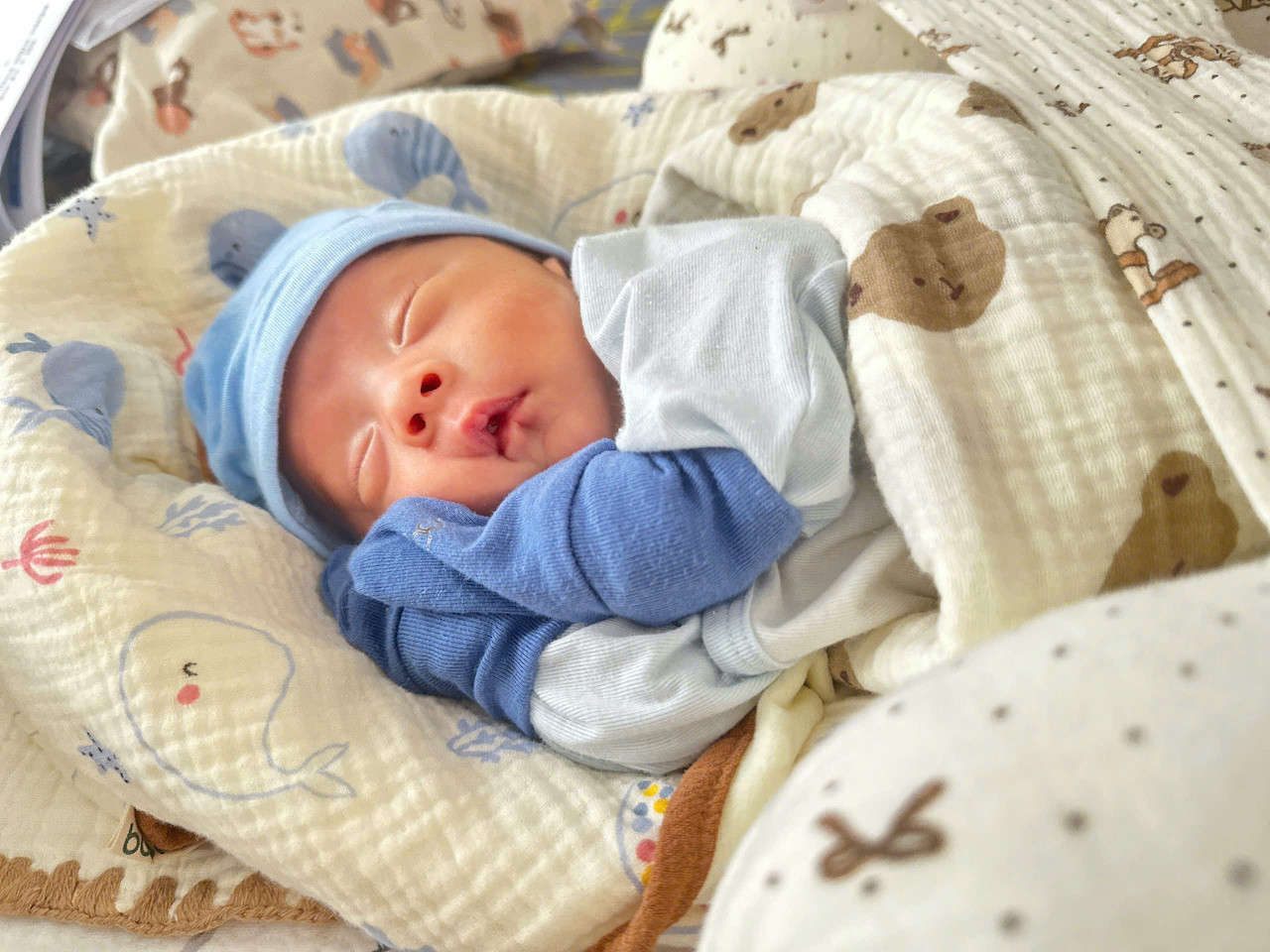
After giving birth to her first child by cesarean section, T.T. (born in 1991 and living in Hanoi) went for routine gynecological checkups and discovered a large uterine fibroid measuring more than 10cm. Doctors considered the growth a major obstacle to conception and advised her to have it surgically removed before trying to have another child.
However, before the planned medical intervention could begin, T. unexpectedly became pregnant. Faced with a delicate balance between her own safety and the tiny life developing inside her, the sacred bond between mother and child drove her to decide to continue the pregnancy at all costs. She accepted the risks of carrying both a fetus and a growing fibroid in her abdomen.
A race against time
Dr. Truong Minh Phuong, deputy head of the A4 Obstetrics Department at Hanoi Obstetrics and Gynecology Hospital, said pregnancy with a large uterine fibroid poses numerous risks to both mother and child. The most common include miscarriage in the early months, premature birth in the second half of pregnancy, restricted fetal growth, and life-threatening postpartum hemorrhage because the uterus may be damaged and unable to sustain the pregnancy to full term.
“Doctors generally prioritize surgically removing the fibroid before a woman becomes pregnant. When a patient conceives before surgery, it presents an enormous challenge for obstetrics. Some women choose to terminate the pregnancy so the fibroid can be treated, while others accept all the risks to keep their babies,” Dr. Phuong said.
In T.’s case, the fibroid continually competed for space inside the uterus, compressing the surrounding area and triggering early contractions that could threaten the fetus’s life at any time. To prolong the pregnancy as much as possible, the medical team implemented a specialized pregnancy-preservation protocol with strict monitoring.
The doctors had to adjust the treatment at every stage, from hormonal medication to high-dose drugs to suppress uterine contractions, alongside numerous supportive measures and close supervision.
Every passing week of pregnancy was a small miracle. As the baby grew, the fibroid threatened to occupy even more space, turning the mother’s abdomen into a fierce battleground.
A hard-won happy ending
When T. reached 34 weeks of pregnancy, her wat broke. Doctors assessed the case as a preterm pregnancy at 34 weeks, complicated by a previous cesarean section and a large uterine fibroid causing strong contractions. The situation carried risks of uterine rupture, uterine atony and hemorrhage, all potentially life-threatening for the mother.
An emergency operation was ordered. The team would deliver the baby by cesarean section and perform a subtotal hysterectomy during the same operation to remove the fibroid completely.
Dr. Phuong personally performed the surgery. Once the abdomen was opened, the surgical team faced numerous challenges. The amniotic fluid had been completely depleted, while the huge, rock-hard fibroid tightly encased and compressed the fetus. Every movement to maneuver the baby out required exceptional dexterity and precision to avoid injuring the newborn.
After several tense moments, the baby boy, weighing 1.8kg, was safely delivered. On September 5, his first cry rang out in the operating room, and his mother burst into tears of happiness. The team then proceeded to remove the enormous fibroid, which had expanded to fill the abdominal cavity and weighed as much as 4kg.
Dr. Phuong added that when a large uterine fibroid is detected, doctors generally advise women to have it treated before becoming pregnant to ensure a safer pregnancy.
In cases like T.’s, where pregnancy occurs before treatment, women face risks of miscarriage in the early months, premature birth later in pregnancy and postpartum hemorrhage. Not every pregnant woman can receive timely treatment or achieve an outcome as favorable as T.’s. Women planning to have children should therefore undergo comprehensive health checks beforehand to help ensure a safer pregnancy.
M. Huyen

