 Vietnamnet.vn

 Podcast



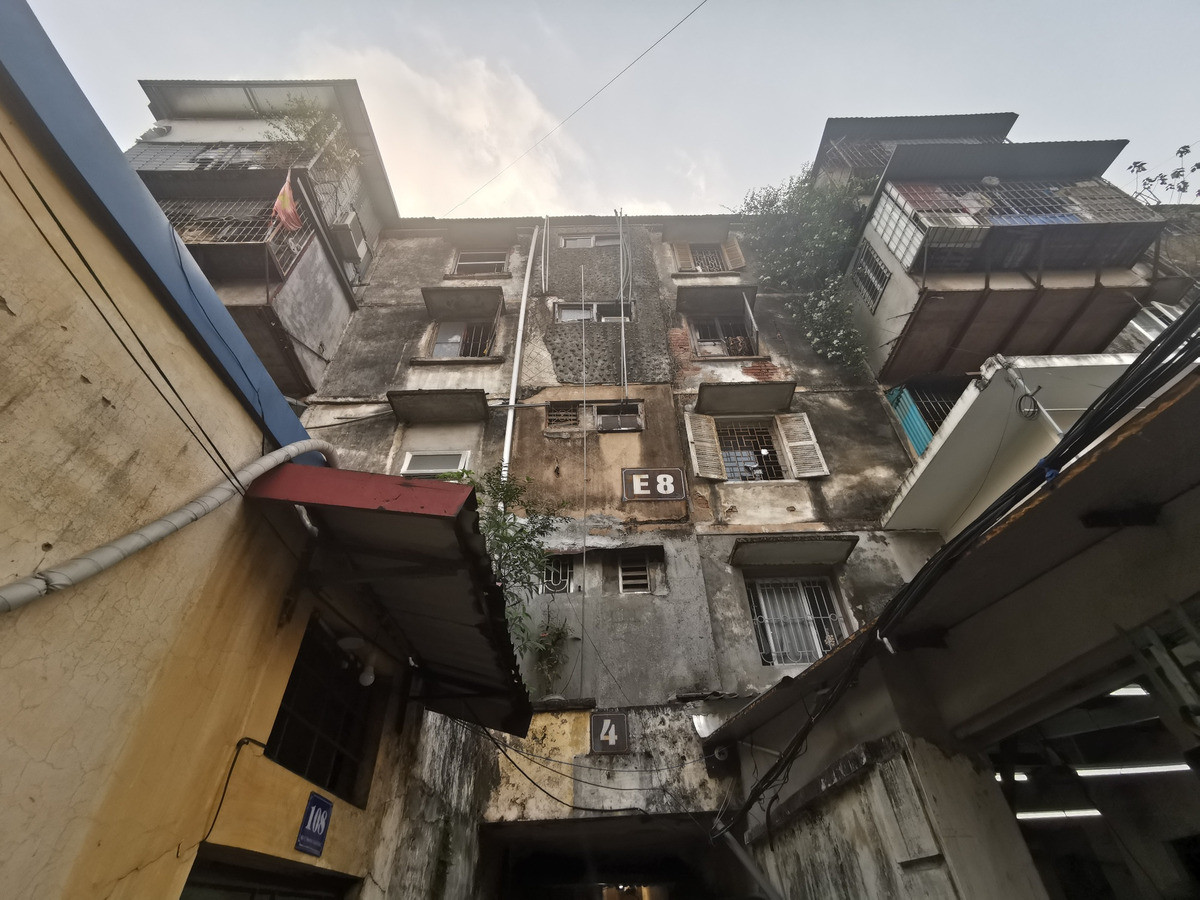
Before Lunar New Year 2026, many old collective apartments in Hanoi’s inner districts recorded a price surge, commonly ranging from VND60–80 million per sqm in areas such as Cua Nam, Dong Da, Kim Lien, and Thai Thinh. However, the market quickly reversed as many homeowners were forced to cut prices by VND300–500 million per unit, yet transactions remain limited.
Market surveys found that prices of old collective housing in Hanoi currently range from VND50–80 million per sqm in inner areas such as Dong Da, Hai Ba Trung, Ba Dinh, and Thanh Xuan. Units located in prime central areas, with advantages in position may be listed at higher prices, ranging from VND100 to VND160 million per sqm.
On Thai Thinh Street, a 70 sqm unit is being offered at around VND4.6 billion (VND65.7 million per sqm), while the Xa Dan area records about VND58.9 million per sqm for a 73 sqm unit.
Areas such as Vinh Ho and Thanh Cong fluctuate around VND68–74 million per sqm, depending on location and unit quality. Larger apartments in Phuong Mai are priced more moderately, at around VND53–55 million per sqm.
In the former Hai Ba Trung District, prices vary significantly by location. A small 21 sqm unit on Ba Trieu Street is listed at up to VND3.5 billion, equivalent to about VND166 million per sqm due to its central location, while the Hong Ha area is priced around VND70–75 million per sqm.
In Ba Dinh District, old collective housing areas such as Doi Can are priced between VND80 million and over VND100 million per sqm. Apartments sized 50–70 sqm typically have total values ranging from VND3 billion to VND7 billion.
Most collective housing complexes built before 2000 in inner districts such as Dong Da, Ba Dinh, and Hai Ba Trung have now clearly deteriorated. Outdated infrastructure, aging electrical and water systems, lack of elevators, limited parking, and fire safety systems that do not meet modern standards all result in less comfortable living conditions compared to current housing. Many units have also been illegally extended or renovated, increasing structural and safety risks.
Price cuts fail to boost sales
Quan, a broker in Dong Da, said that although many homeowners have reduced prices by several hundred million VND to sell quickly, actual buyer interest remains very limited. Buyers are now more cautious, prioritizing thorough checks of legal status, construction quality, and comparisons with alternative options before making decisions.
In many cases, negotiations last a long time as buyers continue waiting for better prices instead of making quick decisions as seen at the end of last year.
The current buyer pool for old collective apartments mainly consists of people with average income, typically young families or long-time workers in inner districts. This group is willing to accept older housing in exchange for convenient locations, proximity to workplaces, and infrastructure amid rising prices of new apartments.
There are also small-scale investors seeking reasonably priced units with clear legal status to renovate for rental or resale profit. However, this group has shrunk significantly due to declining profit margins and weak liquidity.
According to Quan, the characteristics of these buyer groups make transactions more difficult. End-users are cautious, investors tend to push for deep discounts, and those seeking rare well-located positions are highly selective. This leads to a situation where many units remain unsold despite price cuts, transactions are prolonged, and overall market liquidity stays low.
To sell quickly, Quan believes homeowners need to offer reasonable prices. Buyers often bid low and prolong negotiations; supporting part of the ownership transfer costs or interior costs can help close transactions faster.
Furthermore, homeowners need to improve the current state of the apartment to a reasonable degree. A large investment may not be necessary, but painting, cleaning, and handling problems (electricity, water, waterproofing) will help the house sell more easily, especially to the buyers who will live there.
Hong Khanh
.svg)
