 Vietnamnet.vn

 Podcast



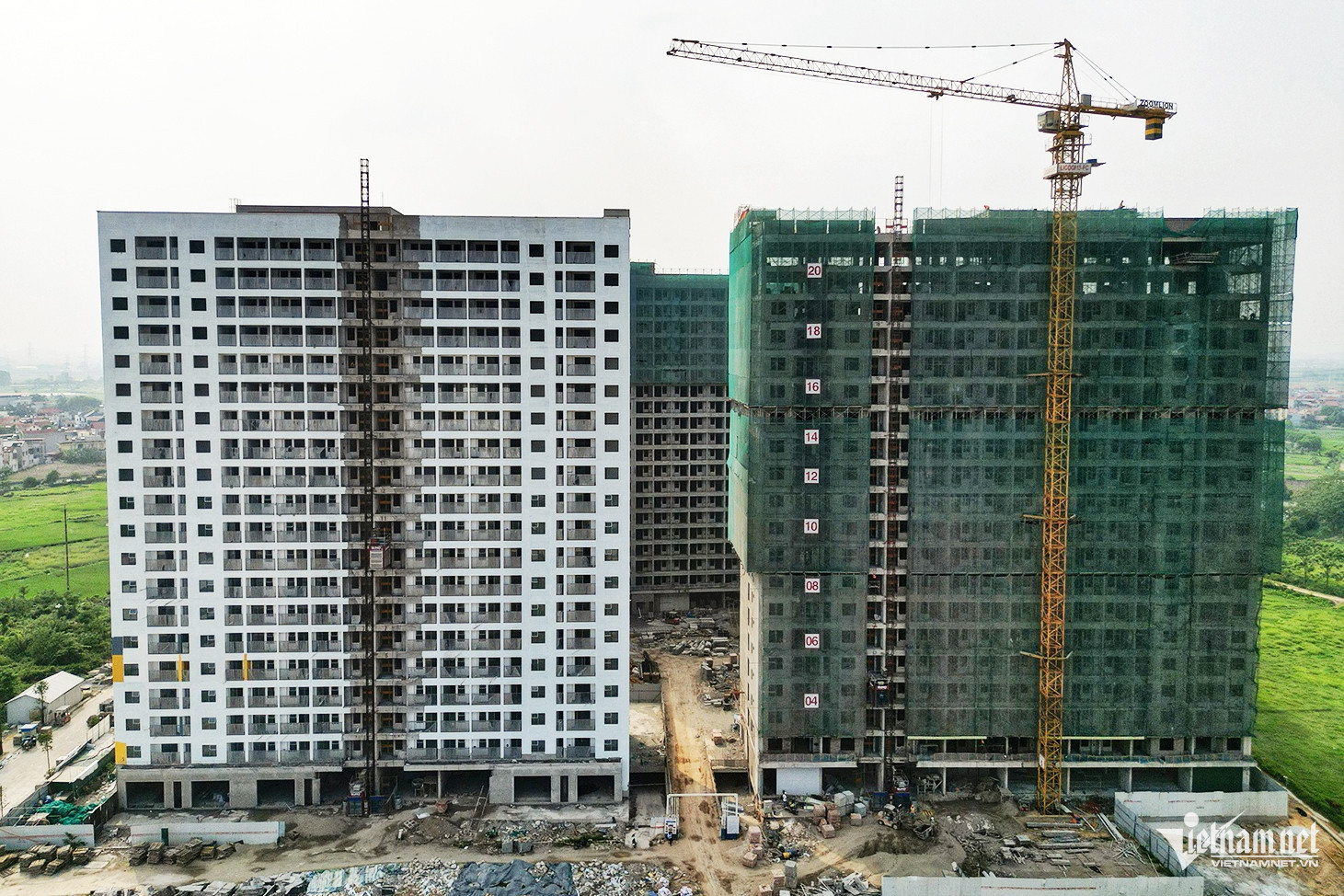
Hanoi is seeking public feedback on a draft regulation governing the establishment, management and operation of a social housing fund. Under the proposal, a wide range of beneficiaries could be eligible for housing support, including civil servants, low-income residents, workers, experts and scientists facing housing difficulties.
The draft decision, prepared by the Hanoi People's Committee, is intended to implement the Capital Law 2026 and establish a city-managed social housing fund that supports social welfare objectives and the long-term development of the capital.
Under the proposal, the fund would be built from multiple sources, including housing projects financed by the city budget, purchases of commercial or social housing units, transfers of housing stock, conversions of public properties, donations and long-term housing leases from organizations and individuals.
The initiative is viewed as a significant step as Hanoi accelerates the development of social housing and rental housing while seeking mechanisms to create a large-scale housing stock capable of meeting growing demand from urban residents. The city plans to break ground on 41 social housing projects in 2026, delivering more than 27,000 apartments.
Broad eligibility for housing support
One notable feature of the proposal is the wide range of groups that could qualify for housing allocation.
In addition to low-income urban residents, eligible groups include workers and employees in industrial parks, export processing zones and high-tech parks; civil servants and public employees; experts, scientists, artists, intellectuals and highly skilled professionals. Individuals whose land has been acquired and who require temporary resettlement, as well as people affected by natural disasters, fires or other force majeure events, would also be considered for housing support.
According to the draft regulation, applicants must demonstrate a genuine housing need and must not own a home in Hanoi. Those who do own housing may still qualify if their average living space per person falls below the minimum threshold set by the city. Applicants would also be prohibited from receiving overlapping housing support under multiple government schemes.
Subleasing could lead to eviction
A key area of public interest is the approval process.
The proposal requires housing allocation to be conducted transparently, objectively and in accordance with eligibility criteria and priority rankings. Lists of approved beneficiaries, evaluation criteria, allocation methods and occupancy periods would all be publicly disclosed.
Each eligible individual would be entitled to only one housing allocation under the same support policy unless otherwise provided by law.
The social housing fund would primarily be used for rental housing, temporary accommodation and special-purpose assignments determined by the city. Occupants would be required to sign rental contracts or receive formal housing allocation decisions from competent authorities.
Rental rates would be set by the Hanoi People's Committee and reviewed at least once every three years, or sooner if management and operating costs fluctuate significantly. In cases where policy beneficiaries are unable to afford rental payments, the city may provide support in accordance with existing regulations.
The draft also outlines conditions under which housing units could be reclaimed in order to prevent misuse.
Housing would be withdrawn if occupants no longer met eligibility requirements, subleased or lent out units, transferred occupancy rights unlawfully, left units vacant for more than six consecutive months without valid reasons, accumulated more than three months of unpaid rent, or provided inaccurate information in their applications.
Digital management and talent attraction
Notably, Hanoi plans to manage the entire social housing fund through a unified electronic data platform.
The system would store information on housing inventory, legal records, occupancy status, tenants, rental contracts, revenues and expenditures, maintenance activities and violations.
The proposal also signals a new direction in Hanoi's approach to housing policy by using it as a tool to attract highly qualified talent. The city plans to reserve dedicated housing stock for experts, scientists, intellectuals and highly skilled professionals while prioritizing cleared land for the development of such projects.
In recent years, Hanoi has continuously advanced policies promoting social housing and rental housing in line with the Capital Law 2026. City leaders have repeatedly emphasized the need to shift from a homeownership-focused mindset toward expanding rental housing and building large-scale housing funds capable of meeting genuine housing demand, particularly among low-income residents, workers and urban laborers.
Thanh Hue
.svg)
