 Vietnamnet.vn

 Podcast



Hanoi police said on August 22 that they had broken up the alleged illegal cross-border currency transfer operation, which involved transactions totaling more than $51 million.
According to investigators, foreign nationals allegedly worked with people in Vietnam to establish a network of shell companies in Vietnam, Hong Kong (China) and Singapore to conceal and legitimize the movement of funds.
The group allegedly collected money from individuals and businesses seeking to transfer funds illegally either out of Vietnam or into the country.
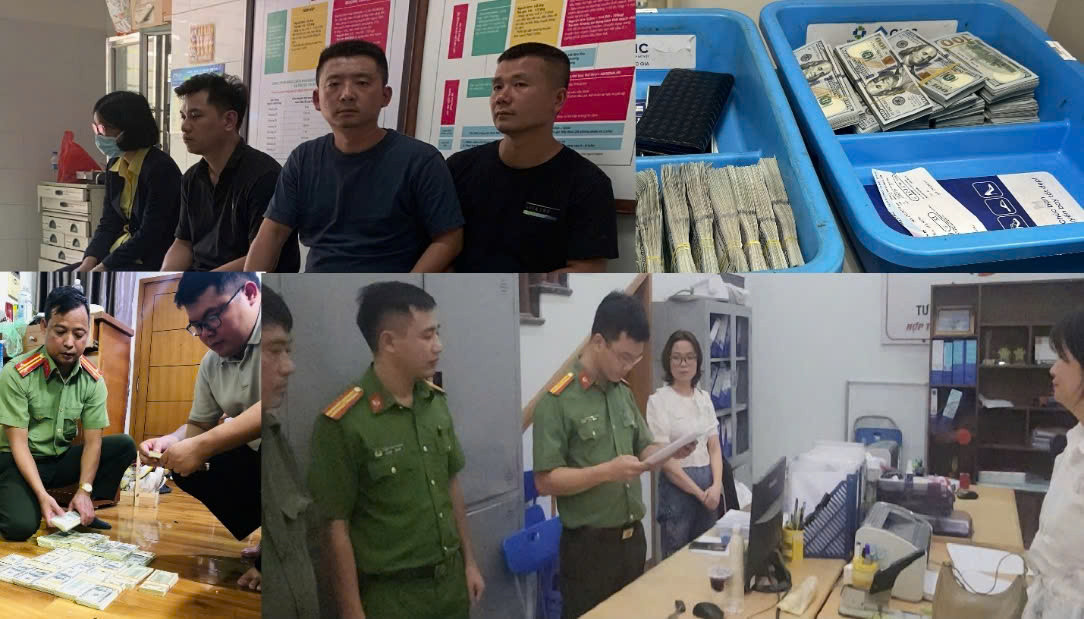
The money was divided into smaller amounts, typically less than VND500 million (about $19,000) per transaction, and transferred through multiple personal bank accounts. It was then withdrawn in cash and deposited into accounts belonging to the shell companies.
Investigators said the group subsequently created fraudulent foreign trade documentation for transactions involving chip resistors, small electronic components whose value can be difficult to determine.
Contract values were allegedly inflated to unusually high levels, while documentation lacked technical specifications and information on the origin of the goods. The contracts also allowed deferred payments of up to 12 months.
Taking advantage of gaps in bank appraisal procedures and customs clearance mechanisms, the group allegedly used UPAS L/C, or usance payable at sight letters of credit, and telegraphic transfers (T/T) to send foreign currency overseas under the guise of payments for goods temporarily imported for re-export.
After transferring the money abroad, the suspects either failed to carry out the re-export transactions or conducted only a very limited number of them, according to investigators.
Police allege that the commercial transactions effectively served as a cover for an illegal cross-border money transfer operation involving more than $51 million.
Tien Dung
.svg)
