 Vietnamnet.vn

 Podcast



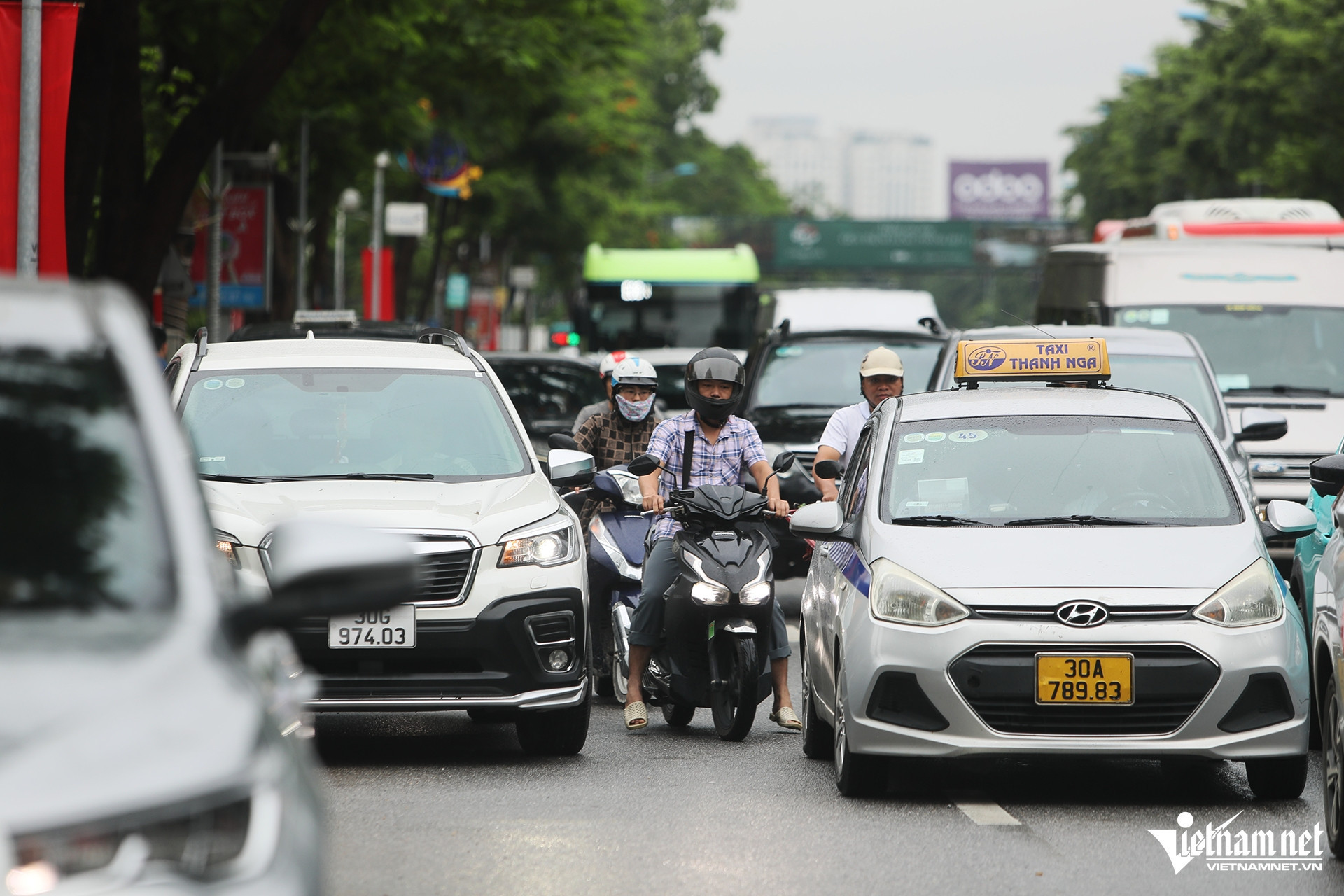
Hanoi residents will receive financial support when purchasing electric motorbikes. Photo: Dinh Hieu
The proposal is included in a draft resolution released by the Hanoi People’s Committee on policies supporting the transition from fossil fuel-powered road vehicles to clean energy transportation, alongside a roadmap to gradually limit polluting vehicles.
One notable aspect of the proposal is that it combines vehicle subsidies with broader measures involving charging infrastructure, fee incentives and future restrictions on gasoline-powered transport.
Full support for low-income households
Under the draft, residents who have permanent registration or at least two consecutive years of temporary residence in Hanoi, and who own gasoline-powered motorbikes registered before the resolution takes effect, would be eligible for support when purchasing electric motorbikes priced at VND10 million ($385) or more.
Each individual would only be eligible for support for one vehicle and could choose between two support options.
Under the direct cash support option, the city would subsidize 20% of the value of an electric motorbike, capped at VND5 million ($190) per vehicle.
Poor households would receive support covering 100% of the vehicle price, capped at VND20 million ($770), while near-poor households would receive 80% support, capped at VND15 million ($580).
Residents declining cash support could instead choose public transport vouchers worth VND5 million ($190).
In addition to vehicle replacement incentives, Hanoi also plans to subsidize 50% of registration and license plate fees for electric motorbikes.
Poor and near-poor households would receive a full exemption from these fees.
The draft also proposes free public transport for war veterans, people with disabilities, senior citizens, students, industrial park workers and poor households.
All passengers would also receive free rides on public transport during major holidays, Tet and special city events.
Mandatory transition roadmap for transport businesses
Beyond individual residents, Hanoi is also introducing mandatory transition targets for commercial transport operators.
Ride-hailing motorbike services would be required to ensure green vehicles account for 20% of their fleets before January 1, 2027, 50% before 2028 and 100% before 2030.
Taxi operators and commercial passenger vehicles with fewer than nine seats would also need to achieve 50% green vehicles before 2028 and full conversion before 2030.
Starting July 1, 2026, all newly purchased or replacement taxis and contracted passenger vehicles with fewer than nine seats would be required to use clean energy.
Unlike previous policies that mainly encouraged voluntary adoption, the new draft establishes mandatory conversion timelines for commercial transport groups, which operate frequently and generate high levels of urban emissions.
Gradual restrictions on private gasoline vehicles
Another major element of the proposal is Hanoi’s plan to begin restricting certain categories of private vehicles from January 1, 2035.
The city government would have authority to impose restrictions based on roads, traffic lanes, operating hours and specific urban zones.
The draft states that at least 12 months before any restriction phase takes effect, Hanoi authorities must publicly announce the affected areas, timelines and alternative transport plans for residents.
The proposal suggests Hanoi is preparing for a future urban transport model similar to those adopted in major global cities, where private vehicle access is controlled to reduce congestion and emissions.
At the same time, the city also plans to adjust parking service fees for gasoline-powered vehicles.
Charging infrastructure targets
The draft sets specific goals for electric charging infrastructure development.
Before 2030, at least 15% of parking spaces in existing parking lots, apartment complexes, shopping centers, hospitals and public buildings within Ring Road 3 must be equipped with public charging stations.
For newly developed projects, the minimum ratio would rise to 30%.
The city also plans to allow parts of public land, transport land and green space areas to be used for charging infrastructure and non-motorized transport systems.
Public charging station projects would receive support covering 30% of loan interest payments for up to five years, along with full land rental exemptions during the first five years and simplified investment procedures.
According to a transportation expert cited in the proposal, Hanoi’s broader goal is not simply replacing gasoline vehicles with electric ones.
The deeper objective is to restructure the city’s transport system by reducing private vehicle use, expanding public transport and controlling emissions in densely populated urban areas.
The proposal to let residents exchange cash subsidies for public transport vouchers, alongside expanded fare exemptions and incentives for non-motorized transportation, indicates the city is aiming to change travel behavior - not just fuel types.
Thanh Hue
.svg)
