 Vietnamnet.vn

 Podcast



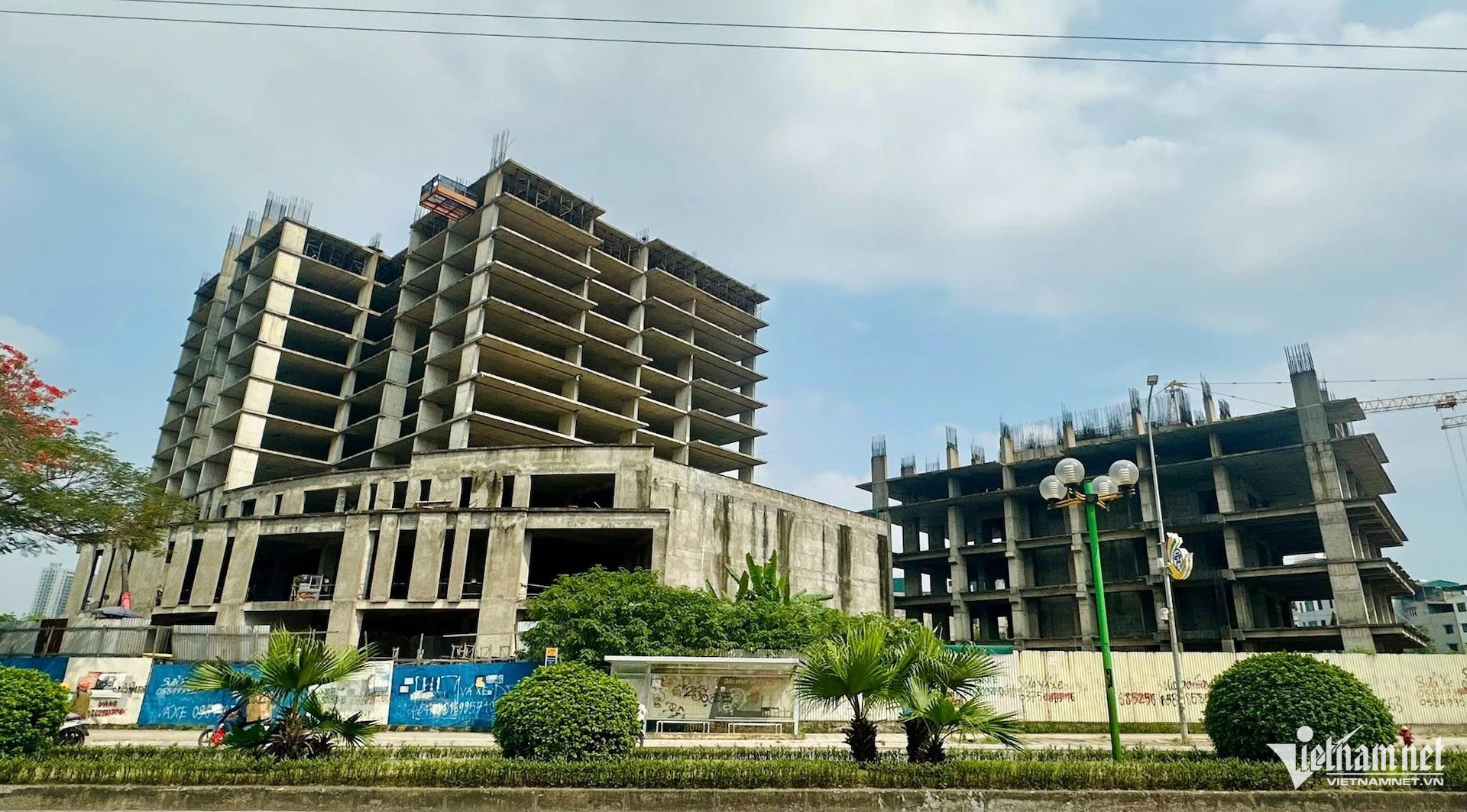
While the economy seeks double-digit growth, a number of prime land plots, delayed projects, and unfinished constructions nationwide continue to sit idle, wasting enormous resources. Many land areas have been allocated for years but remain unused, creating no jobs and contributing nothing to economic growth or the state budget.
While businesses need capital and localities need new growth drivers, unlocking land resources has become increasingly urgent. This requires a comprehensive review, removal of legal bottlenecks, action against prolonged land hoarding, and the revival of stalled projects.
It is necessary to “awaken” trillion-dong resources, address land waste, forgotten projects, and create solutions to revive dormant resources in order to create more space for economic growth.
Hanoi People’s Committee has just issued Notice 396 regarding the review and final handling of 341 non-budget projects using land that have been delayed across the city.
Under the direction of the chair of the Hanoi People’s Committee, investors must urgently prepare and submit written reports on project implementation status.
For cases where reports are not submitted, submitted late, or fail to meet requirements and do not clearly demonstrate implementation capacity and commitment, the city will consider measures such as project withdrawal or suspension.
Reports must clearly state the actual progress of projects, including investment, construction, site clearance, and fulfillment of financial obligations, as well as the legal status already completed and outstanding obstacles.
In particular, the city requires investors to clearly identify both real and assumed causes behind project delays. At the same time, they must assess their implementation capacity, from financial capability and capital mobilization to project execution.
In addition, enterprises must clarify responsibility for project delays and propose handling measures together with specific and feasible implementation commitments.
Hanoi is conducting a comprehensive campaign to review the projects using land that have been delayed. “Hotspots” are clearly visible both in suburban areas and in the urban core.
Statistics by localities before administrative boundary adjustments showed that Me Linh tops the list with 42 projects, becoming the “capital” of delayed projects. Me Linh is not considered a “golden land” area, but it represents a typical consequence of the real estate investment wave after Me Linh was merged with Hanoi in 2008.
In that year, after the merger, numerous real estate companies flocked into the area with projects of all sizes. But when the market turned downward, weaknesses became apparent as legal problems and financial limitations of investors emerged, leaving many projects unfinished.
The review list names of pending projects in Me Linh, including CEO Me Linh Urban Area, AIC Urban Area, Cienco 5 Urban Area, Rose Valley, Vinalines Urban Area, and the Minh Giang - Dam Va residential area.
Not only Me Linh, but other districts under the former administrative boundaries such as Nam Tu Liem, Cau Giay, Long Bien, and Ha Dong have dozens of delayed projects.
In Cau Giay, considered an area where “an inch of land is an inch of gold,” stalled projects are also widespread. Delayed projects there are mainly commercial-service land plots, office buildings, and mixed-use complexes located at prime locations but left suspended for many years.
These include the parking complex, medical clinic, public service, and commercial center project of Handico - Thuy Duong Trading and Services JSC, as well as the commercial-service and Vietcombank’s office building project.
One typical example of the consequences of selecting investors without sufficient financial capacity is the Van Khe Urban Area Expansion project (Usilk City).
After more than 16 years, only several buildings have been completed and handed over. Many other towers remain unfinished, with rusting concrete and steel structures abandoned for more than a decade.
The Government Inspectorate stated that the former Ha Tay provincial People’s Committee assigned Song Da Thang Long JSC to develop the project though the company did not meet financial capability requirements under regulations.
During implementation, the company mobilized VND8,456 billion but used more than VND5,300 billion for other projects and purposes. As a result, the project lacked capital, construction was delayed, and more than 750 apartments have yet to be handed over, leading to prolonged complaints from customers and causing major waste.
Hong Khanh
.svg)
