 Vietnamnet.vn

 Podcast



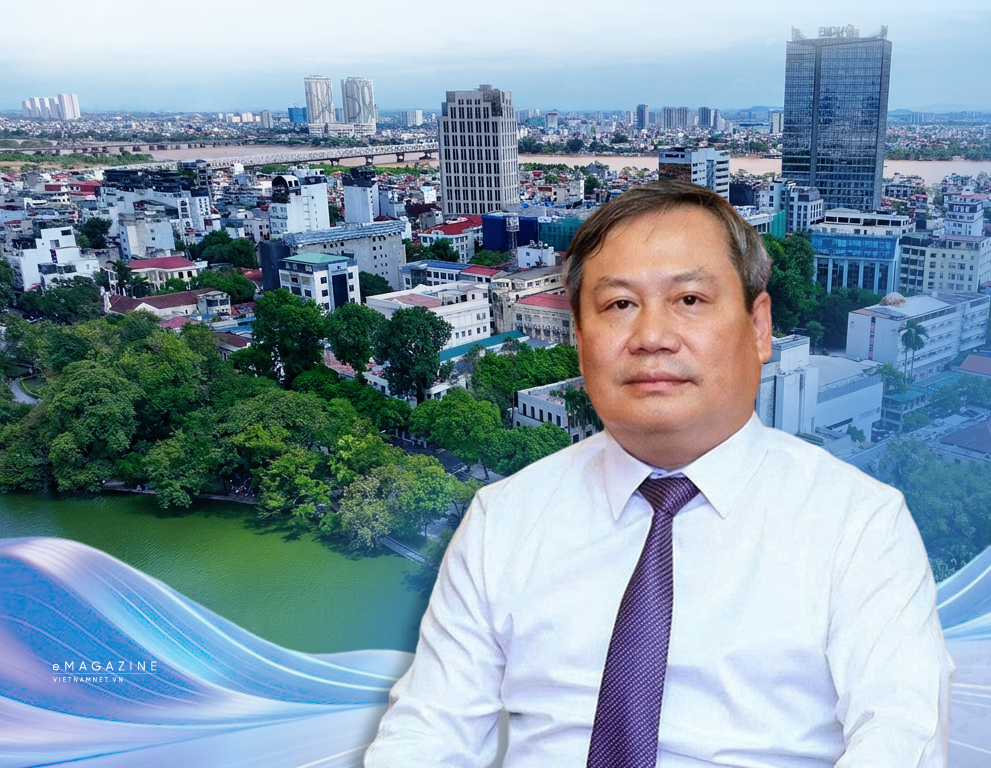
Hanoi is implementing many major projects to transform the capital’s landscape. As the head of the city’s administration, what concerns you most?
My greatest concern at present is how to mobilize and use all available resources as effectively as possible, particularly for strategic infrastructure, so that the capital can develop faster and more sustainably.
Under the capital’s master plan with a 100-year vision, the investment needs for urban railway networks and key transport projects are enormous. These are crucial to fundamentally addressing traffic problems while creating momentum for new urban development under the transit-oriented development (TOD) model.
I am also concerned about how to put existing resources to work more quickly and effectively. Public investment, land, credit and foreign direct investment (FDI) must be converted into actual construction, productive capacity and added value in the final months of the year so that we can achieve our growth target of at least 11 percent.
Hanoi’s landscape is clearly changing rapidly as a series of transport and other key infrastructure projects move forward. What resources is the city relying on to implement large-scale infrastructure projects simultaneously?
Recently, several of Hanoi’s transport projects have made positive progress, particularly in site clearance. Alongside the direction of the municipal Party Committee, People’s Council and People’s Committee, as well as the involvement of local authorities at all levels, public support has played a crucial role. New mechanisms and policies on site clearance have helped build consensus and accelerate project implementation.
Ring Road 1 was opened for technical traffic on September 2. Work is also being accelerated on regulating lakes and numerous projects, including the Nguyen Trai–Dam Hong section of Ring Road 2.5, Tran Hung Dao Bridge, Tu Lien Bridge, the upgrade of National Highway 6 from Ba La to Xuan Mai, and the road linking Gia Binh Airport with the capital.
In the coming period, Hanoi will launch multiple large-scale projects simultaneously, including urban and national railway lines, ring roads, complete bridges across the Red River and develop the West Thang Long arterial road in line with the approved plan. All these projects require substantial investment.
To ensure adequate funding, the city has adopted an approach that diversifies and mobilizes different sources of resources in a coordinated manner.
First, the state budget is being allocated with clear priorities. The 2026 public investment plan, worth VND171 trillion, is being managed flexibly, prioritizing projects with strong spillover effects and the capacity to be implemented and absorb capital effectively.
At the same time, the city is making extensive use of the special mechanisms under the 2026 Capital Law, particularly those concerning finance, land and investment. Plans to issue capital city bonds, project bonds, green bonds and other new financial instruments are being studied and implemented to mobilize large amounts of capital.
Another important resource is land, linked to TOD model. The city considers the increase in land values around urban railway stations a strategic resource for the next stage of development.
Hanoi is also focusing on mobilizing social resources, private investment and FDI. The city is working to resolve obstacles so that projects can move from preparation to actual implementation, turning land, capital and credit into productive capacity and added value.
Residents are paying close attention to the Red River Scenic Boulevard project and the proposed partial adjustment of the planning for Hoan Kiem Lake and its surrounding area. What is the city leadership’s viewpoint on implementing these two projects?
The Red River urban zoning plan has been identified as one of the capital’s nine development drivers. It is a strategic corridor and central green-space axis, as well as an economic, commercial, service and urban development corridor linked to creative culture, science and technology along both banks of the Red River.
The city requires that research and implementation be carried out cautiously and systematically, based on scientific calculations and in compliance with the law. Flood drainage and dike safety must be ensured, while striking a balance between modern urban development, heritage and cultural preservation, and the improvement of long-established villages and residential areas.
In particular, resettlement and compensation for site clearance must comply with the highest level of support provided for under the Capital Law. Residents will be resettled either in place or near their current homes, with synchronized social and technical infrastructure. Temporary accommodation will not be arranged. Resettlement areas must be built with complete infrastructure before site clearance begins.
Thanh Hue
.svg)
