 Vietnamnet.vn

 Podcast



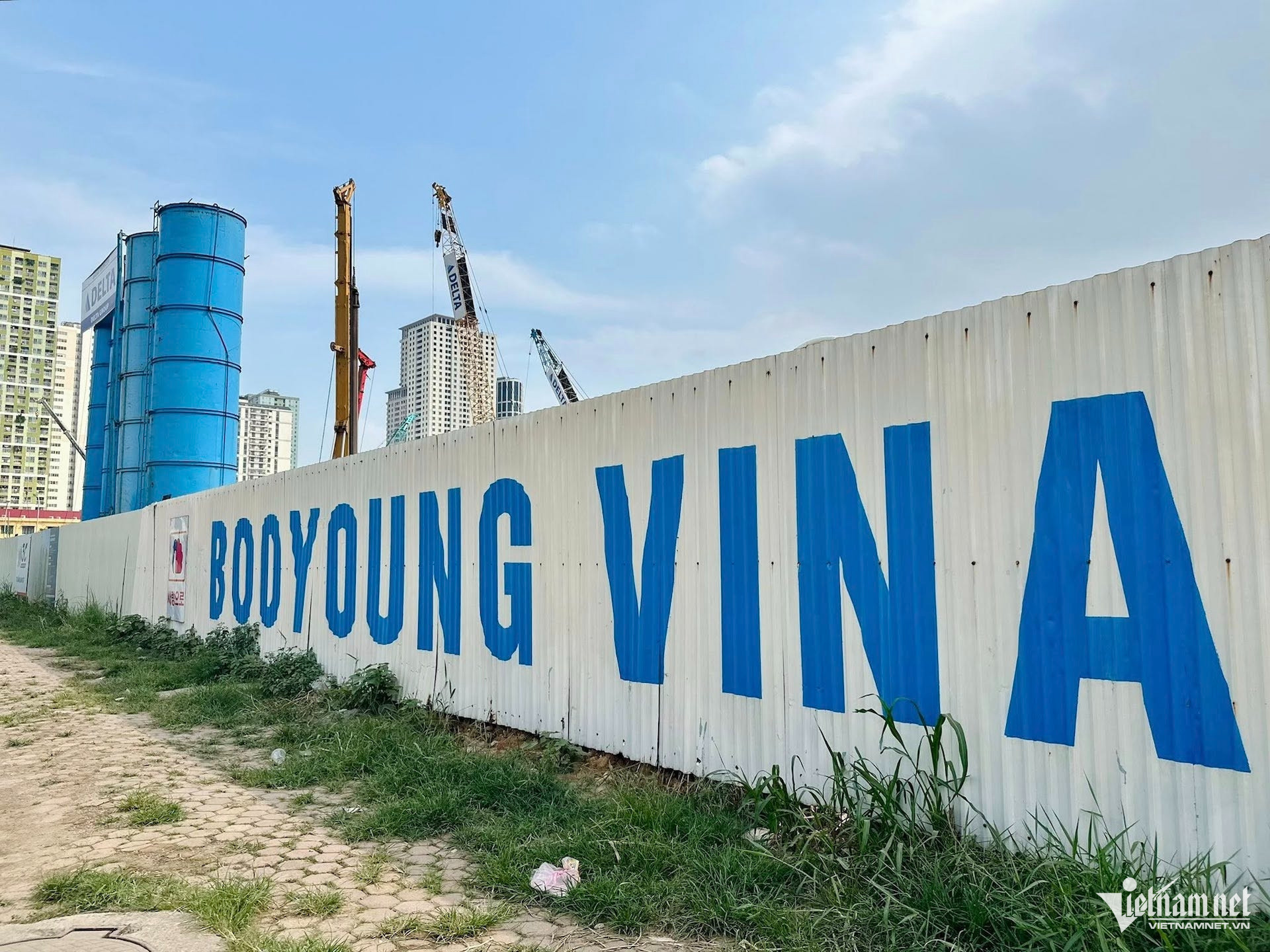
The Housing and Urban Development Corporation (HUD) under the Ministry of Construction has projects identified on a list, including Thanh Lam - Dai Thinh 2 New Urban Area in Me Linh, Southwest Linh Dam Lake New Urban Area in Thanh Tri, Phap Van - Tu Hiep Urban Area in Hoang Mai, Van Canh New Urban Area in Hoai Duc, and land plots in My Dinh II Urban Area.
Geleximco also has several projects on the list, including the Co Nhue canal project combined with a parking lot and low-rise residential area in Bac Tu Liem; the urban area project along both sides of Le Trong Tan Street in Ha Dong; and Zone A of the urban area along both sides of Le Trong Tan Street in Hoai Duc.
Several major banks also have delayed projects. Vietcombank was mentioned with its commercial-service and office building project in Cau Giay. The more than 5,000s qm land plot, located at a highly valuable three-frontage position, was auctioned in 2008 for VND265 billion.
Although financial obligations were fulfilled and the land-use right certificate had been granted, the project has yet to be implemented.
In its 2025 financial report, the bank recorded an incurred construction-in-progress cost of over VND22 billion on the project.
VietinBank was also named for its Bac Thang Long branch headquarters project. Commencing in 2010 with a total investment capital of over VND10 trillion, the project was expected to become a modern multi-functional complex. However, after about 16 years, the work is still incomplete.
At the 2026 Annual General Meeting of Shareholders recently held, VietinBank General Director Nguyen Tran Manh Trung stated that the bank and its partners are striving to complete the transfer of the tower in the first half of this year. Both parties are in the stage of finalizing the last legal procedures.
Another name is the Commercial Transaction Center, offices, and high-rise apartments at No 32, Alley 298 Ngoc Lam Street, Ngoc Lam Ward in the former Long Bien District.
Another case is the Vietnam Development Bank (VDB), with the project for a Staff Training and Development Center, offices, and official residences at plot A/D18 of the Cau Giay New Urban Area.
So, there are two parts in the same picture: the first is incapable enterprises with unfinished projects, and the second is large corporations/banks with frozen projects. But both lead to one consequence: the waste of land resources.
Suspended land, homeless people
Lawyer Truong Anh Tu, chair of TAT Law Firm, said that while land funds are abandoned, people lack housing, especially affordable housing.
“Resources exist but do not flow to where they are needed,” Tu said. “The food is hanging, yet the cat still starves.”
According to Tu, the root cause lies in how land allocation decisions and project approvals are designed and controlled. Many decisions are not strong enough to withstand re-evaluation under new circumstances.
A project is a long-term commitment between the State, the enterprise, and the market. But in many cases, three core elements are broken: the authority to decide, the obligation to implement, and final responsibility.
Decisions may be approved collectively and implemented by enterprises, but when projects stall, responsibility becomes fragmented. As a result, the management mechanism can become overloaded with procedures while lacking effective substantive oversight.
The consequence of these shortcomings is that land funds remain “frozen” for long periods, while demand for housing, especially reasonably priced housing in Hanoi, remains very high.
Tu emphasized the need to shift from the mindset of “handling delayed projects” to “redesigning decisions from the beginning.”
First, investor capacity must be screened more substantively. Next, an enforceable progress-binding mechanism needs to be established. Extensions cannot merely be procedural formalities but must come with sufficiently high costs to eliminate the incentive of “holding land while waiting for prices to rise.”
Most importantly, responsibility must be clearly defined. A decision may pass through multiple advisory levels, but there must be one party ultimately accountable for explanations. When responsibility is individualized, decision quality will improve.
The lawyer said the review of 341 projects in Hanoi is a positive sign, demonstrating determination to clean up the investment environment and use land resources more effectively.
“The issue is not that Hanoi lacks land, but whether land resources are being used effectively. If land allocation and project supervision mechanisms do not change, suspended projects are likely to continue recurring.”
“Land does not become abandoned by itself. It is abandoned only when decisions regarding it are no longer fully supervised,” lawyer Truong Anh Tu concluded.
Hong Khanh
.svg)
