 Vietnamnet.vn

 Podcast



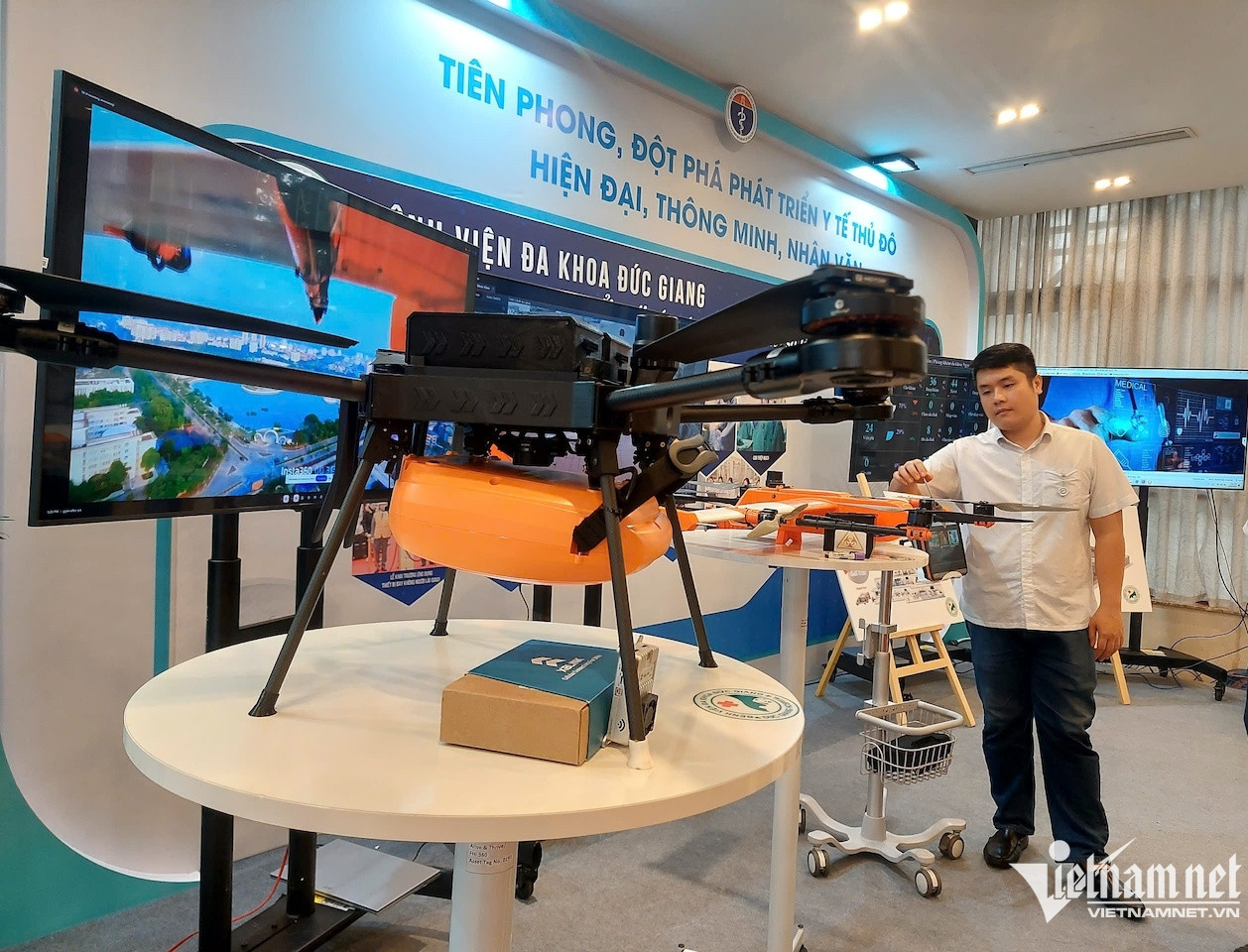
The Hanoi Department of Health recently held a meeting with medical staff to mark Vietnamese Doctors’ Day on February 27, alongside an exhibition showcasing achievements and smart healthcare applications.
Nguyen Trong Dien, Director of the Hanoi Department of Health, said that in 2026 the sector will implement Politburo Resolution No. 72 on breakthrough solutions to strengthen the protection, care and improvement of public health.
In the context of the Capital Master Plan with a 100-year vision and the amended Law on the Capital, the health sector will restructure its system toward sustainability, establishing a strategic healthcare network of core hospitals, satellite facilities and modern commune and ward health stations.
At the exhibition, the 4.0 Health Station model introduced by Duc Giang General Hospital drew strong professional interest for its digital integration and seamless connectivity between the hospital and grassroots healthcare facilities.
Speaking to VietNamNet, Associate Professor Do Dinh Tung, Director of Duc Giang General Hospital, said the goal of the 4.0 Health Station is to bring high-quality medical services closer to residents, enabling patients to receive examination and treatment at the grassroots level with specialist support from higher-tier hospitals.
A key feature of the model is the full digitalization of medical procedures. Health stations are connected for remote consultations with hospital doctors, creating a professional mentorship mechanism. As a result, many complex cases can be diagnosed and treated locally without referral. With upgraded equipment and professional backing, the 4.0 Health Station can provide services such as ultrasound, laboratory testing and endoscopy that were previously available only at upper-level hospitals.
Notably, as an integral component of the 4.0 Health Station model, the hospital has piloted the use of UAVs to transport medicines and biological samples, becoming the first hospital in Vietnam to implement the application.
Previously, transferring test samples or emergency drugs between the hospital and local health stations relied mainly on road transport. In a densely populated city like Hanoi, travel time could range from 15 to 30 minutes, or longer during rush hour.
By contrast, UAVs can reduce delivery time to 5-10 minutes by flying directly and avoiding traffic congestion.
Beyond speed, UAVs enhance emergency responsiveness, shorten laboratory turnaround times, increase preparedness in disasters or epidemics, and ease pressure on traditional transport systems.
Hospital leaders said the model will be expanded, including plans to use UAVs to deliver defibrillators directly to emergency scenes upon urgent request, especially in stroke cases, helping maximize the golden hour to save patients’ lives. The plan is expected to be implemented in 2026.
N. Huyen
.svg)
