 Vietnamnet.vn

 Podcast



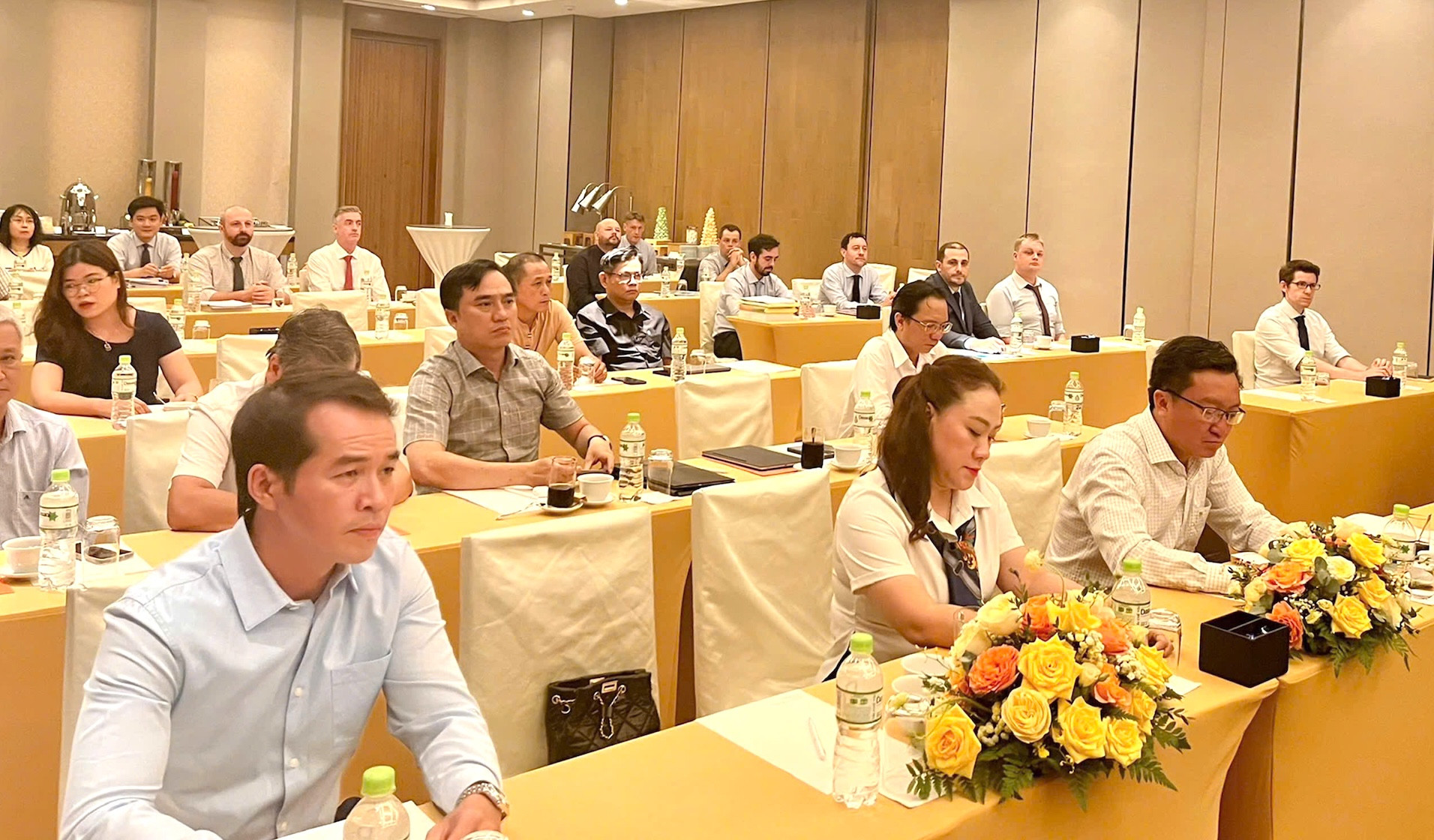
The Prime Minister late last month approved the national project “Making English the second language in schools for 2025–2035, with a vision to 2045.”
This is a nationwide initiative aimed at forming an ecosystem where English is used throughout the Vietnamese school system, from teaching, communication, and management to educational activities. English is not only a subject but also a tool that helps students access knowledge, expand thinking, and integrate internationally.
In 2025-2030, under the project, all preschools in cities and advantaged regions have to create conditions for children to become familiar with English; all general education institutions must teach English from grade 1.
At the university level, at least 20 percent of institutions must reach level 1, 5 percent level 2, and 3 percent level 3 in their capacity to implement English programs and teach subjects in English. These are ambitious yet necessary goals in the context of globalization and educational reform.
HCMC has the strongest foundation to realize this goal. Over the past decade, the city has continuously pioneered the systematic teaching of English aligned with international standards.
Notably, the Integrated English Program (IEP) under Project 5695, implemented by the HCMC Department of Education and Training in cooperation with EMG Education since 2014, is considered a groundbreaking step. From 18 schools with about 600 students at the start, the program has expanded to 160 schools across 20 former districts, attracting more than 30,000 students.
The program’s highlight is the philosophy that English must become a true learning tool, not just a subject. Students are immersed in an academic environment, learning English, Math, and Science entirely in English with foreign teachers.
IEP combines the Vietnamese national curriculum with the UK framework. The CLIL approach (Content and Language Integrated Learning) is applied, enabling students to master subject content while developing multilingual thinking.
Foreign teachers are highly qualified, proficient in CLIL methodology, and work closely with Vietnamese teachers to implement the program effectively. Meanwhile, the application of STEM promotes an open learning environment, encouraging scientific thinking, problem-solving, and presenting ideas in English.
To ensure quality and consistency, the program is tightly managed through a system of professional monitoring, assessment guidance, training for management officials, and specialized workshops between the city’s Department of Education and Training’s divisions and EMG Education's academic experts.
The content is regularly reviewed and adjusted to ensure continuity, updates, and suitability, especially with the implementation of the General Education Program 2018, which helps reduce the academic burden on students and optimizes the advantages of both curricula.
Achievements
After 10 years, IEP has shown clear effectiveness: In primary school, over 93 percent of students achieved good to excellent performance; At secondary and high school levels, more than 80 percent achieved similar results.
Students of the program have consistently achieved success in international exams, especially in the Pearson Edexcel certification system - the program’s standard output. The program has produced five students with the highest scores in the world, 41 Outstanding Learners, and 119 Excellence Awards, reflecting the true academic capacity of students in this international-standard bilingual environment.
In 2025, the HCMC education sector marks 50 years of development. Deputy Minister of Education and Training Pham Ngoc Thuong identified one of the five “brightest highlights” of HCMC education as its well-prepared and forward-looking implementation of the goal to make English the second language.
He affirmed that HCMC has “gone ahead by 10 years” by boldly introducing Math and Science instruction in English at an early stage, something that has proven to be the right decision.
According to the Deputy Minister, Project 5695 is an educational initiative and also proof of effective social engagement: “Without parental support, more than 30,000 students would not have access to this program.”
This social consensus has enabled HCMC to create a practical and effective model that many provinces nationwide are now studying.
Today, with the Politburo issuing Conclusion 91 on making English the second language in schools, HCMC’s model has even greater reference value. Thuong recommended that Departments of Education and Training across the country learn from HCMC’s experience and find suitable partners to implement the model based on local conditions, moving toward the education sector’s shared goals.
Le Huyen
.svg)
