 Vietnamnet.vn

 Podcast



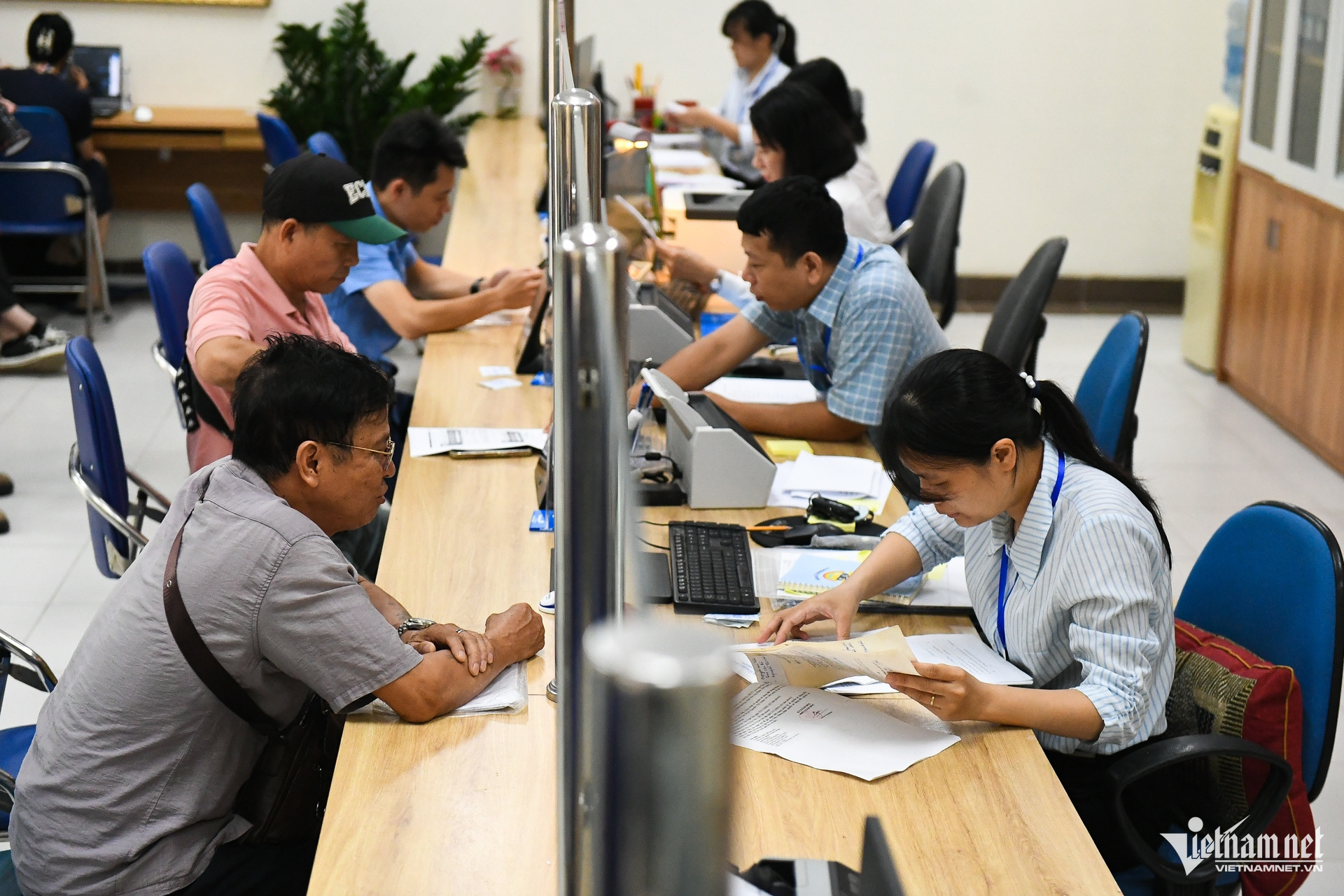
Ho Chi Minh City has proposed that the Government recognize an administrative staffing level aligned with practical realities, or allow the city to proactively balance its total payroll based on its degree of budget self-reliance.
In its latest report on implementing the Government’s action program to further build and refine the socialist rule-of-law state in the new phase, the Ho Chi Minh City People’s Committee said the establishment of the urban governance model and the two-tier local government apparatus has delivered tangible results.
However, institutional constraints appear to remain tight, particularly in terms of fiscal autonomy at the grassroots level and mounting staffing pressures.
A gap between mechanism and complex urban reality
The city assessed that the restructuring and consolidation of the organizational apparatus have been carried out urgently, seriously and in a streamlined manner, ensuring operational effectiveness and efficiency. Major policies have been implemented in parallel with payroll downsizing and salary reform, helping mobilize resources to spur economic growth.
The organizational structure of specialized agencies under the city People’s Committee no longer shows overlapping or duplicated functions and tasks.
At the grassroots level, the rearrangement of administrative units has created conditions for building a lean and effective urban and commune-level government apparatus. Personnel arrangements and policies for redundant staff have been handled democratically and transparently, generating broad consensus.
In addition, state management effectiveness, administrative reform, and anti-corruption and anti-waste efforts have seen positive changes. The supervisory role of the municipal People’s Council has been strengthened, while transparency and autonomy in governance have been enhanced, safeguarding the people’s right to mastery.
Nevertheless, the report acknowledged that rankings in administrative reform indices such as PAR-Index, PAPI and PCI have not met targets. The lack of synchronization between mechanisms and the realities of a complex metropolis is reflected in 94 projects facing difficulties and bottlenecks, including prolonged delays and risks of waste and loss, which have been placed under thematic inspection.
Grassroots level bears mounting workload
Since July 1, 2025, Ho Chi Minh City has officially completed the rollout of the two-tier local government model. The fact that communes and wards no longer function as independent budget units has created difficulties and confusion in local budget administration.
While constrained in fiscal space, the grassroots level is shouldering an enormous workload. The city has issued 33 decentralization and delegation decisions, transferring around 410 tasks across nine sectors to departments and commune-level People’s Committees.
Although the newly reorganized Ho Chi Minh City has streamlined its system to 168 commune-level administrative units, the grassroots apparatus - comprising 3,878 personnel in Party and mass organizations, 12,119 in the government bloc, and 6,532 non-specialized workers - is facing growing pressure as the volume of administrative dossiers continues to rise year on year.
The city therefore acknowledged that the restructuring and payroll downsizing process still has shortcomings, and that the quality and effectiveness of training and retraining for officials, civil servants and public employees remain generally inconsistent with task requirements.
Against this backdrop, the Ho Chi Minh City People’s Committee proposed that the Government recognize an administrative staffing quota consistent with actual conditions, or allow the city to proactively balance its total payroll based on its level of fiscal self-reliance.
The city also urged the National Assembly to issue a time-bound resolution applying specific mechanisms during the administrative unit reorganization phase.
These would include regulations on budget allocation and simplified procedures for auctioning and handling redundant public assets and offices.
At the same time, the city proposed that the National Assembly Standing Committee permit adjustments for commune-level units experiencing rapid urbanization and large populations during the 2023-2030 restructuring period.
Ho Chi Minh City further called on the Ministry of Finance to promptly issue guidance on procedures for auctioning public assets and finalizing expenditures related to administrative unit reorganization. It also urged the Government Inspectorate to soon promulgate regulations on inspection procedures and handling of legal violations in anti-corruption efforts involving enterprises and organizations in the non-state sector.
Quoc Ngoc
.svg)
