 Vietnamnet.vn

 Podcast



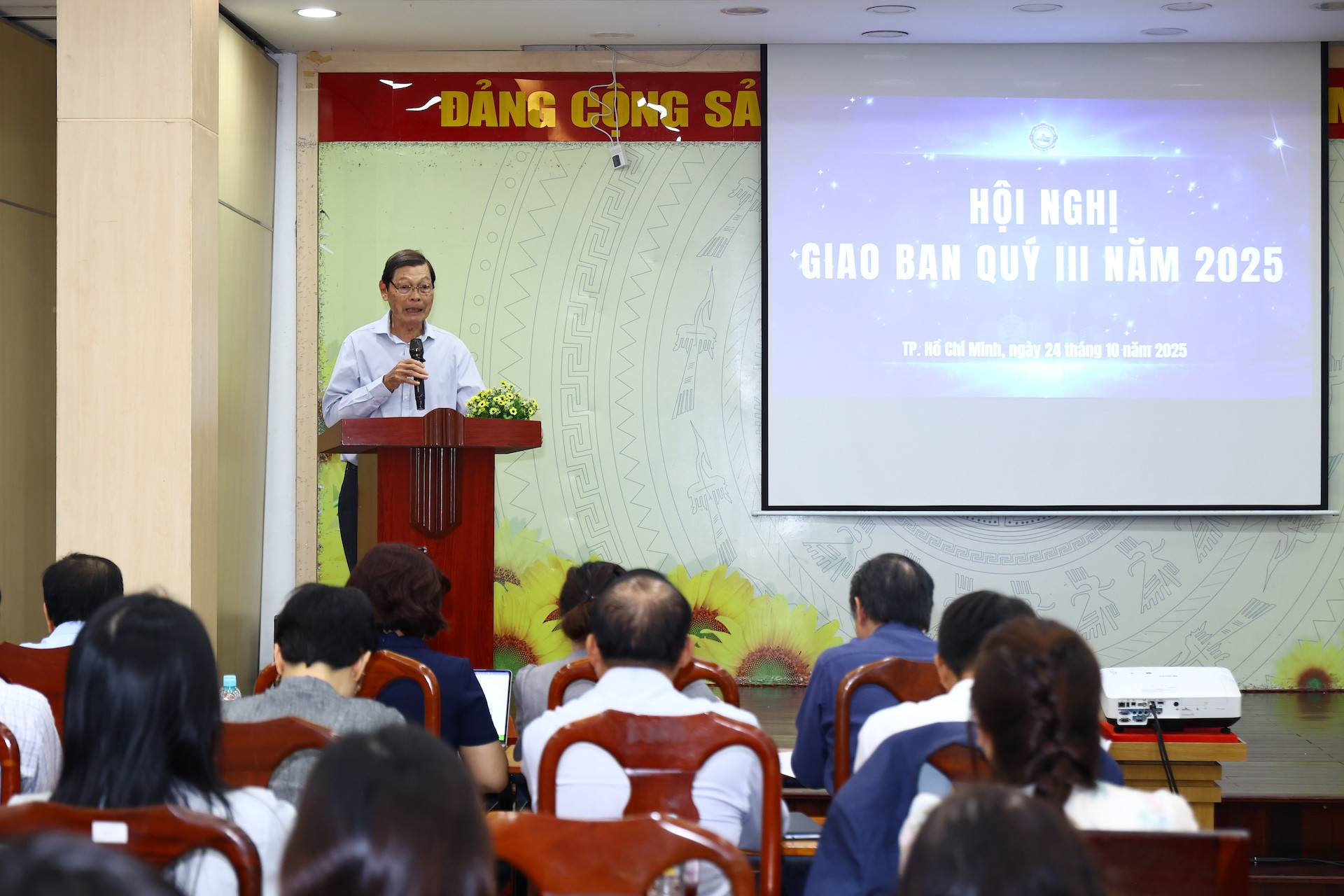
After nearly four months of operation under the two-tier local government model, administrative procedures in HCMC are still moving slowly and drawing complaints from the business community, according to the HCMC Business Association (Huba) in its “Q3/2025 Business Situation Report.”
Enterprises continue to appreciate the city’s overall business environment, with 52 percent giving positive feedback. However, 41 percent of surveyed businesses rated post-merger administrative processing as “slower than before,” citing delays in document handling since the city’s administrative boundary restructuring.
Many businesses have complained about delays when submitting applications for business registration, information changes, or construction-related permits through the city’s public administration system. Departments explained that these delays were caused by software issues and system errors.
Several real estate firms reported overdue processing of land-use right certificates due to complications in determining land-use fees and registration taxes for homebuyers.
In addition, the handover of administrative records between agencies remains incomplete; and staffing shortages and newly appointed personnel have led to slower processing times. Some officials are overly cautious and afraid of making mistakes, which further delays application handling.
Most delays are explained by departments as requiring multi-agency coordination, field verification, or cross-sector checks.
In such conditions, Huba urges HCMC departments to swiftly finalize file-processing software and organizational systems.
“Officials must handle tasks within authority, avoid passing responsibility upward unnecessarily. File reception and processing must follow procedures without delays affecting people and business operations,” the report stated.
Speaking with VietNamNet on the sidelines of the Q3/2025 review conference on October 24, Nguyen Phuoc Hung, Huba Permanent Vice Chair, said licensing procedures are extremely slow. Commune and ward levels in HCMC remain confused in administrative processing. Public e-services are also unstable. These are the top business complaints.
He stressed the need for seamless inter-agency workflows and data connectivity.
According to the Ministry of Justice, ministries and ministerial-level agencies have been actively implementing administrative procedures (APs) as prescribed in legal normative documents (LNDs), while also reviewing and studying plans to streamline and simplify APs in line with government directives. These efforts focus on carrying out approved measures to cut and simplify administrative procedures.
In line with Government Resolution No66/NQ-CP, as of September 22, 2025, ministries and ministerial-level agencies have abolished 172 administrative procedures and simplified 718 others; additionally, 222 business conditions have been removed.
By the end of 2025, it is expected that 520 administrative procedures will be abolished and 2,421 will be simplified, bringing the total number of streamlined or eliminated procedures to 2,941 out of 4,888 related to production and business activities (equivalent to about 60%).
The Ministry of Justice also plans to cut 2,263 out of 6,974 business conditions in conditional business sectors (about 32 percent).
Huba’s full report will be submitted to HCMC People’s Committee on October 28. Previously, the city requested Huba to prepare content for the session with the Prime Minister’s working group on production, public investment, import-export, infrastructure, social housing, national target programs, and two-tier local government implementation.
The report also noted that several sectors show promising signs of recovery and growth. The industry and construction sector rose by 8.55 percent; agriculture, forestry, and fishery by 3.83 percent; and exports of electronics, computers, components, and manufacturing by over 10 percent.
Conversely, traditional labor-intensive industries such as textiles, footwear, wood products, and furniture are shrinking.
Overall, the city’s business community expressed concern over the rising exchange rate, which has increased debt burdens and import costs. Prices of imported goods and materials have climbed by around 6 percent over the past year.
Meanwhile, the instability in the real estate market, coupled with heavy bond repayment obligations, has further weakened financial safety indicators. The total value of corporate bonds maturing in the second half of 2025 is estimated at VND131,601 billion, of which real estate bonds account for VND69,970 billion, or 53 percent of the total.
Small businesses and household enterprises are under intense competitive pressure from e-commerce. Changing consumer habits have led to the closure of many traditional market stalls and small retail shops.
Furthermore, stricter enforcement against counterfeit goods and new rules on invoicing and tax declaration have posed challenges for older or less tech-savvy business owners. As a result, the number of small and micro enterprises temporarily suspending operations has risen by more than 10 percent year-on-year.
“On average, nearly 20,000 businesses withdraw from the market each month. In addition, many enterprises remain inactive without completing dissolution or bankruptcy procedures, while numerous small traders have returned their premises and temporarily shut down,” the Huba report stated.
Tran Chung
.svg)
