 Vietnamnet.vn

 Podcast



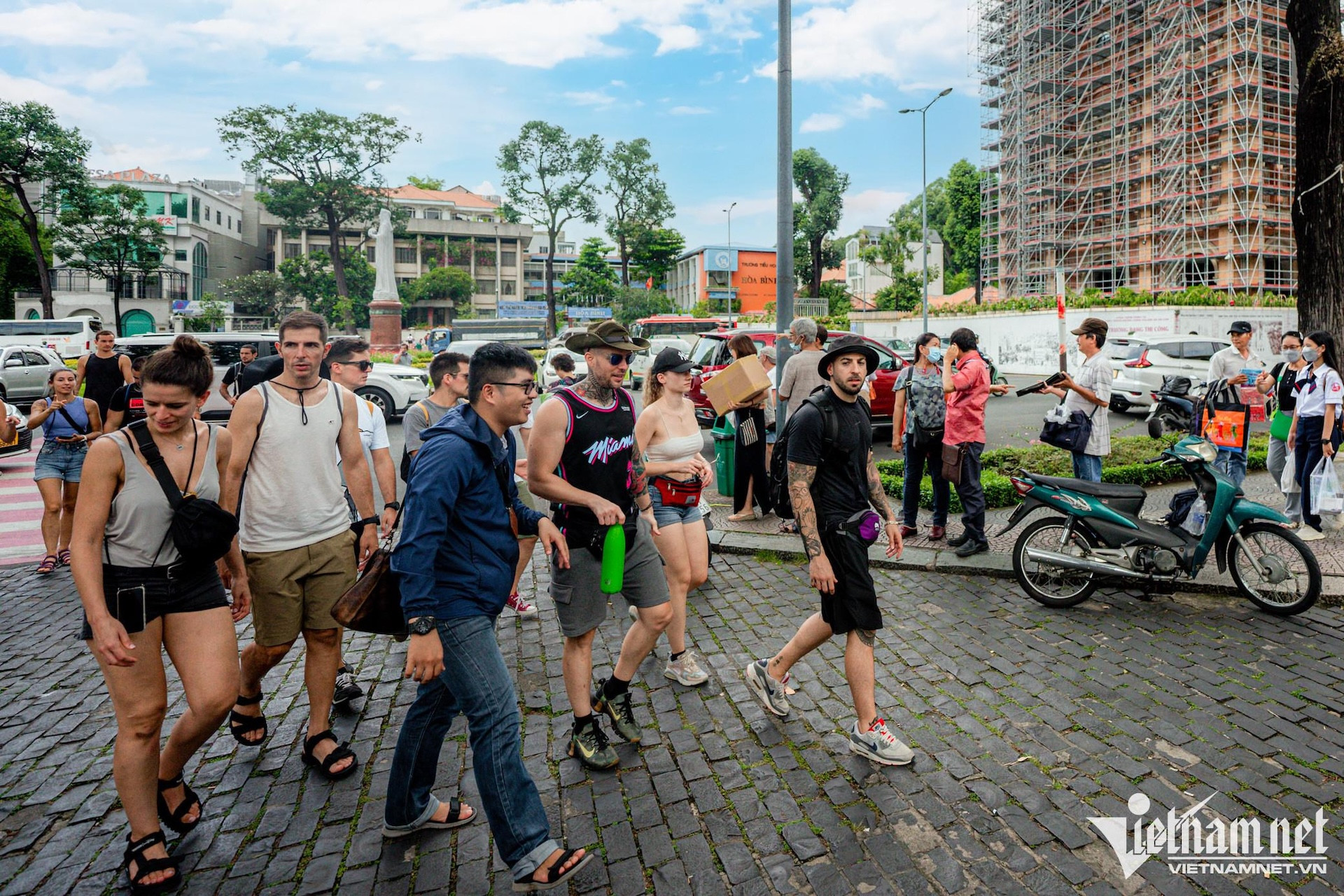
After a period of tightened oversight, under Decision No19 of the HCMC People’s Committee, effective from April 25, 2026, the management of short-term rental apartments (the Airbnb model) has been relaxed compared to Decision No26 issued more than a year earlier.
As a resident, Ha (HCMC) does not support this decision. She has had two unpleasant experiences related to the Airbnb model: noise from an adjacent serviced apartment and an often-overcrowded shared pool.
The inconveniences Ha faced are not isolated cases. Recently, the HCMC Department of Construction recorded conflicts brewing at several apartment complexes (such as the Hado Centrosa project in Hoa Hung Ward) related to short-term renters overloading shared amenities. Furthermore, a conflict of interest has emerged between permanent residents and apartment owners exploiting their units for short-term lodging.
According to a report from the Millennium Apartment Management Board (Khanh Hoi Ward, HCMC), in the first six months of 2024, apartments there hosted over 7,100 short-term guests of diverse nationalities. Concurrently, multiple social evils surfaced and were dismantled by authorities. Also, the building's infrastructure, such as elevators and corridors, faced excessive wear and tear, leading to deterioration.
At that time, 350 out of 728 apartments (48 percent of the total units) were used for short-term rentals via Airbnb.
Financial losses
Given the evidence, HCMC’s ban on Airbnb was initially supported by many residents. However, three months after its issuance, Decision 26 was struck down by the Department of Legal Document Post-Review and Administrative Violation Management under the Ministry of Justice.
According to the judicial agency, banning apartment rentals via Airbnb is unreasonable and lacks legal rigor. Apartment owners who do not reside in their units hold the right to rent them out, which constitutes a core property right under the Civil Code.
Owning nine Airbnb rental apartments, Annie (HCMC) suffered losses of nearly VND200 million when the Airbnb model was banned last year. And those who leased properties to re-lease under Airbnb model suffered even heavier financial blows.
While the model brought inconvenience to some residents, it created high revenue to the local economy. Airbnb activities generated total spending of VND16 trillion in 2024 on accommodation and other expenses in Vietnam, according to a report conducted by Oxford Economics.
Specifically, a typical Airbnb guest in Vietnam stayed an average of 3 days and spent an average of VND2.8 million per day on non-accommodation activities, such as dining at restaurants, retail shopping, and transportation. Airbnb supported job creation for 64,100 people in related sectors, with total wages reaching around VND6.5 trillion.
The report assessed that the aggregate spending of both guests and hosts has driven an extensive value chain within the domestic economy.
In HCMC (former) alone, according to the HCMC Real Estate Association, the city has 24 apartment complexes with roughly 8,740 owners and users utilizing online travel platforms for short-term rentals. This service model creates jobs for around 10,000 workers and contributes to local socio-economic development, the association claims.
Ban or regulate?
According to the HCMC Department of Construction, the principle is “no bans, but must be transparent and within a regulatory framework.”
Real estate expert Le Quoc Kien stated that the short-term accommodation supply might surge as many apartment owners return to this service. In the long term, the market may more clearly form a "hybrid apartment-hotel" model, allowing flexible living and renting. However, if developed without control, the conflict of interest between long-term residents and commercial operators could remain a source of ongoing controversy.
Le Hong Hanh, a finance lecturer at RMIT University Vietnam, said Airbnb-style models bring clear economic benefits: increasing lodging supply, stimulating domestic tourism, generating additional income for residents, and efficiently utilizing idle assets. Yet, the conflict between economic benefits and residents’ quality of life is an issue many ASEAN countries also face, not just Vietnam.
To reconcile these conflicts, the “permit but tightly manage” model should be applied, according to Hanh.
For HCMC, Hanh suggested several possible solutions: First, cap the proportion of Airbnb units in each building to prevent apartment complexes from turning into de facto hotels; or limit the maximum number of rental days per year for each unit. Second, require landlords to place a deposit or purchase liability insurance to handle risks. Third, apply higher management fees for short-term rental units.
Anh Phuong
.svg)
