 Vietnamnet.vn

 Podcast



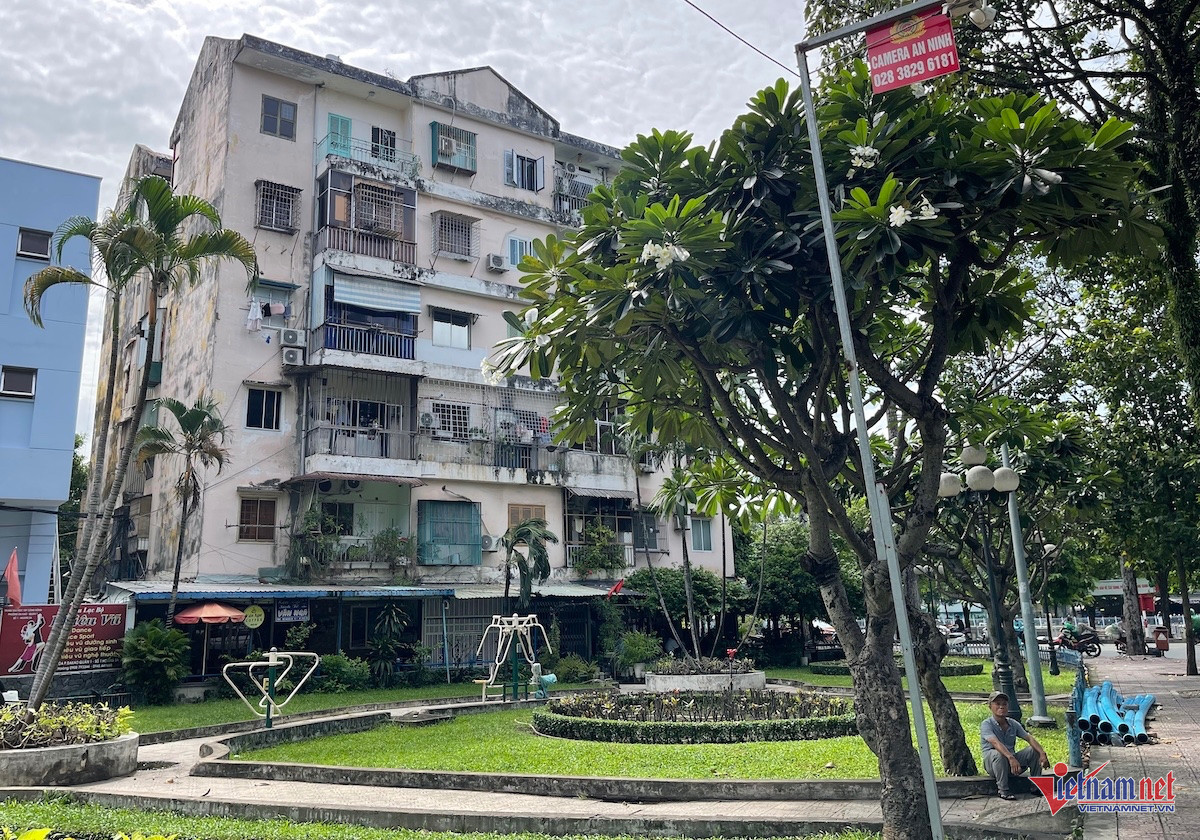
Old apartments increasingly expensive
At a voter meeting after the first session of the 16th National Assembly recently, HCMC Party Secretary Tran Luu Quang said the city will limit additional high-rise apartment development in the central core and areas with excessively high population density.
HCMC will prioritize land funds for parks, public spaces, and promote housing development in suburban areas together with connected transport infrastructure. This is considered a necessary step to reduce pressure on urban infrastructure that has been overloaded for years.
With new apartment supply in the central core becoming scarcer, the market is seeing a notable shift toward the old apartment segment.
According to a VietNamNet survey, apartment prices in HCMC continued to stay high in early 2026. Some central projects have surpassed VND120–150 million/m2, with some even reaching VND500 million/m2. As new apartment prices keep climbing, many buyers are seeking apartments built 10–30 years ago in existing central areas.
A typical example is Apartment Block 1A-1B Nguyen Dinh Chieu, Saigon Ward, an old apartment building put into use more than 30 years ago but still listed at VND67–80 million/m2.
Current listing data shows a 22–26m2 unit there is priced at around VND1.8 billion, equivalent to nearly VND80 million/m2. Meanwhile, 40–46m2 units are offered at around VND2.5–3.5 billion.
This is not a high-end or newly built project. However, thanks to its location in the central core and proximity to major transport axes, unit values here continue to rise even though the building is over 30 years old.
Hoang, a broker specializing in central-area apartments, said the number of customers looking to buy old apartments has increased markedly recently, especially those working downtown or young families wanting to cut commute times.
“Buying a new apartment downtown now is very hard because prices are too high. Moving to the suburbs means accepting a long daily commute. So many people choose old apartments because they have convenient locations and more reasonable prices than new ones,” Hoang said.
According to data from a market research firm, primary apartment supply in HCMC in Q1/2026 was only about 4,300 units, a sharp drop from previous periods. Meanwhile, affordable apartments have almost disappeared from the central area.
Old apartments turn into "rare commodities"
Experts assess that the upward price trend of old inner-city apartments reflects HCMC’s severe scarcity of central land funds.
Nguyen Van Dinh, Chair of the Vietnam Association of Realtors (VARS), argued that restricting high-rise developments in the urban core will leave new supply scarcer, thereby driving up the value of existing assets. Following market laws, when supply is scarce yet real housing demand remains massive, prices will climb, even for aging products.
Meanwhile, Dr. Dinh The Hien remarked that HCMC residents still tend to prioritize living near their workplaces and existing amenities rather than relocating too far to the periphery. According to the economist, to successfully decentralize the population, transport infrastructure must lead the way. If connectivity remains un-synchronized, residents will still find ways to cling to the central districts.
Beyond owner-occupiers, many investors are also returning to buy old apartments in prime locations, wagering that these areas may later undergo urban refurbishment or reconstruction at a higher valuation.
According to investors, as inner-city land funds become increasingly restricted, the "location premium”, i.e the added value derived from a prime location, will grow larger. This means an old apartment located downtown can still retain its value, or even yield better price appreciation than many new products in far-flung areas.
Regarding old apartments, engineer Nguyen Bao Vinh cautioned that many complexes have degraded after long periods of use, yet their selling prices are still inflated based on location. Buyers face multiple risks related to construction quality, fire safety, maintenance costs, as well as operational disputes. In other words, many are accepting a compromise on their quality of life just to own a central location.
Anh Phuong
.svg)
