 Vietnamnet.vn

 Podcast



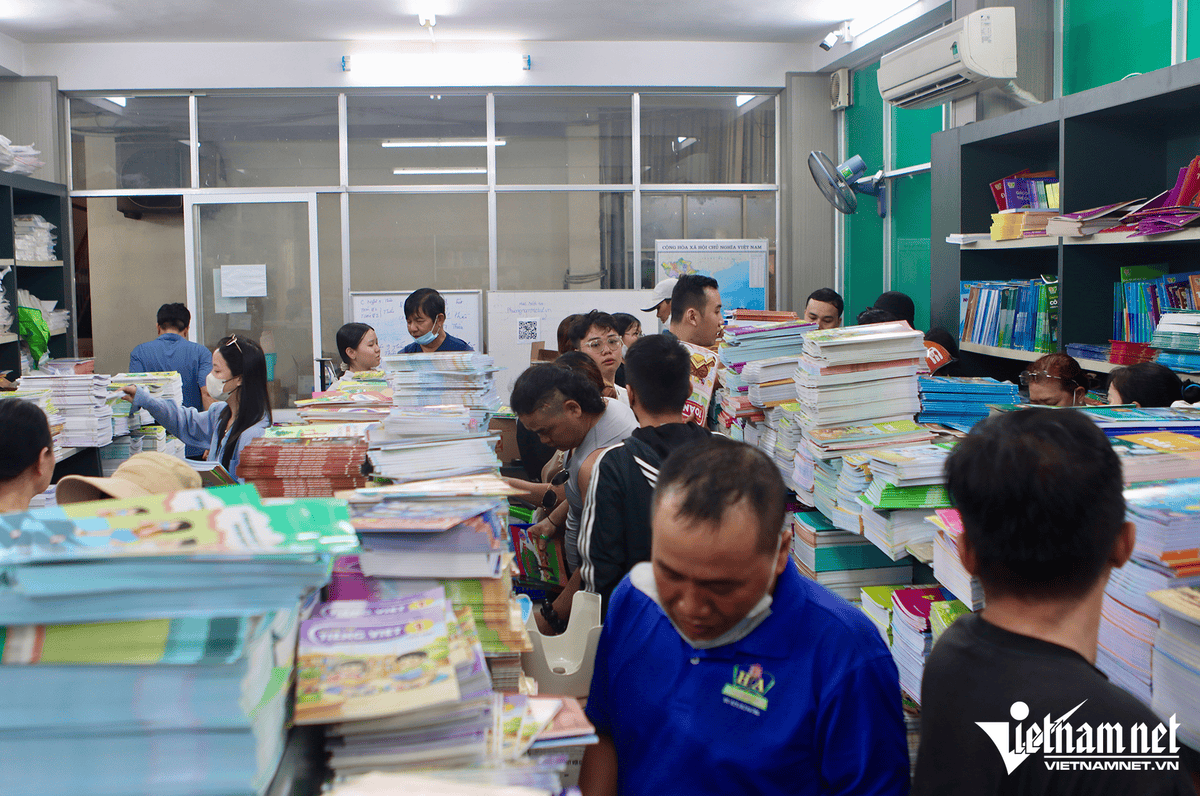
The 2026-2027 academic year is the first year Vietnam will implement a nationwide policy of using the “Ket Noi Tri Thuc va Cuoc Song” (Connecting Knowledge with Life) textbook series published by the Vietnam Education Publishing House.
VEPH’s Ngo Van Hoan said the publisher began planning production, printing and distribution early to ensure sufficient textbooks for the new academic year. As of August 25, it had printed and distributed 225 million textbooks, along with more than 76 million workbooks and reference books, exceeding the initial orders registered by localities.
From now until the start of the school year, the publisher will distribute an additional 10 million textbooks based on actual demand from schools and localities. It also plans to print another 8 million copies as a reserve to ensure supplies in the event of natural disasters, storms, floods and other unexpected situations.
In HCMC alone, the publisher had supplied 25.5 million textbooks as of August 24, reaching 102 percent of the initial order of 25.1 million copies.
In addition to supplying books ordered by schools, the publisher meets parents' demand for textbooks through stores in its distribution system.
The publishing house said there is no overall shortage of textbooks across the system and pledged to fully supply 100 percent of the textbooks needed by students nationwide for the 2026-2027 academic year.
Why are parents still queuing?
With the start of the school year approaching, many parents in HCMC have had to visit multiple sales points and wait in crowded queues as several textbook titles have sold out. Many parents said that because some titles were no longer available at smaller bookstores, they had to go directly to the publisher to buy them.
HCMC had arranged for students to borrow textbooks free of charge from school libraries. However, many parents still chose to buy books for their children to make studying and revision more convenient and reduce the risk of books being damaged or lost.
VEPH said that localized congestion and textbook shortages in some areas, particularly HCMC, are not due to an overall lack of supply. Instead, they stem from temporary interruptions in the traditional textbook ordering channels through schools, as well as difficulties in implementing the policy.
In HCMC, before July 30, only 62 percent of schools had submitted textbook orders through distributors under the VEPH system. The publisher said it had fully delivered all books included in orders placed by July 30.
However, after August 15, nearly 26 percent more schools placed orders for the first time, while more than 220 schools continued to place additional orders for large quantities. As of August 25, nearly 200 schools in HCMC had still not submitted textbook orders.
The publisher also said delays in placing orders were linked to the implementation of the free textbook policy.
Specifically, in May and June, the HCMC Department of Education and Training issued urgent notices instructing schools to pause book orders while awaiting guidelines on the proposal to provide free textbooks.
The department subsequently did not issue new guidance on textbook registration as in previous years, causing the ordering process to be disrupted while schools waited for further instructions.
Only on August 14, the HCMC People's Committee officially issued the plan to implement the free textbook policy across the city. Following this, schools began flooding distributors with massive orders as the new school year approached.
According to VEPH, this created a "dual demand pressure": schools need to purchase textbooks for library lending, while parents want to buy books independently. When demand surge, parents rush to retail stores in droves, causing long queues at several locations.
VEPH stated that it has dispatched official documents to the Ministry of Education and Training and provincial Departments of Education and Training regarding free textbook distribution for the 2026–2027 academic year and subsequent years, detailing the required procurement procedures to ensure supply.
If free textbooks are implemented for the 2026–2027 school year, localities must finalize demand forecasting plans before October 30, 2025, to ensure textbooks are delivered to educational facilities before June 15, 2026.
"The bidding, printing, and finishing process for textbooks requires a minimum of six months," stated Ngo Van Hoan, Deputy General Director of VEPH.
.svg)
