 Vietnamnet.vn

 Podcast



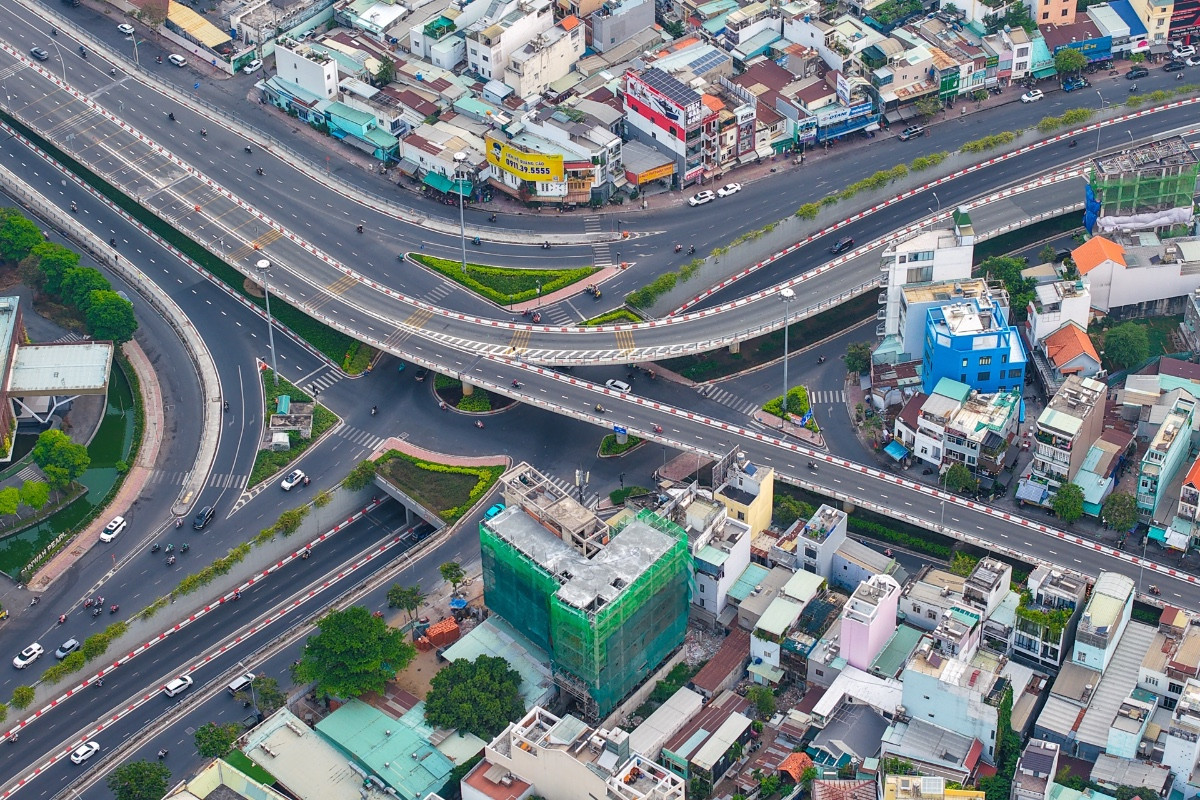
Northern capital flows heading south
Toward the end of the year, the HCMC real estate market becomes more bustling, with the East as the main hotspot. According to DKRA Group, new housing supply in this area accounts for nearly 97 percent of total primary supply across the market, showing that capital and development strategies remain heavily concentrated there.
In the luxury apartment segment, Masterise Homes has just introduced the high-rise Masteri Park Place. The developer is now accepting reservations for Tower A after units in Tower B sold out earlier.
Eaton Park, a high-end condominium project on Mai Chi Tho Boulevard developed by Gamuda Land, has also launched multiple sales phases this year. The upcoming phase is already taking reservations at prices higher than previous releases.
In Nam Rach Chiec residential area, The Prive by Dat Xanh Group is another highlight in the high-end segment. With nearly 3,200 units, more than 1,000 were sold in the first sales phase in August, and the developer is now proceeding with phase 2. Its rapid absorption rate shows strong demand for high-end products.
In the mid-range segment, the market recorded new towers released at MT Eastmark City, invested by Dien Phuc Thanh, adding significant supply.
Speaking at the “Riding the East Saigon wave – A golden opportunity for Hanoi investors” workshop in Hanoi on November 16, Nguyen Quoc Anh, Deputy CEO of Batdongsan.com.vn, noted that the recent administrative merger has highlighted promising growth potential in the Southeast region.
The formation of the new HCMC (comprising HCMC, Ba Ria - Vung Tau, Binh Duong) and the new Dong Nai (comprising Dong Nai, Binh Phuoc) is not simply an expansion of administrative boundaries, but a consolidation of strengths to create a major economic zone. After the merger, the GRDP of HCMC reached more than VND2.7 quadrillion in 2024, leading the country, while Dong Nai ranked fourth with over VND609 trillion.
The merger of HCMC with Binh Duong and Ba Ria - Vung Tau has provided a strong boost for the entire Southern Key Economic Region. Numerous inter-regional infrastructure projects have accelerated to form a comprehensive network, laying a solid foundation for investment attraction and urban development.
Along with this, the presence of leading real estate corporations in this area is playing a market-leading role.
"The Eastern area is almost the only region with sufficient land fund to develop large-scale urban areas. This is also the reason why Hanoi investors are continuously increasing their interest. In the next 5–10 years, this area will be the focal point of the Southern market," Anh emphasized.
According to him, real estate in the East of HCMC is facing a new growth cycle as three core factors, including infrastructure, capital flow, and real demand, converge. The development model along the Dong Nai River is assessed as similar to the urban chain along the Red River, promising to create a complete urban – industrial – service belt in the near future.
Anh believes that in the short term, investors should prioritize areas where urban areas have been clearly formed, with can be rented, or meeting real living needs. In the long term, infrastructure progress and urbanization rate will be the decisive factors for the true value of the East area in the next development cycle.
Opportunities
According to Batdongsan, in the third quarter of 2025, the level of interest in apartments in HCMC from Northern customers increased by 28 percent compared to the same period last year.
This figure reflects a trend of capital shifting given the continuously escalating price level in the North. Many areas in Hanoi and its vicinity have established relatively high new price levels, causing the profit margin from rental exploitation to decline.
Rental prices have not increased proportionally to selling prices, reducing investment efficiency. This has prompted many investors to seek markets with better growth potential.
HCMC and its neighboring provinces are assessed to be in the phase of forming new growth drivers. A series of inter-regional infrastructure projects such as Ring Road 3, Ring Road 4, the expansion of the HCMC - Long Thanh - Dau Giay expressway, and the progress of Metro Line 1 have created a premise for stronger regional connectivity. As a result, housing demand in areas with complete infrastructure continues to be high.
Anh Phuong
.svg)
