 Vietnamnet.vn

 Podcast


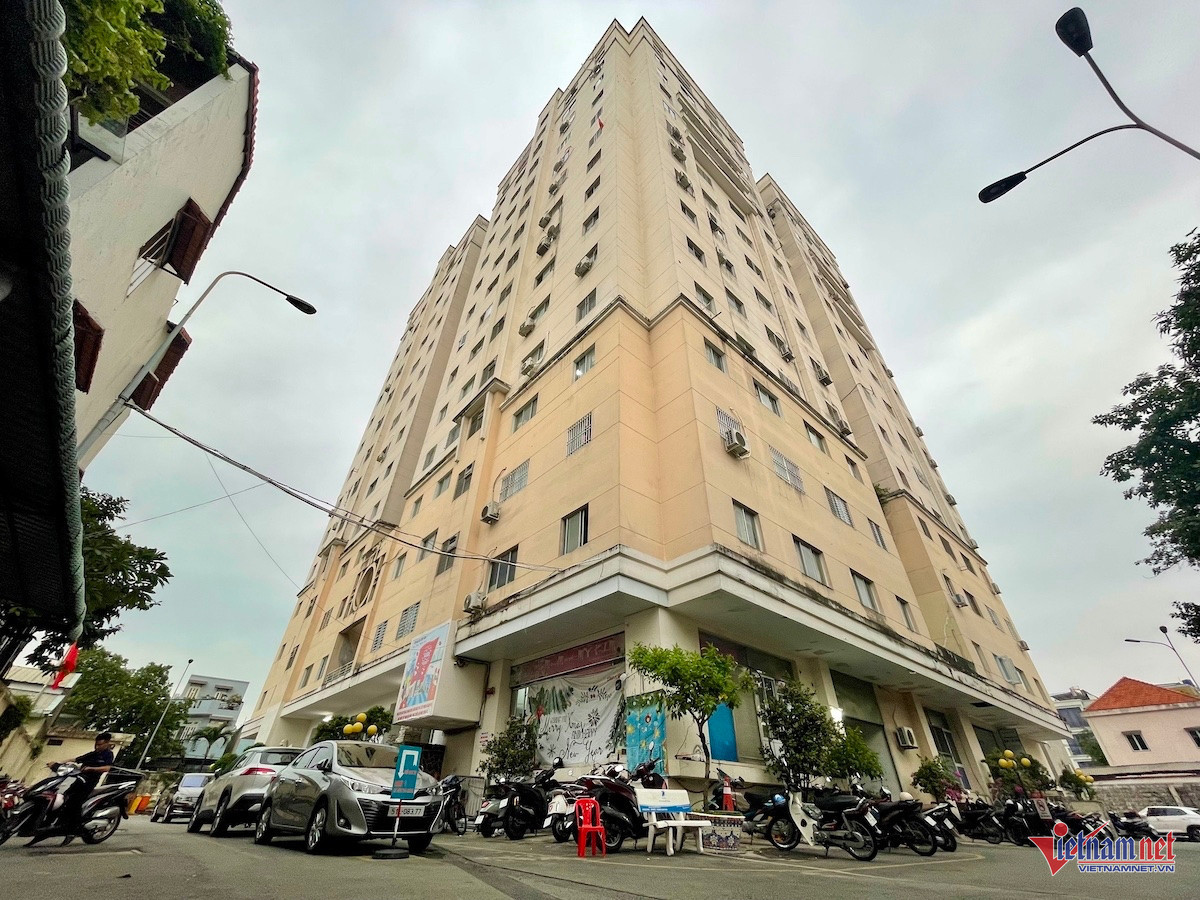
After many years of operation, several apartments in housing complexes associated with HCMC's resettlement housing fund are being offered for sale at prices reaching billions of dong. Some units have more than tripled in value since they were handed over 15 years ago.
Originally built to rehouse residents subject to site clearance, many HCMC resettlement apartments are currently listed on the secondary market for billions of dong, three to four times their original levels at handover.
A survey conducted by VietNamNet in the HCMC secondary apartment market shows that several complexes connected to the resettlement fund are being offered at prices comparable to commercial housing.
In the Binh Khanh Resettlement Area within the Thu Thiem New Urban Area, apartments are commonly listed at VND53 million to VND70 million per square meter. For a two-bedroom apartment, listing prices range between VND3 billion and VND4.5 billion per unit. Data from Batdongsan records a price increase of over 16 percent at this resettlement area over the past year.
In the inner city, Nguyen Kim Apartment Complex (formerly in District 10) has also logged notable price gains. Apartments are listed at roughly VND55 million to VND70 million per square meter. Units measuring nearly 50 square meters are offered at around VND2.7 billion, while a 72-square-meter unit commands around VND4.2 billion. Asking prices at this complex surged nearly 30 percent over the past year.
At the My Kim Apartment Complex, now located in Hiep Binh Ward (HCMC), asking prices for units measuring 69 to 72 square meters hover around VND2.7 billion to VND3.4 billion, equivalent to VND40 million to VND47 million per square meter. Compared to 15 years ago, prices at this complex have tripled.
X., a resident at My Kim Apartment Complex, shared that her family previously owned a home in the Binh Thanh area. After their house was cleared for a development project, her family was allocated a two-bedroom apartment at this complex, with a converted compensation value of VND850 million.
“Having lived here for 15 years, I’ve noticed apartment prices quietly inching up year by year. The two strongest price surges occurred when Pham Van Dong Street was opened and when the commercial center near the complex was built. Although the complex is old, its proximity to the central area keeps the units valuable,” X. shared.
Meanwhile, at No 1050 Chu Van An Apartment Complex (formerly in Binh Thanh District), units measuring around 60 to 65 square meters are listed at VND3.1 billion to VND3.7 billion. Batdongsan reported that asking prices at My Kim and No 1050 Chu Van An complexes rose by 51 percent and 27 percent respectively over the past year.
Why do old apartments continue to rise in value?
According to experts, the price growth of older apartments is driven not only by location advantages but also by supply scarcity, seller expectations, and buyer affordability.
According to Nguyen Van Dinh, Chair of the Vietnam Association of Realtors, restrictions on high-rise developments in urban core zones have made new supply increasingly scarce, thereby pushing up the value of existing properties. When supply remains tight while real housing demand stays high, prices can rise even for older units.
Dr. Dinh The Hien, a respected economist, noted that HCMC residents still tend to prioritize living near workplaces and existing amenities rather than moving too far to outer suburbs. This factor helps apartments in long-established residential areas maintain their appeal despite the age of the structures.
However, limited supply is not the sole factor driving up older apartment prices.
Dinh Minh Tuan of Batdongsan observed that sellers anchor high asking prices amid scarce new supply, making it difficult for buyers to find alternative options. He also noted that some apartments are being offered at prices that do not align with their amenities and construction quality.
While prices at resettlement complexes may rise alongside general regional levels, those increases do not necessarily reflect apartment quality, maintenance status, or actual purchasing power. For buildings used for many years, buyers must also factor in repair costs, the quality of technical systems, and legal issues before deciding to transact.
Duong Thuy Dung of CBRE Vietnam commented that secondary apartment price levels remain high because many properties were purchased during previous periods of rapid price escalation. Meanwhile, home loan interest rates and affordability continue to influence buyer decisions.
According to Dung, as new apartment supply brings more choices and more flexible payment policies, the secondary market will face competitive pressure if asking prices remain high.
Anh Phuong

