 Vietnamnet.vn

 Podcast



On January 29, the city’s Food Safety Authority announced that it is inspecting 1,320 facilities involved in the production, processing, distribution, and importation of food products across the city.
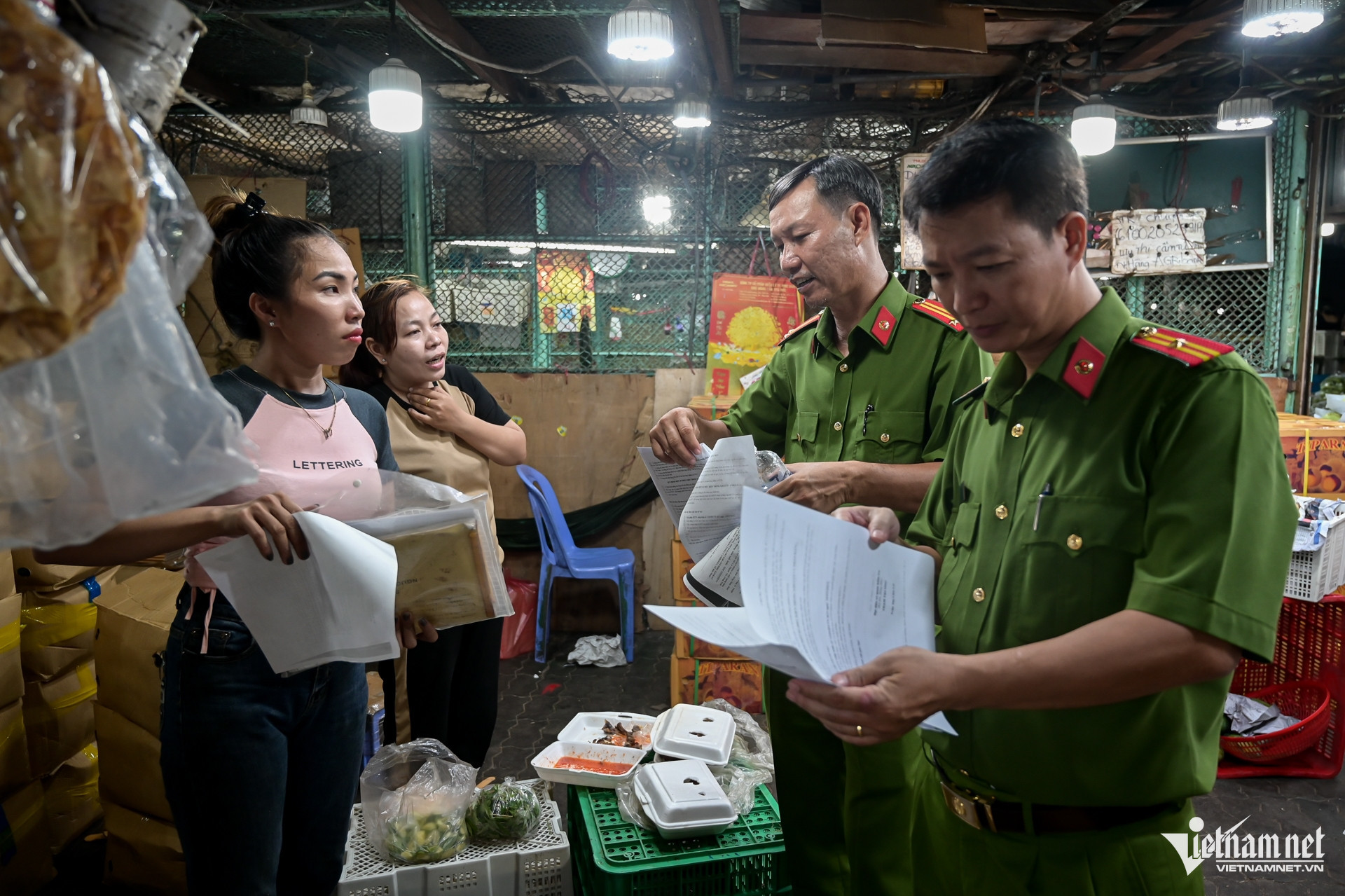
Authorities inspect the Thu Duc wholesale agricultural market in 2025. Photo: Nguyen Hue
The inspections are focused on high-demand items during Tet (Lunar New Year), including meat and meat-based products, alcoholic beverages, soft drinks, confectionery, fruits and vegetables, food additives, and catering services.
Particular attention is being paid to key distribution points such as production facilities, import warehouses, wholesale markets, shopping centers, supermarkets, and traditional markets.
Where warranted, inspectors may deploy advanced technologies - such as mobile rapid testing devices, AI-driven risk assessment tools, and GIS-based supply chain tracking - to detect and respond swiftly to any food safety violations.
A serious public health risk
This citywide action follows a wave of alarming discoveries by HCMC police and national enforcement agencies, who recently dismantled multiple large-scale operations involved in producing contaminated food.
On January 27, police in HCMC shut down a major operation that had been chemically treating apple snail meat with sodium silicate - a highly toxic industrial chemical also known as “liquid glass.”
The ringleader, Huynh Van Truong, had been running the scheme since 2021, reportedly using around 500 tons of sodium silicate to process more than 3,000 tons of apple snail meat before distributing it to the market.
A forensic analysis conducted by the HCMC Forensic Science Institute confirmed that all seized snail meat samples contained sodium silicate, which is strictly banned from all food processing applications.
Earlier, on January 12, HCMC’s Economic Police Department dismantled another operation producing noodles using banned substances including borax, industrial-grade soda, and sodium silicate.
Experts warn that prolonged consumption of these chemicals may lead to poisoning, liver and kidney damage, reproductive issues, and even cancer.
Strengthening control amid rising risks
These cases underscore the growing complexity of food safety violations, especially in the era of booming e-commerce, which creates additional challenges for enforcement.
In response, the city is not only intensifying inspections but also collaborating with HCMC police to organize training sessions on food labeling regulations, advertising practices, and online fraud prevention.
These workshops, held on January 29–30, are part of a broader effort to raise awareness among producers and consumers alike about the threats posed by unsafe food practices in the digital age.
Phuoc Sang
.svg)
