 Vietnamnet.vn

 Podcast



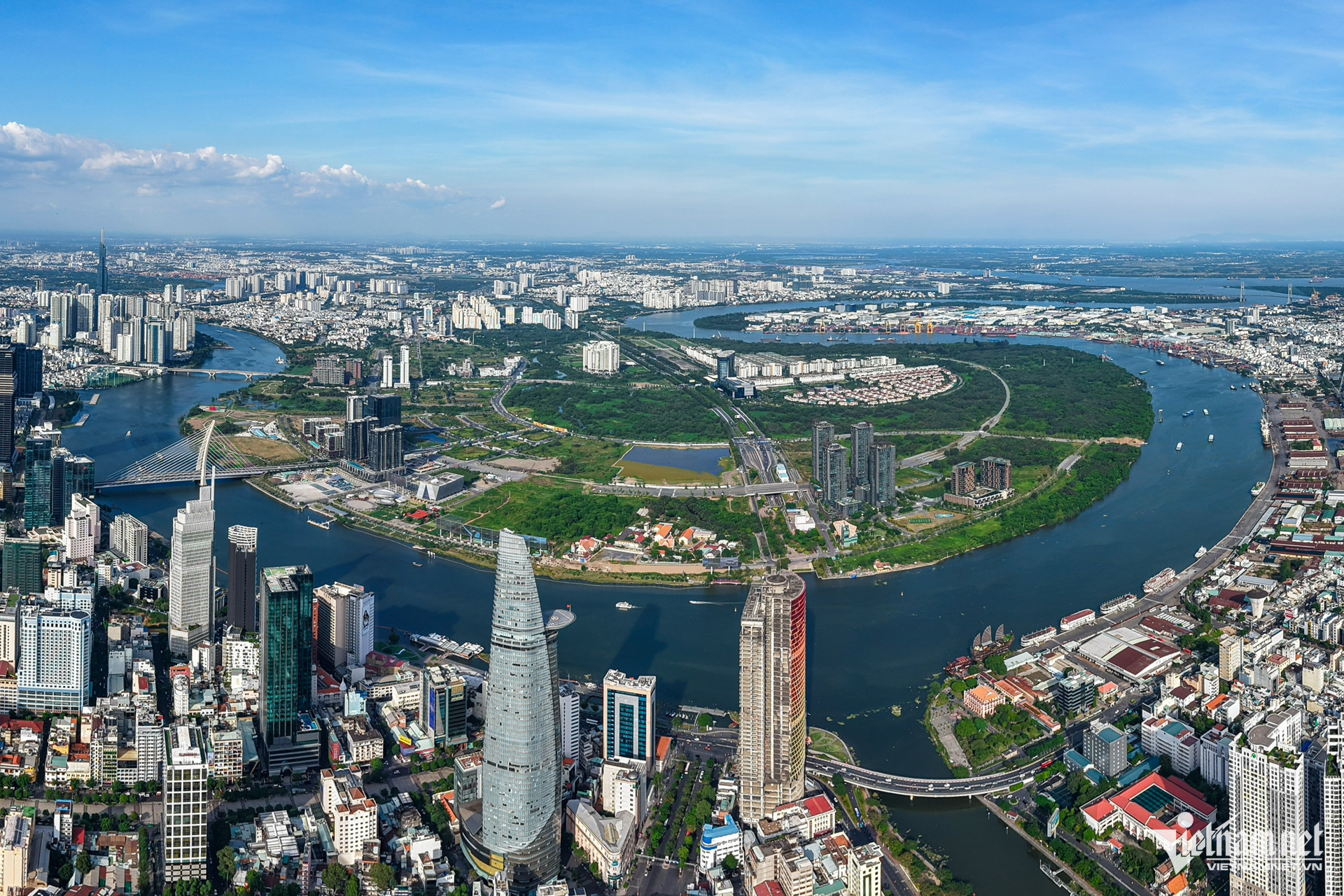
The law would establish a superior institution with an appropriate and stable legal framework tied to a long-term vision.
On May 28, the Propaganda and Mobilization Commission of the HCMC Party Committee issued a press release regarding the 6th City Party Committee Conference for the 2025–2030 tenure.
Accordingly, alongside reviewing the one-year implementation of the organizational model of the city's political system and the two-tier local government model, the conference focused its discussions on three major agendas: the Draft Law on Special City, the Action Program to implement Resolution 09-NQ/TW, and the project to establish the HCMC Newspaper, Radio, and Television Agency.
HCMC Vice Mayor Nguyen Manh Cuong stated that the bill is defined as a "breakthrough of breakthroughs," updating the Party's guidelines and policies in line with the city's position, stature, and mission. It regulates the development issues of a special city, replacing the current experimental pilot approach.
The law would establish the specific legal status of HCMC as a national and international hub, maintaining its vanguard role in socio-economic development, innovation, finance, logistics, high-quality services, and the marine economy.
This would serve as the foundation for the city to apply innovative, breakthrough policies with a high degree of autonomy and self-responsibility, alongside prioritized resources and appropriate decentralization.
At the workshops that collected opinions on the draft law, experts repeatedly emphasized the need to grant genuine power, boost proactive attitudes, and untie the constraints currently hindering HCMC's development momentum.
Pham Phuong Thảo, former deputy secretary of the City Party Committee and former chair of the HCMC People's Council, said the core spirit of the law must be to expand authority and supplement resources for the city. She said matters that are ripe and fully qualified should be legislated immediately, rather than continuing under "pilot" mechanisms.
Thao also requested a reduction in regulations requiring submissions for approval or consultation with ministries and sectors, which can decelerate the execution process. “Once authority has been delegated, it must be delegated fully without attachments or strings," she emphasized.
The former HCMC leader argued that alongside specific mechanisms, the draft law needs to clearly prescribe inspection, examination responsibilities, and sanctions to guarantee enforceability.
Sharing the same view on granting strong powers to HCMC, Nguyen Thi Quyet Tam, former deputy secretary of the City Party Committee and former chair of the HCMC People's Council, suggested that the draft law should replace the concept of "radical decentralization" with "strong devolution of power," while clarifying the basis of such empowerment.
She said devolution must stem from practical capacity, untapped development headroom, and HCMC’s distinct competitive advantages.
“We must prove to the National Assembly and the ministries that without sufficient authority, the city will miss out on development opportunities,” she said.
She stressed that the law must guarantee long-term stability, contrasting with time-bound pilot resolutions. The law needs to be strong enough and have superior mechanisms to dismantle bottlenecks instead of reverting to the old legal framework.
However, she emphasized that power must walk hand in hand with responsibility. “Once power is handed over, the city must perform better and hold itself accountable before the law and the people,” she said.
Nguyen Ngoc Tran, former vice chair of the National Assembly's Foreign Affairs Committee, noted that the Central Government's empowerment of localities must be matched by the absorption and implementation capacity of the administrative apparatus.
In the realm of economic development and shaping urban space, Tran suggested institutionalizing the exploitation of the Can Gio sea area in tandem with the responsibility to preserve the Can Gio Mangrove Biosphere Reserve.
Regarding sea reclamation urban projects, he noted that this is not merely a matter of planning or real estate development, but also carries massive impacts on the hydrodynamic system of HCMC's estuarine regions.
It is vital to fully evaluate extreme hydrological risks such as high tides, storm surges, extreme heavy rainfall, and upstream discharge volumes, while factoring in the risks of altering water currents, erosion, and the degradation of the Can Gio mangrove ecosystem.
Tran Thuong
.svg)
