 Vietnamnet.vn

 Podcast


Universities in Ho Chi Minh City are expanding their campuses and research facilities through the transfer of state-owned land and public buildings worth trillions of Vietnamese dong, as authorities seek to make better use of public assets.
Among the major beneficiaries, Saigon University has received nearly 20 hectares of land, Ho Chi Minh City University of Industry and Trade (HUIT) now manages more than 185 hectares, while the University of Economics Ho Chi Minh City (UEH) has been allocated a prime downtown property near Turtle Lake valued at over VND1.789 trillion ($68 million).
The transfers involve former administrative headquarters, educational facilities and research properties, offering universities opportunities to expand academic activities while raising questions about the effective management of valuable public assets.
Saigon University receives nearly 20 hectares of former public facilities
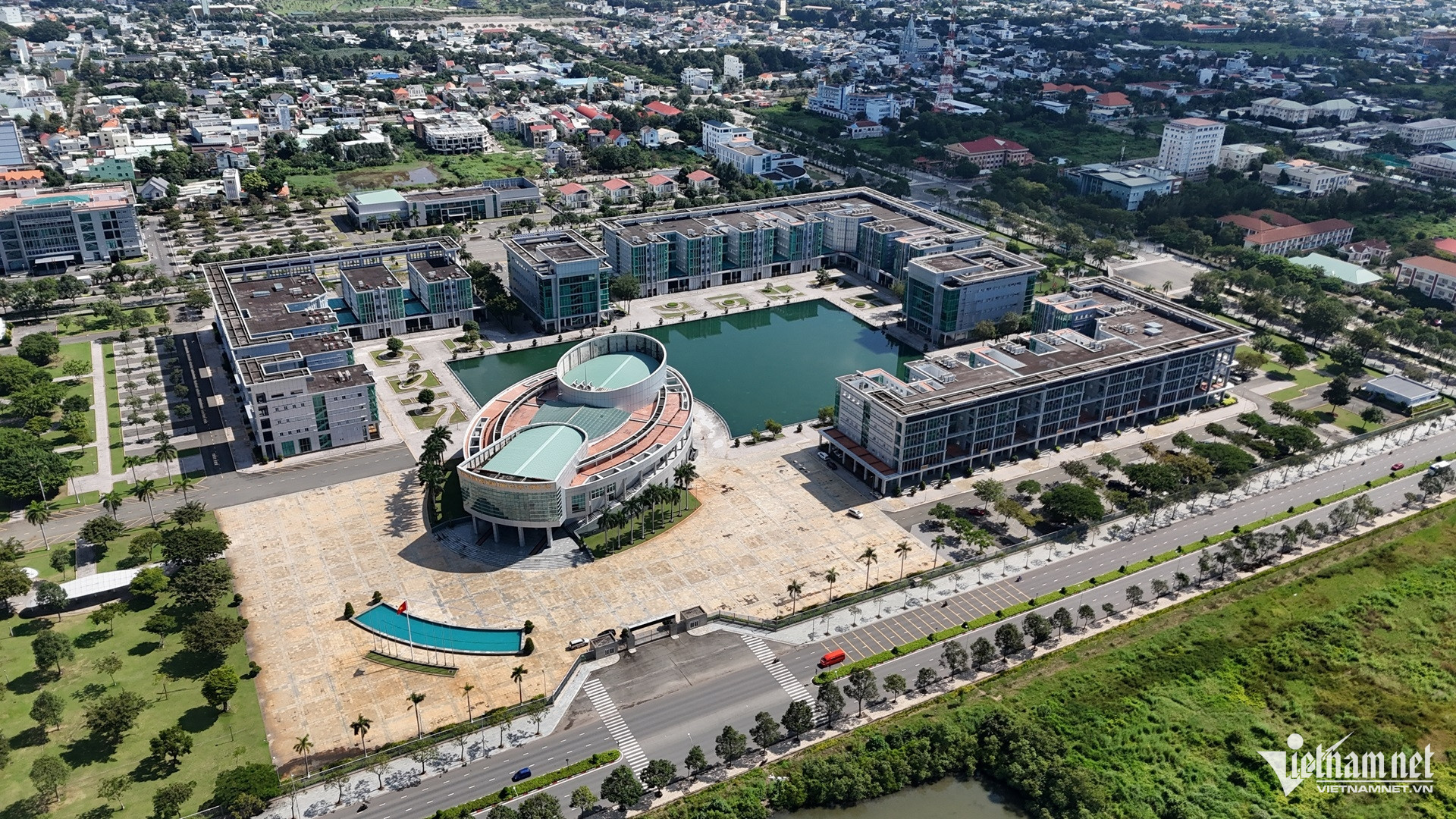
The former Ba Ria-Vung Tau Province Administrative and Political Center at 198 Bach Dang Street, Ba Ria Ward, has been transferred to Saigon University for educational use.
In early October, the Ho Chi Minh City People's Committee approved the transfer of the former Ba Ria-Vung Tau Province's Administrative and Political Center at 198 Bach Dang Street, Ba Ria Ward, to Saigon University.
The property will be converted from government office space into facilities for education and training.
Covering 147,856 square meters, the complex is among the largest public properties recently allocated to a university in the city.
It comprises buildings A1, A2, B1, B2 and B3, along with a convention center, with a combined usable floor area of 204,499 square meters.
According to official asset records, the land has a recorded original cost and remaining value of more than VND2.881 trillion.
The buildings have an original recorded cost exceeding VND1.355 trillion, with a remaining book value of more than VND790.9 billion.
The city has instructed its People's Committee Office to coordinate with Saigon University in transferring the property and relevant legal documentation.
The university is responsible for managing and using the facilities for their designated purposes in a transparent and efficient manner.
It must also move quickly to bring the property into educational use beginning in the 2026-2027 academic year.
In addition to the former administrative center, Saigon University has been allocated the second campus of Tran Dai Nghia College at 7/10 Extended Administrative Area, Nha Be Commune.
This property covers 46,633.7 square meters of land and includes buildings with a total area of 16,147 square meters.
The land has an original recorded cost of nearly VND1.204 trillion, while the buildings have an original cost of approximately VND182 billion and a remaining value exceeding VND174.6 billion.
Together, the two transfers have added nearly 19.45 hectares to the university's land holdings, providing additional space for teaching, training and future institutional development.
HUIT expands land holdings to more than 185 hectares
Ho Chi Minh City University of Industry and Trade has significantly expanded its land portfolio following a decision by the Minister of Industry and Trade to reorganize the Research Institute for Oil and Oil Plants as a unit under the university.
Under the arrangement, HUIT takes over the institute's personnel, research functions, responsibilities, finances and existing assets, including land in several localities.
In Ho Chi Minh City, the institute operates from its headquarters at 171-175 Ham Nghi Street in Ben Thanh Ward, along with two research stations in the former Binh Thanh area.
These facilities account for more than eight hectares.
Elsewhere, the Dong Go Coconut Center in the former Ben Tre Province occupies approximately 60 hectares, while the Trang Bang Seed Production Center in Tay Ninh covers around 100 hectares.
In total, HUIT has received more than 168 hectares from the institute.
Combined with its existing properties, the university now manages more than 185 hectares, making it the Vietnamese university with the largest reported land holdings, according to published figures.
The Ministry of Industry and Trade has required the transfer process to maintain normal institutional operations, safeguard the rights of relevant parties and prevent corruption, asset losses or waste.
The additional land provides opportunities for HUIT to expand education, scientific research and experimental activities.
However, the extensive portfolio also creates management challenges, particularly in ensuring that land and facilities are used for their intended purposes rather than remaining vacant or underutilized.
UEH receives prime downtown property near Turtle Lake
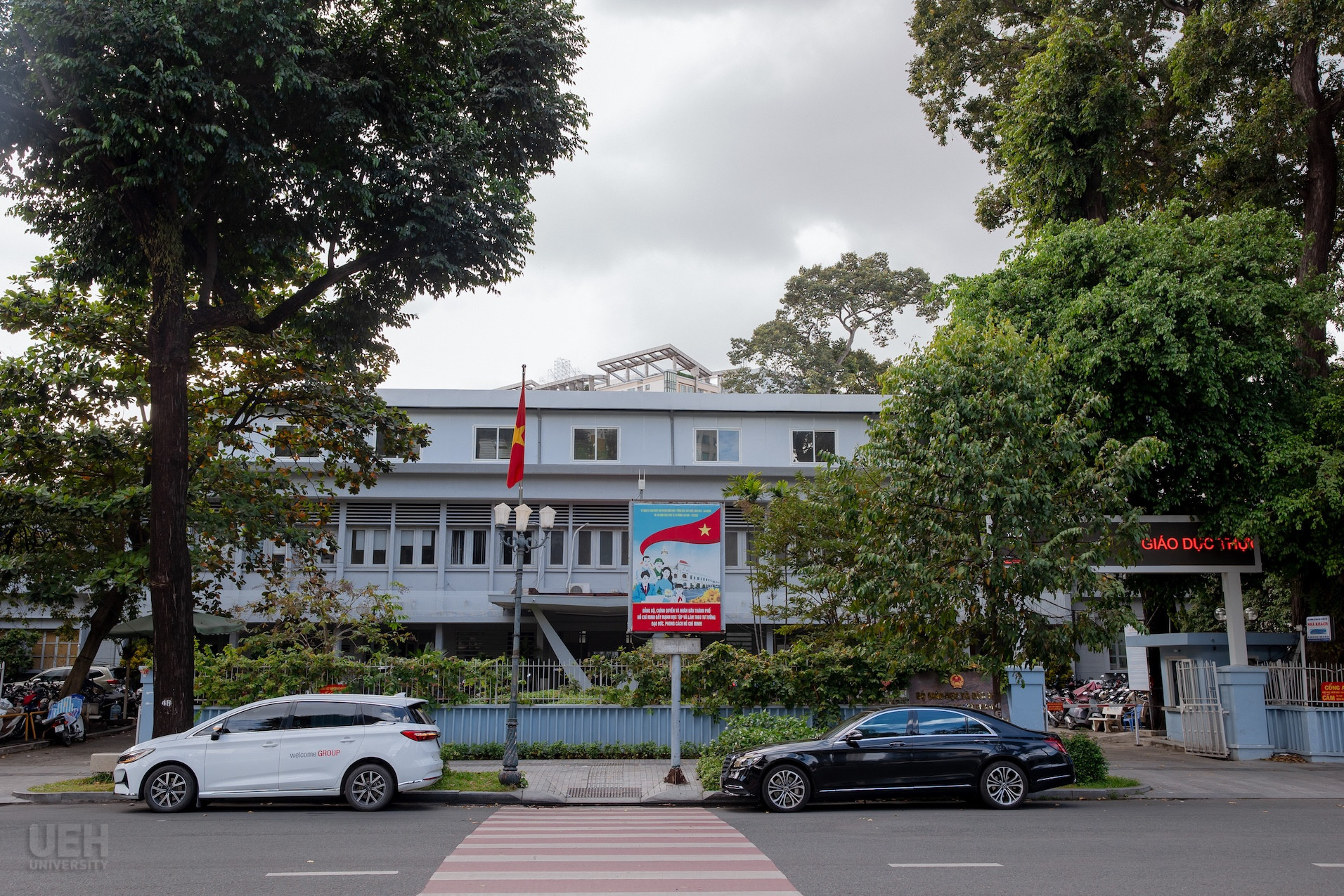
The prime property at 3 International Square, beside Turtle Lake in central Ho Chi Minh City, has been allocated to the University of Economics Ho Chi Minh City.
While Saigon University and HUIT have gained substantial land areas, the University of Economics Ho Chi Minh City has received a smaller but exceptionally valuable property in the heart of the city.
The site, located at 3 International Square beside Turtle Lake, occupies one of Ho Chi Minh City's most prominent central locations.
Previously managed by the Southern Center for Education and Training Development under the Ministry of Education and Training's Office, the property covers more than 5,200 square meters.
According to an asset inventory conducted at the end of 2025, the complex comprises land, four buildings and a parking garage.
The land alone has an original recorded cost exceeding VND1.789 trillion, while the buildings' remaining book value was recorded as zero.
The transfer forms part of efforts to redistribute state-owned assets according to institutional needs and improve the efficiency of public resource utilization.
Bui Quang Hung, director of UEH, said the university plans to transform the property into a knowledge square.
The proposed development would accommodate shared activities for the ministry while providing additional space for scientific research, international cooperation, innovation and community engagement.
According to Hung, the redevelopment plan will prioritize the preservation of existing architecture and integration with the surrounding urban landscape.
Green spaces and environmentally friendly construction materials will also be emphasized.
The project is expected to create a new academic and community-oriented space in one of the city's most valuable urban areas.
Public asset transfers offer opportunities and management challenges
The allocation of former government offices, research facilities and prime urban land to universities reflects a broader effort to redistribute state-owned properties in line with higher education development needs.
For universities facing growing demand for teaching space, laboratories and research infrastructure, the transfers offer opportunities to expand without acquiring entirely new sites.
The properties also differ considerably in their potential uses, from large campuses suitable for education and experimental research to centrally located facilities designed for academic collaboration and community engagement.
However, the substantial value of these public assets places additional responsibility on recipient institutions.
Effective management, transparent use and timely conversion into functional educational facilities will be essential to preventing waste and ensuring that the transfers deliver meaningful benefits.
Ultimately, the significance of these properties lies not only in their size, location or multitrillion-dong valuations, but also in how effectively they support education, scientific research and the wider community.
Le Huyen

