 Vietnamnet.vn

 Podcast


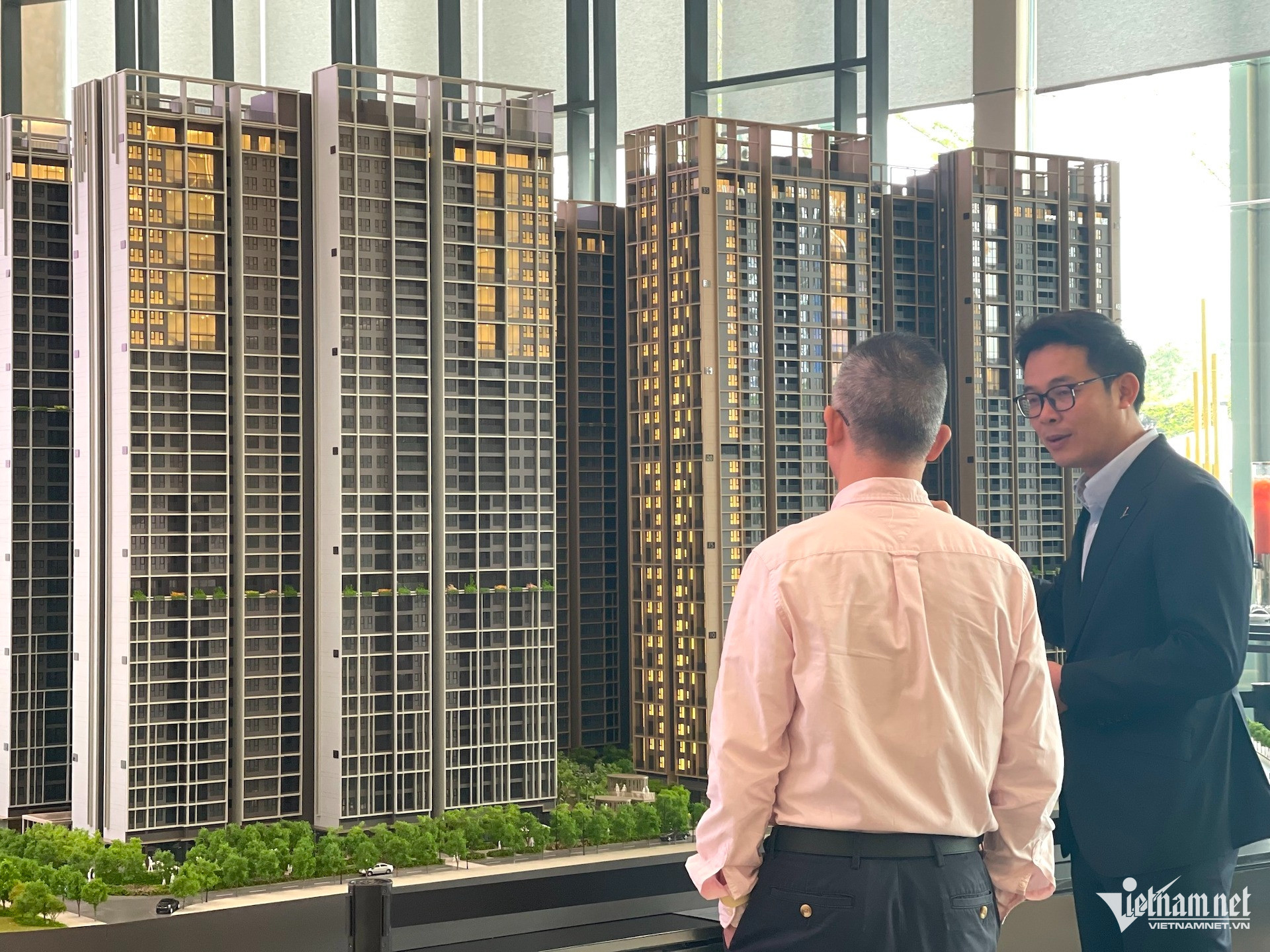
Experts advise that total monthly principal and interest payments should not exceed 30-35 percent of actual income, while factoring in potential rate hike scenarios.
A survey shows that floating interest rates on home loans at many banks range from 12 to 15 percent a year, while first-year rates are around 9-10 percent. Against this backdrop, many people are asking how much they can safely borrow without having to devote most of their income to repaying the bank.
Speaking at a housing price seminar on October 15, economist Ngo Tri Long said homebuyers should prioritize financial safety, particularly when using credit to finance a purchase.
He said monthly principal and interest payments should account for no more than 30-35 percent of a household's actual income. This is a guideline to help buyers maintain spending on essential needs and cope with fluctuations in income.
For example, a household earning VND40 million a month should aim to keep loan repayments at around VND12-14 million. If repayments exceed 40 percent of income, financial pressure will rise significantly, particularly if the family faces additional expenses or interest rates increase.
In addition to assessing their repayment capacity, buyers should maintain an emergency reserve sufficient to cover living expenses and loan obligations for at least six months. Ideally, this reserve should cover nine to 12 months of essential expenses.
Another factor that cannot be overlooked is interest rate risk. Buyers should calculate whether their income would remain sufficient to service the loan if rates rose by another 2-3 percentage points.
Long cited the example of a VND1.5 billion loan over 20 years. With equal monthly repayments calculated on a reducing-balance basis and a fixed annual interest rate of 10 percent, the monthly payment would be around VND14.5 million. If the rate rose to 15 percent, the monthly payment could increase to around VND19.8 million.
This means that an interest rate increase alone would add more than VND5 million to the borrower's monthly expenses. If income does not rise accordingly, the loan could quickly become a financial burden.
The expert also noted that advertised bank deposit rates differ significantly from actual lending rates. Banks may advertise interest rates of around 6-7 percent, but some offer loans at 8-9 percent or even above 9 percent, depending on the circumstances.
This is particularly important for first-time homebuyers, who often need long-term loans and have limited financial flexibility to cope with adverse changes.
With VND3 billion in savings, should you buy or rent?
One question many people face is whether, with around VND3 billion in savings and plans to borrow another VND1 billion, they should buy an apartment or purchase land on the outskirts and build a house.
Pham Duc Toan, CEO of EZ Vietnam Real Estate Investment and Development JSC, said buying an apartment was worth considering with a total budget of around VND4 billion.
He said young buyers should prioritize apartments close to their workplaces, with convenient transport links and facilities suited to their long-term living needs. They should also consider proximity to schools and amenities, as well as their family's needs if they plan to have children.
With this budget, buyers could look for two-bedroom apartments in some areas such as Hoang Mai and Thanh Tri, or other suitable locations. However, the actual options available would depend on the project's location, apartment size and quality, and prevailing market prices at the time of purchase.
Toan recommended considering loans from family members or relatives, if possible, to reduce interest payments to banks and limit credit-related obligations.
In his view, taking on a manageable amount of debt can sometimes motivate young people to work harder, increase their income and improve their quality of life. However, this is only beneficial if borrowers have carefully assessed their repayment capacity and do not take on more financial pressure than they can bear.
Taking a more cautious view, economist Ngo Tri Long said people with VND3 billion in savings who need to borrow another VND1 billion should also consider continuing to rent, particularly in a high interest-rate environment.
If actual borrowing rates are 13-15 percent a year, interest alone on a VND1 billion loan could exceed VND10 million a month during the initial period. This could place considerable pressure on households with average incomes.
Meanwhile, depositing VND3 billion in a savings account at an annual interest rate of 8-9 percent would generate nearly VND300 million a year. That amount could comfortably cover the cost of renting a good-quality home while leaving money to spare.
Hong Khanh

