 Vietnamnet.vn

 Podcast



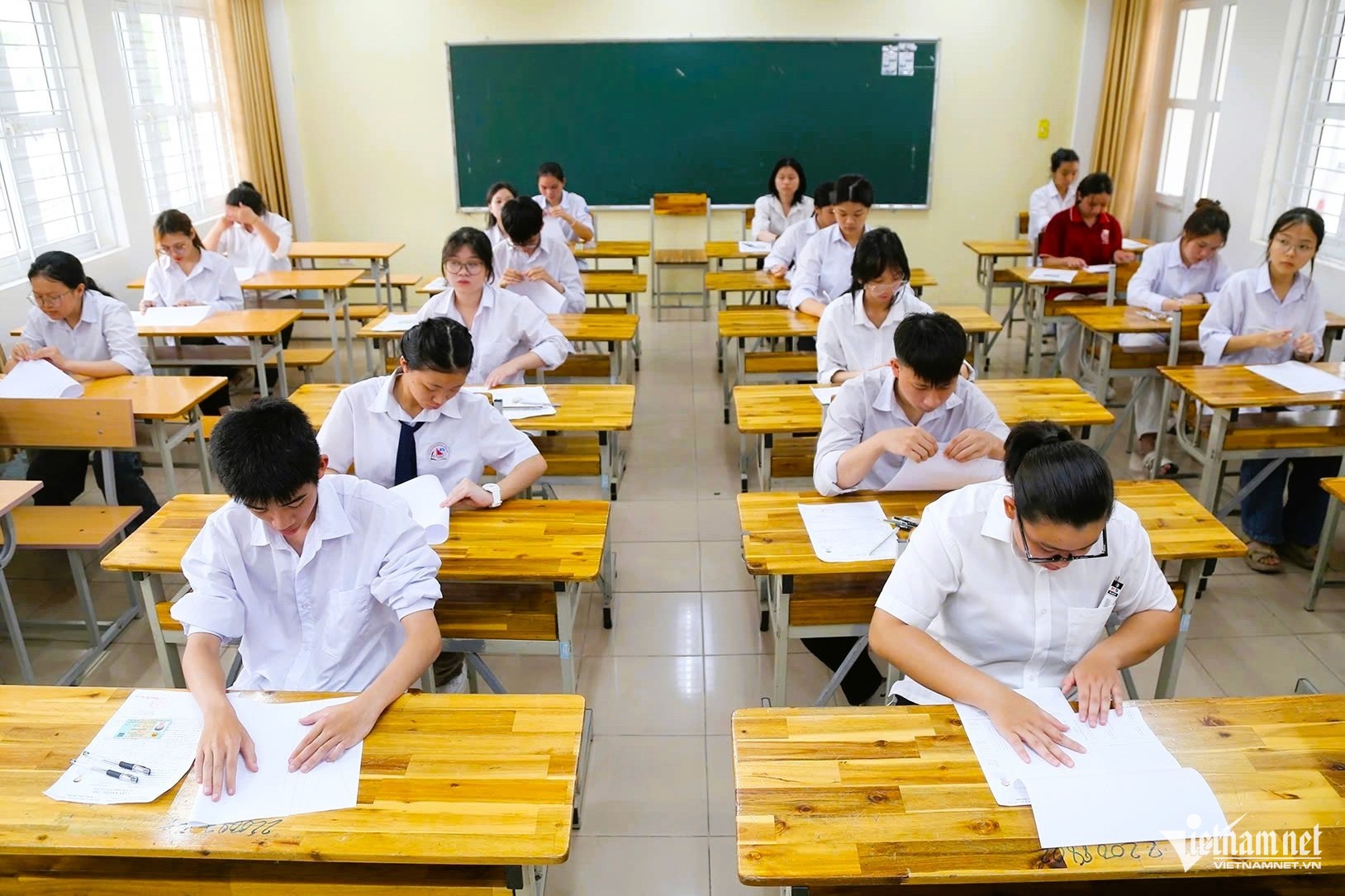
According to the Ministry of Education and Training (MOET), the exam not only aims to certify graduation, but also acts as a standardized assessment tool that provides data for management and university admissions.
According to MOET's web portal, the High School Graduation Exam over recent years has been organized and incrementally adjusted to suit practical realities. Continuing to innovate and perfect a national standardized exam is not only a mandate under official policies and regulations, but also a practical requirement aimed at building a fair, high-quality, and transparent education system.
MOET stated that Resolution 29-NQ/TW and the Law on Education both identify exam reform as a move toward reducing stress while maintaining reliability, accurately assessing student capacity, and serving as a foundation for admissions into vocational and higher education.
According to MOET, reforming the High School Graduation Exam since 2015, and particularly from 2020 onward, has demonstrated numerous advantages. It creates a unified national benchmark for evaluation, contributing to fairness, reducing social pressure and costs, and supplying data to evaluate educational quality and university admissions.
As the high school graduation exam has undergone reforms, the question of whether "a national standardized examination is still necessary" has been raised repeatedly. Most experts, scientists, education administrators and teachers have answered that such an exam remains necessary for several key reasons.
First, for a significant number of students and teachers, if there is no exam, they will not study or teach. This is a reality that needs to be acknowledged openly when designing an appropriate system.
Second, without examinations that are seriously administered and conducted on a broad scale, particularly nationwide, education managers would lack reliable information about the state of general education across the country and in individual localities.
Third, the fact that "more than 99 percent of students pass every year" should not be used as an argument for questioning the need for the exam.
Even if 99 percent of products coming off a production line meet standards, no one would eliminate the final quality-control stage. Detecting anomalies in exam results in some localities is itself a result of analyzing exam data and making that data publicly available and transparent – something that very few examinations today are able to achieve.
Reforms continue
MOET said that, since 2020, the high school graduation exam has no longer been a "two-in-one" examination as it was during the 2015-2019 period.
Since 2020, the exam has been used to recognize high school graduation while also assessing, on a large scale, the extent to which students meet national standards; providing a basis for evaluating education quality at schools, in localities and nationwide; and monitoring the impact of education programs and policies against a common benchmark.
The ministry stressed that university and vocational education admissions fall under the autonomy of individual education institutions. Graduation exam results remain one source of data that institutions can choose to use alongside other admission methods.
According to the ministry, reforms to examinations and admissions in recent years have aimed to establish national standards, reduce social costs, expand institutional autonomy and strengthen data-driven governance.
In the time to come, the national standardized exam will continue to apply technology to minimize human intervention, while authorities will study the possibility of holding multiple exam sessions each year.
The ministry said admissions are a matter of institutional autonomy, but management will be tightened to prevent a situation in which "every flower blooms in its own way," with each university adopting a different admissions method, creating unnecessary costs, pressure and inequality for students. Although the use of results is not mandatory, scores from the national standardized exam will remain an important basis for university admissions.
MOET will continue to refine regulations on admissions autonomy alongside accountability requirements; establish minimum standards for independent examinations; modernize assessment systems; develop standardized question banks; gradually pilot computer-based testing; and apply artificial intelligence to data analysis, anomaly detection and examination support, while strengthening measures to ensure exam security and transparency.
Minister of Education and Training Hoang Minh Son has ordered a comprehensive review and assessment of the organization of the high school graduation exam in recent years. The review will serve as the basis for further improvements toward a safe, high-quality and efficient examination.
Thanh Hung
.svg)
