 Vietnamnet.vn

 Podcast



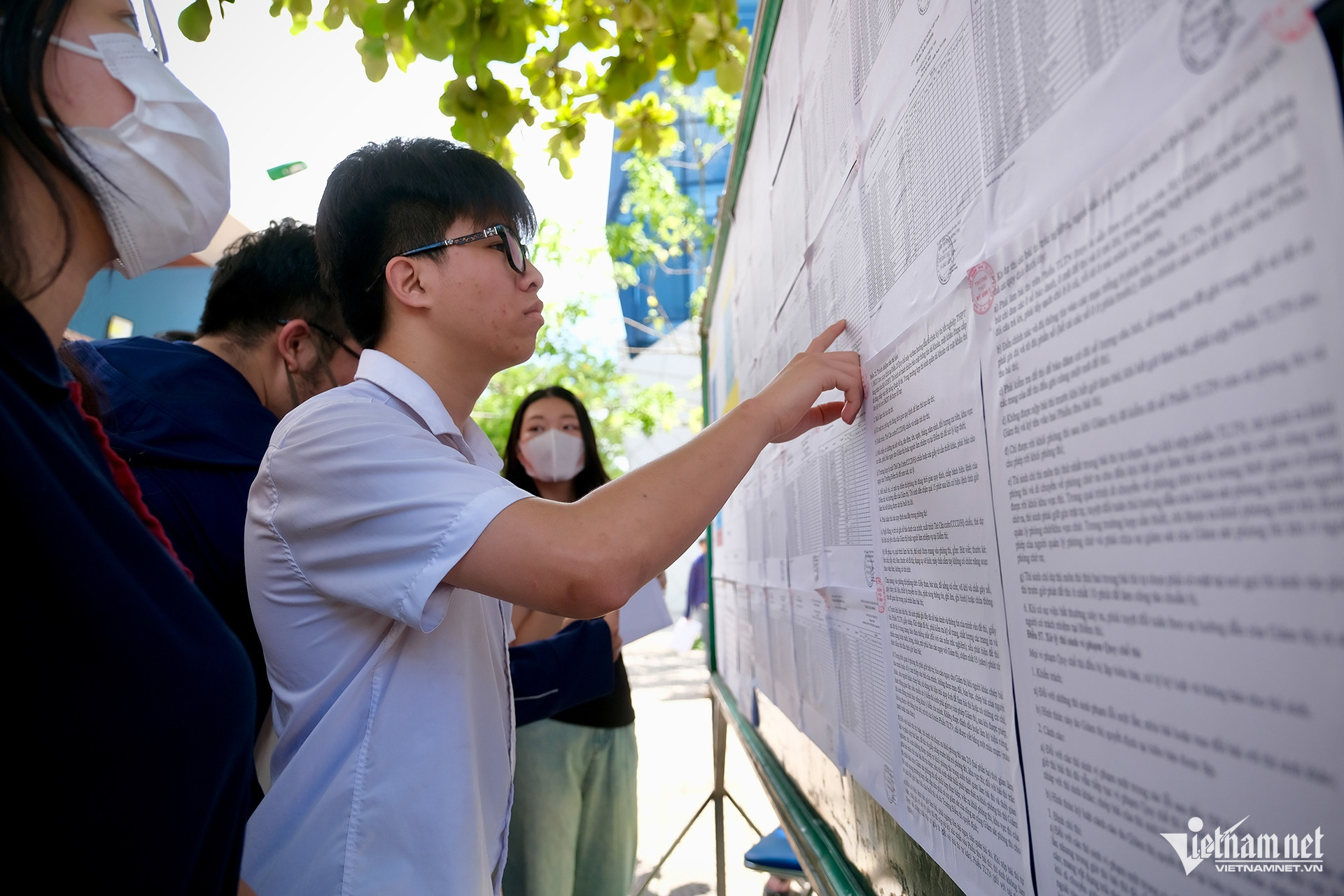
Eight member schools of Vietnam National University HCMC (VNU-HCM), including: HCMC University of Technology, University of Natural Sciences, University of Social Sciences and Humanities, International University, University of Information Technology, University of Economics and Law, University of Health Sciences, and An Giang University, will no longer admit students based solely on high school finals results. The HCMC University of Technology has had this policy since 2021.
All eight schools use a unified admission method throughout the system, allowing candidates to use high school graduation exam results, the aptitude test organized by VNU-HCM, high school academic results (transcripts), and other appropriate criteria for admission.
The universities are granted autonomy to determine the minimum quality threshold for admission; develop weights and conversion coefficients for each criterion; implement them according to the characteristics of each field of study; and take responsibility for public accountability, ensuring fairness and convenience for candidates.
The combined admission formula for 2026 is calculated according to the principle: Combined admission score = w1 × high school graduation exam score + w2 × aptitude test + w3 × high school academic record score + bonus points (if any).
In this formula, w1, w2, and w3 are the coefficients of each criterion and are all greater than 0, meaning all three factors play a role in calculating the final score. Depending on each member university, these coefficients may differ and are determined based on the proportion of enrolled students by admission method in the previous three years or through analysis of the correlation between student academic performance and admission criteria.
All admission scores are converted to a 100-point scale.
The University of Economics HCMC (UEH) has also stopped considering academic records and high school graduation exam scores as independent admission methods. Instead, the university now has only two methods: direct admission according to regulations of the Ministry of Education and Training and combined admission.
These two methods are applied uniformly across all training programs, including Vietnamese-language programs, full English-language programs, partial English-language programs, ISB Talent Bachelor programs, and ASIA Co-op Bachelor programs. The university has developed a common admission formula to ensure comprehensiveness, fairness, and suitability with modern training requirements, especially targeting well-rounded students, students with strong English proficiency, and students from specialized high schools, the core group for high-quality and internationally connected programs.
Similarly, Industrial University of HCMC no longer considers separate admission methods such as academic records or high school graduation exam scores, but instead shifts to a combined admission approach.
Graduation exam scores reflect only a short period
Nguyen Trung Nhan, head of the Training Department at Industrial University of HCMC, said the combined admission method is increasingly being chosen by higher education institutions because it better ensures fairness for candidates. Since 2025, universities have been required to clearly publish score differences between admission subject combinations (if any) as well as the method for converting admission scores between different admission methods in accordance with admission regulations.
Nhan said that evaluating through transcripts still has differences in difficulty levels between high schools and localities. Training institutions cannot fully analyze the transcript score spectrum by school or region to build a suitable conversion formula for all candidates. This makes independent admission by transcripts or graduation exam scores potentially risky and unfair.
Therefore, in 2026, the general trend is to prioritize combined admission using multiple criteria, in which nationwide standardized exams are often assigned higher weights to better reflect actual academic ability. Determining admission based on weighted total scores not only helps select students with balanced abilities but also helps limit “score inflation,” creating a more transparent competitive environment.
Pham Thai Son, Director of Admissions under HCMC University of Industry and Trade, assessed that no longer reviewing graduation exam scores independently is an inevitable trend in the near future.
He said the high school graduation exam plays an important role but primarily reflects the results of review in a short period. If using only this result for admission, it may skew the learning orientation, causing students to focus on a single exam instead of comprehensive development. The integrated scoring method will create a more balanced learning motivation, limiting the situation of lopsided learning.
Thanh Hung
.svg)
