 Vietnamnet.vn

 Podcast



In an interview with the Vietnam News Agency (VNA) ahead of the election of deputies to the 16th NA and People’s Councils at all levels for the 2026–2031 term, Nyamayemombe said the figure also aligns with Vietnam’s electoral law, which stipulates that at least 35% of candidates on the official list must be women.
She noted that the proportion reflects both the aspirations and the capacity of women to engage in decision-making processes, bringing their perspectives and experiences into law making and enforcement for the country’s development and prosperity.
Nyamayemombe added that many female candidates are likely receiving strong backing from their families, signalling a positive shift in social attitude in Vietnam, where women are increasingly recognised as playing an essential role in public affairs.
The development also mirrors Vietnam’s sustained efforts to establish legal and policy frameworks that promote gender equality, alongside long-term investment in education and capacity building. Together, these factors have created a more favourable environment for women to step into leadership and decision-making roles.
From UN Women’s perspective, the trend highlights the growing presence and influence of Vietnamese women in political life, while also sending a powerful message to younger generations that political participation is a viable and meaningful path for women.
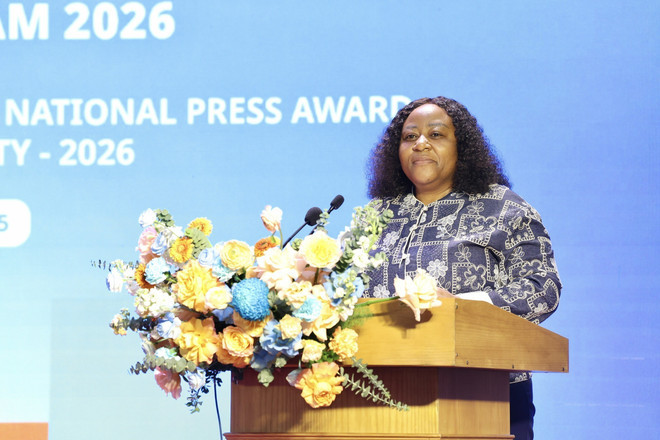
The country representative pointed to global parliamentary data and UN Women research showing that when women are practically represented, decision-making bodies tend to prioritise issues closely tied to people’s daily lives, including health care, education, social protection, equality before the law and community welfare.
In Vietnam, women made up about 30-31.6% of deputies in the 15th NA, placing the country among those with relatively high levels of female parliamentary representation in the Asia-Pacific region.
Greater diversity in parliament, she said, helps enrich debate, ensure policies are more closely aligned with real-life needs, and foster a governance system that is more inclusive and people-centred, thus benefiting society as a whole.
According to the UN Women representative, Vietnam has taken a number of effective steps to promote women’s political participation, offering valuable lessons for other countries.
The National Strategy on Gender Equality for 2021–2030 sets specific targets for women’s representation in elected bodies and leadership positions across the political system, the public sector and the economy, helping create a clearer leadership pathway for women.
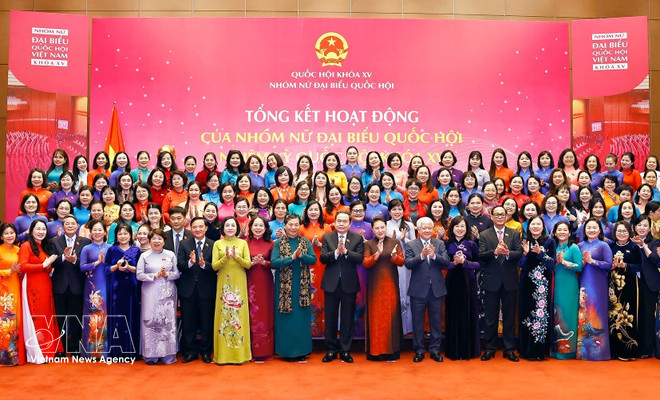
National Assembly Chairman Tran Thanh Man and officials attend a ceremony reviewing the activities of the Group of Women Deputies of the 15th National Assembly in Hanoi on December 9, 2025. (Photo: VNA)
Mass organisations such as the Vietnam Women’s Union and the Ho Chi Minh Communist Youth Union also play a crucial role by mobilising, identifying and nurturing female talent for political engagement.
Vietnam has also invested heavily in leadership training. The Ho Chi Minh National Academy of Politics, for example, runs a range of programmes designed to prepare future leaders and managers. Introducing targeted measures to expand training opportunities for women could further strengthen the pipeline of female candidates for leadership roles.
In addition, international development cooperation initiatives and academic and cultural exchanges have contributed to reshaping public perceptions of women’s roles while opening up more learning and career development opportunities for women in fields such as science, governance and diplomacy. UN Women, together with other UN agencies, is supporting initiatives aimed at advancing women’s leadership in Vietnam.
As Vietnam moves into a new stage of development, Nyamayemombe said sustained investment in both institutions and people will be crucial to further enhancing women’s political participation.
Key priorities include strengthening the implementation of gender equality policies and targets, through effective monitoring mechanisms and adequate resources; expanding training, mentorship and networking programmes for female leaders, especially young women, first-time candidates and women in the public sector; and continuing efforts to challenge gender stereotypes while promoting a more balanced sharing of unpaid care responsibilities so women have greater opportunities for learning, networking and career advancement./.VNA
.svg)
