 Vietnamnet.vn

 Podcast



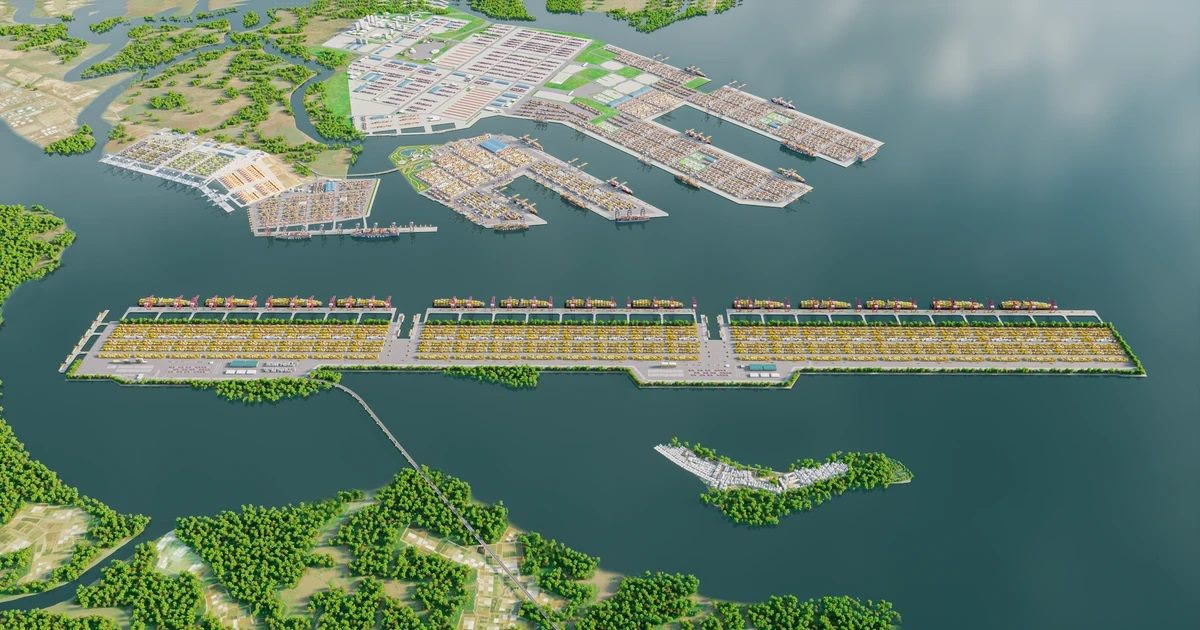
Ho Chi Minh City has officially approved a strategic investor consortium to develop the Can Gio international transshipment port, marking a significant milestone for a mega project with a total investment of nearly VND128,872 billion (US$5 billion).
The selected consortium comprises Vietnam Maritime Corporation, Saigon Port Joint Stock Company, and Terminal Investment Limited Holding S.A. The latter is a member of MSC, the world’s largest shipping line, and will contribute 49% of the project’s capital.
The participation of this global shipping powerhouse is expected to provide both substantial financial resources and access to an extensive cargo network, strengthening the port’s position as a future international gateway.
With a total investment of VND128,872 billion (US$5 billion), the project will span around 571 hectares, with a main berth system stretching approximately 7.5 kilometers.
Under the development roadmap, by 2030 the port is expected to feature between two and four berths with a combined length of more than 2 kilometers, capable of handling up to 4.8 million TEU annually. Looking further ahead to 2047, the mega port is projected to reach a maximum design capacity of 16.9 million TEU, supported by a system of 13 modern terminals capable of accommodating ultra-large container vessels of 250,000 tons or more.
To ensure feasibility and long-term sustainability, the city has imposed strict conditions on the investor consortium.
The partners must arrange their own financing and are prohibited from transferring the project within 10 years from the date of land handover. They are also required to disburse at least VND50,000 billion (US$2 billion) within the first decade and complete the entire project within 20 years, in line with the spirit of Resolution 98 and Resolution 260.
Authorities have further instructed the investors to strictly follow the Prime Minister’s directives, ensuring a balanced ratio between transshipment cargo and import-export goods, while implementing the project in a way that does not disrupt nearby ports.
Alongside the responsibility to protect the unique ecosystem of Can Gio, the project is expected to become a critical link in global supply chains. Once operating at full capacity, the mega port is projected to generate annual revenues of between VND34,000 billion and VND40,000 billion (US$1.3 billion to US$1.6 billion), while creating 6,000 to 8,000 direct jobs and tens of thousands of indirect employment opportunities.
Tuan Kiet
.svg)
