 Vietnamnet.vn

 Podcast



Modern industry, innovation, and next-generation manufacturing must anchor Ho Chi Minh City’s ascent into a new era of growth, said Vice Chairman of the municipal People’s Committee Nguyen Loc Ha.
Huge potential, structural bottlenecks
Economists from the University of Economics Ho Chi Minh City noted that prior to its merger with Binh Duong and Ba Ria – Vung Tau provinces, Ho Chi Minh City was all about light industry, high tech, and logistics services; Binh Duong led nationwide in manufacturing and supporting industries; while Ba Ria – Vung Tau specialised in heavy industry, petrochemicals, and seaports. Each had its strengths, but they were like solo acts with no band to back them up.
Post-merger now, Ho Chi Minh City has become Vietnam’s largest industrial hub, boasting 61 industrial parks, export processing zones, and clusters across the former regions. This creates a diverse industrial ecosystem with varied scales and strategic roles.
The city now drives over 30% of Vietnam’s manufacturing output, with seaports handling a massive 250 million tonnes a year, growing 8% yearly from 2020 to 2024. Foreign direct investment tops 90 billion USD, nearly half the nation’s total.
Bui Ta Hoang Vu, Director of the municipal Department of Industry and Trade, flagged key constraints. Logistics costs, at 16–20% of product prices, way above regional averages. Scarce industrial land hampers large-scale, high-tech investment. Automation is stuck in the slow lane, with labour productivity at just 60% of advanced industrial cities. Outdated manufacturers are dragging their feet on digital transformation, green standards, and sustainability. US tariffs on Vietnamese exports are turning up the heat to innovate fast, boost quality, and stay competitive.
Next-generation industry as growth engine
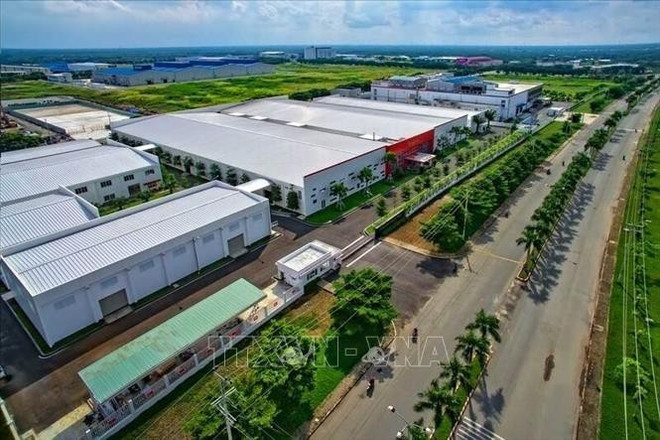
For new Ho Chi Minh City to become a true southern industrial powerhouse, Do Thien Anh Tuan from the Fulbright School of Public Policy and Management proposed a regional division of labour: former Ho Chi Minh City as an R&D, innovation, and tech commercialisation hub hosting research institutes, startups, industrial labs, and large data centres; former Binh Duong as a smart manufacturing base with next-generation industrial parks, supporting industries, semiconductors, precision mechanics, and automation; and former Ba Ria – Vung Tau as a logistics, heavy industry, and clean energy hub leveraging deep-water ports, gas-fired power plants, chemicals, and global logistics services.
Industrial development in Ho Chi Minh City must build first on existing strengths, particularly core sectors with the potential for tech-intensive, high value-added production, said Dr. Nguyen Thanh Trong from the Eastern International University.
To tackle bottlenecks and plan through 2030 with a 2050 vision, Trong advocated for next-generation industrial zones that are green, smart, and eco-friendly, integrated with urban development.
Transport infrastructure is critical to unlock growth. Ongoing projects like Ring Roads 3 and 4, the Ho Chi Minh City - Thu Dau Mot - Chon Thanh expressway, the Bien Hoa - Vung Tau expressway, and the Ho Chi Minh City - Moc Bai expressway will bolster supply chains, linking factories with ports and borders to lure more investors, he said.
Vice Chairman Ha stressed that overcoming current limitations demands tighter collaboration among the Government, academia, and businesses to drive breakthroughs.
Ho Chi Minh City is pushing for a next-gen industrial model rooted in high tech, smart manufacturing, green industry and a circular economy, all while leveling up value chains and creating an innovation-driven regional ecosystem, he added./.VNA
.svg)
