 Vietnamnet.vn

 Podcast


Speaking at the Autumn Economic Forum 2026 on October 27, Nguyen Cong Vinh, Vice Chairman of the Ho Chi Minh City People's Committee, said the forum's theme, "The Spirit of Cooperation in a New Era," reflected profound changes in the global economy, as value chains are being reorganized and traditional sources of growth are running out of room.
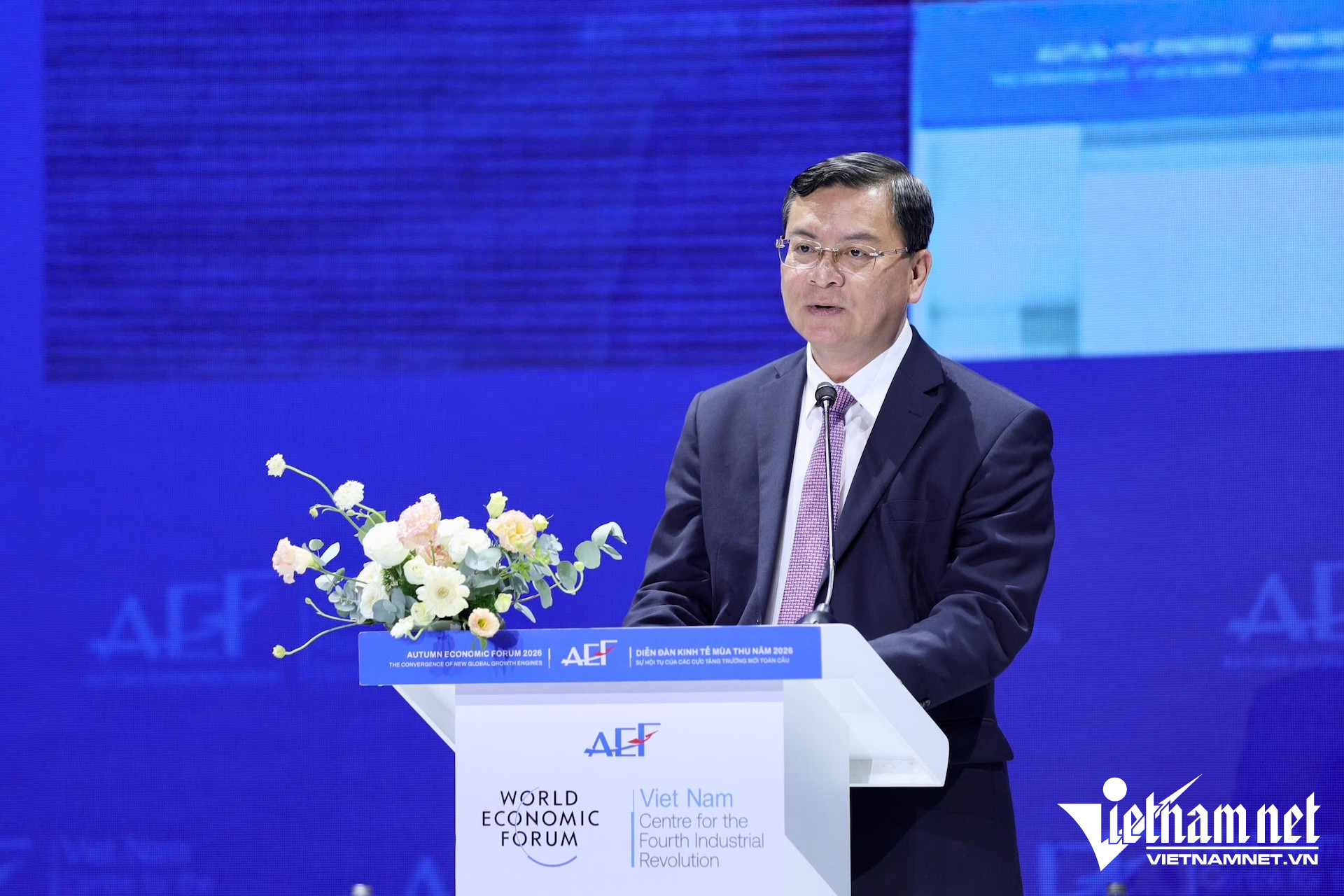
Vinh stressed that artificial intelligence (AI) has become a major force fundamentally reshaping production, public governance and economic structures.
Citing World Economic Forum (WEF) projections that 92 million jobs could be displaced while 170 million new roles emerge by 2030, he warned that nearly 40% of workers' existing skills risk becoming obsolete.
In this new era, he argued, economic success will increasingly depend on how quickly countries can prepare their people, institutions and data systems for change.
Against this backdrop, Vinh outlined three fundamental considerations for Ho Chi Minh City's next stage of development.
First, uncertainty is no longer an exception but a defining condition of the global economy. The ability to adapt, rather than economic size alone, will determine which economies can sustain their progress.
Second, no economy can build everything on its own. Data, technology, capital and talent must increasingly flow across national borders and industry boundaries.
Third, megacities, with their concentrations of people, businesses and knowledge, are emerging as important players in international cooperation alongside nation-states.
To translate these principles into action, international experts at the forum urged Ho Chi Minh City to strengthen the government's role in creating the conditions for innovation and long-term growth.
Drawing on nearly four decades of experience in Singapore, Albert Antoine, Chief Strategy Officer of Singapore-based Avaiga, highlighted the importance of lifelong learning initiatives such as Singapore's SkillsFuture program in helping workers continually upgrade their skills.
He said investment in education, human capital, manufacturing and technology should be treated as a strategic priority for both Vietnam and Ho Chi Minh City.
Antoine also encouraged Vietnam to capitalize on its intellectual resources and abundant workforce by actively pursuing partnerships with global technology corporations.
At the same time, he emphasized that government must play a central role in enabling innovation.
Drawing on Singapore's experience, he pointed to specialized agencies such as GovTech and the Infocomm Media Development Authority (IMDA), alongside regulatory sandboxes that allow new technologies and business models to be tested in controlled environments.
Such mechanisms, he suggested, could help create a more supportive environment for private companies willing to invest in high-risk, emerging fields such as AI.
Thu Ha - Phuoc Sang

