 Vietnamnet.vn

 Podcast



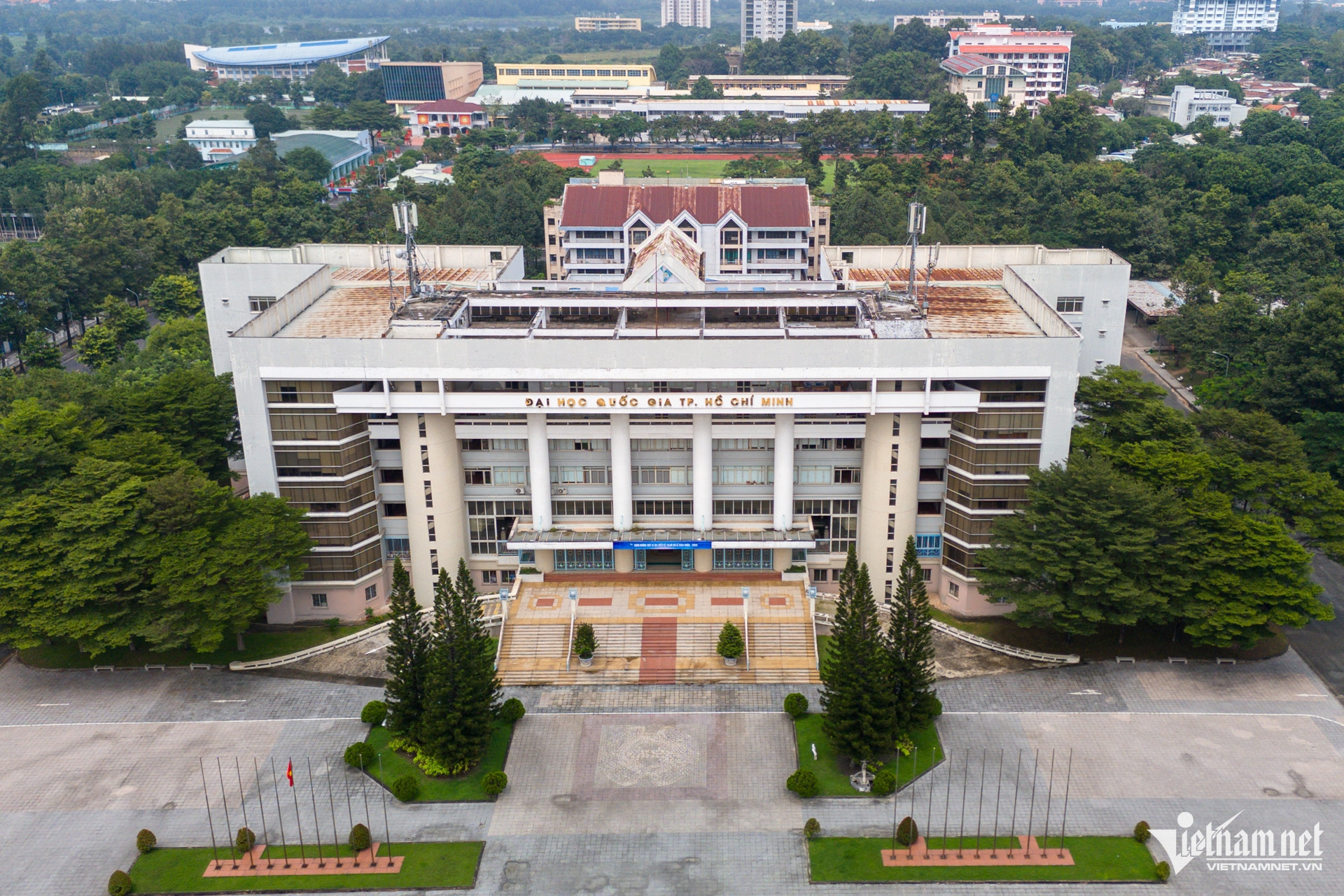
Starting in 2026, Vietnam National University in Ho Chi Minh City (VNU-HCM) will have full authority to set its own standards, conditions, procedures, and criteria for appointing and dismissing professors and associate professors across its entire system.
Aiming for Asia’s top 100 universities
Deputy Prime Minister Le Thanh Long has just signed off on the National Development Program for VNU-HCM, recognizing it as one of Asia’s leading higher education institutions.
According to the decision, VNU-HCM is to develop as a multidisciplinary, multi-field university at the forefront of Asia’s academic landscape. It is envisioned to become a key national center for training, research, and innovation. The university is tasked with developing high-quality human resources, nurturing talent, promoting scientific research, driving digital transformation and entrepreneurship, shaping emerging technological and academic trends, and contributing to national policy development.
Priority investments under the program will focus on core fields such as fundamental sciences, key engineering and technology disciplines, strategic and core technologies, digital technology, as well as economics, management, environmental studies, social sciences, and humanities - to meet the sustainable development needs of Ho Chi Minh City, the Southeast region, and the country as a whole.
The program will run from 2026 to 2030, with the goal of positioning VNU-HCM among Asia’s top higher education institutions. It also seeks to establish the university as a hub for high-quality talent development, science and technology advancement, innovation, and entrepreneurship - serving as a key driver of sustainable growth for the nation, especially in the Southeast region.
Looking further to 2045, VNU-HCM aims to become a top-tier research university in Asia, with at least four disciplines ranked among the top 50 globally by prestigious international rankings. It aspires to become a magnet for talent and a center for the dissemination of Vietnamese knowledge and culture.
By 2030, the university aims to be ranked among Asia’s top 100 universities, with at least one field - such as mathematics - ranked in the world’s top 100. Disciplines such as artificial intelligence and basic sciences are expected to reach the global top 150–250 tier.
Talent-driven transformation
VNU-HCM plans to train and attract at least 1,500 young and leading scientists, 100 visiting professors, and 100 innovation experts. The proportion of lecturers with doctoral degrees will reach 75%.
At least 60% of academic programs in science, engineering, and technology will be taught in English, with priority given to joint degree programs with universities ranked in the global top 200.
Postgraduate learners (including specialized engineers, master’s and doctoral students) will account for at least 30% of total enrollment, with PhD candidates making up 40% of that group.
Six key tasks and solutions
To achieve its goals, the program outlines six strategic priorities:
1. Improving policy and regulatory frameworks: Propose revisions to legal documents to allow VNU-HCM to create and implement mechanisms for attracting top-tier experts, international scholars, and overseas Vietnamese intellectuals. The university will define its own standards, conditions, and procedures for appointing and dismissing professors and associate professors, ensuring alignment with or exceeding national standards from the Ministry of Education and Training. These regulations will take effect across the system beginning in 2026.
2. Developing faculty, researchers, and administrators: Enhance university governance skills, strategic thinking, and capacity for sustainable development and international integration among leaders and managers. Strengthen research capabilities and professional qualifications for faculty and researchers. Attract and retain exceptional young scientists, leading experts, administrators, and entrepreneurs. Promote shared human resource models in collaboration with industry.
3. Modernizing education to meet international standards: Radically reform academic programs and modernize teaching methods through advanced technologies, especially artificial intelligence. Focus on key disciplines such as mathematics, AI, and semiconductors. Develop internationally recognized interdisciplinary and gifted training programs. Innovate admissions processes to better assess students’ abilities and character. Expand graduate training, ensuring 100% of PhD students receive tuition waivers and scholarships via teaching and research assistantship models.
4. Advancing science, technology, innovation, and digital transformation: Invest in facilities and infrastructure. Increase the number of international publications and intellectual property filings. Promote technology transfer and commercialization of research results. Build strong research teams. Elevate the university’s scientific journal to international standards. Grow the Innovation Center into a core platform for collaboration between government, academia, and industry.
5. Developing a university township: Establish a high-tech, smart, and green campus town. Expand student housing and academic spaces. Develop one or two internationally accredited hospitals to support training, scientific research, and community health care.
6. Expanding international cooperation and rankings participation: Implement programs to attract international students, increase student exchanges, and forge strategic partnerships with top global universities, organizations, and businesses. Jointly develop and deliver internationally accredited programs and quality assurance systems.
Le Huyen
.svg)
