 Vietnamnet.vn

 Podcast



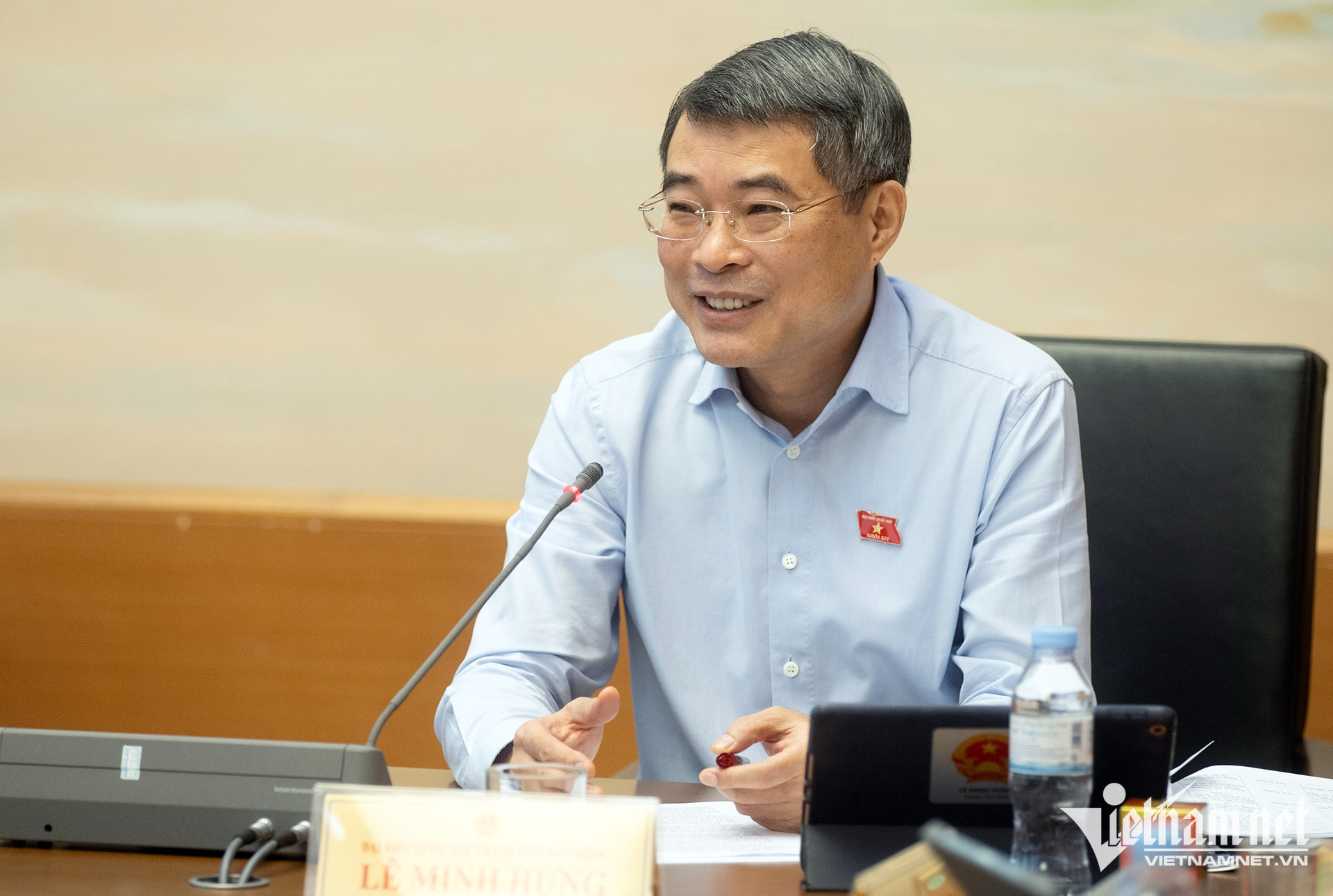
On April 10, the National Assembly discussed the socio-economic situation. Hung noted that "we have set a term goal of double-digit growth," so there must be unity in thinking and action.
He acknowledged that this is a big challenge, but when a goal is set, there must be determination to reach it. With the companionship of the National Assembly, Government agencies, ministries, sectors, localities, the business community, and the people, the Prime Minister believes it is achievable and there is a basis for implementation.
The Government has reported specific targets for each business field and locality to the National Assembly. To achieve growth, the Prime Minister outlined three strategic breakthroughs in the Resolutions of the 13th and 14th Party Congresses.
The Prime Minister said it is “like a road that creates a clear corridor for Vietnam’s economic vehicle to develop.” The Politburo has assigned the Central Policy and Strategy Commission to study and submit to the 3rd Central Conference a resolution on reforming the growth model.
“Before that resolution is issued, we still continue our efforts, and Vietnam’s economic vehicle keeps moving. It is the same vehicle, but if institutions are synchronized, like upgrading the road to high quality, we can achieve higher speed. Therefore, institutional regime is the most critical factor,” the Prime Minister said.
Many deputies raised concerns about obstacles in operating the two-tier local government model. The Prime Minister said this issue must also be thoroughly resolved so that the system operates effectively and smoothly.
“For localities to achieve double-digit growth, the development-creating mission of commune-, ward-, and special-zone-level authorities plays a key role. The year 2026 is a year focusing on the grassroots, with the goal of consolidating and improving the quality of grassroots officials as the guiding principle,” the Prime Minister said.
Regarding stalled projects, the Prime Minister emphasized the determination to complete definitive handling plans within the second quarter. For localities, provincial Party secretaries and standing committees have been requested to directly lead the removal of obstacles for projects in their areas.
“Before talking about new resources and growth drivers, we should address a very large resource currently tied up in thousands of projects and land. If we unblock it, that itself is a very large resource contributing to today’s growth,” the Prime Minister shared.
Regarding special mechanisms mentioned by some deputies, the Prime Minister said “each person wears a different size shirt, and so do localities.” The legal system cannot fit all localities equally; regulations suitable for Hanoi and HCMC may not apply to other provinces.
The legal system has different regulatory frameworks; whichever locality meets certain conditions can apply the corresponding regulations.
The Prime Minister required cutting administrative procedures and business conditions, reducing both compliance time and costs.
The “price to pay” for “hot” growth
The Prime Minister said that in addition to transport infrastructure such as roads, airports, and seaports, energy infrastructure will also be developed. The eighth national power development plan (Plan 8) will be adjusted in response to changes in the international and regional context.
Along with national reserves for petroleum and essential goods, the Prime Minister mentioned developing power plants and baseload power, applying new science and technology to ensure environmental standards.
On human resources, the Prime Minister said the Ministry of Education and Training has been tasked with building programs to train high-quality human resources to meet the requirements of innovation and science and technology development.
Regarding resource allocation, the Prime Minister said the average total investment of society for the next five-year period is expected to be 40 percent of GDP, equivalent to VND38.5 quadrillion, while in the previous term it was about 33 percent. This shows the scale of pressure in this term.
Total public investment in this term is expected to exceed VND8 quadrillion, compared to VND2.87 quadrillion in the previous term. State budget mobilization must also reach VND6.5 quadrillion, 2.7 times higher than the previous term, which is also a major pressure.
About 80 percent of public investment is mobilized from other resources such as domestic enterprises, society’s investment, and foreign investment (both direct and indirect).
The Prime Minister affirmed that growth must go hand in hand with stability and control of the economy’s major balances. We do not accept hot growth, high growth at the cost of macroeconomic stability,” the Prime Minister stated, warning that the price to pay for macroeconomic instability is far greater.
Tu Giang
.svg)
