 Vietnamnet.vn

 Podcast



Business households’ concerns
In the draft amended PIT law, MOF proposes revising and improving the method for calculating tax on business income earned by resident individuals.
To phase out the presumptive tax model from January 1, 2026, and encourage individual businesses to formalize into enterprises, the draft law introduces a tax calculation method, under which taxable income will be multiplied by a tax rate of 17 percent. This will be applied to individuals with annual revenue above the government’s threshold.
This rate is equivalent to the corporate tax rate currently applied to companies with annual revenue from over VND3 billion to VND50 billion, according to the CIT Law.
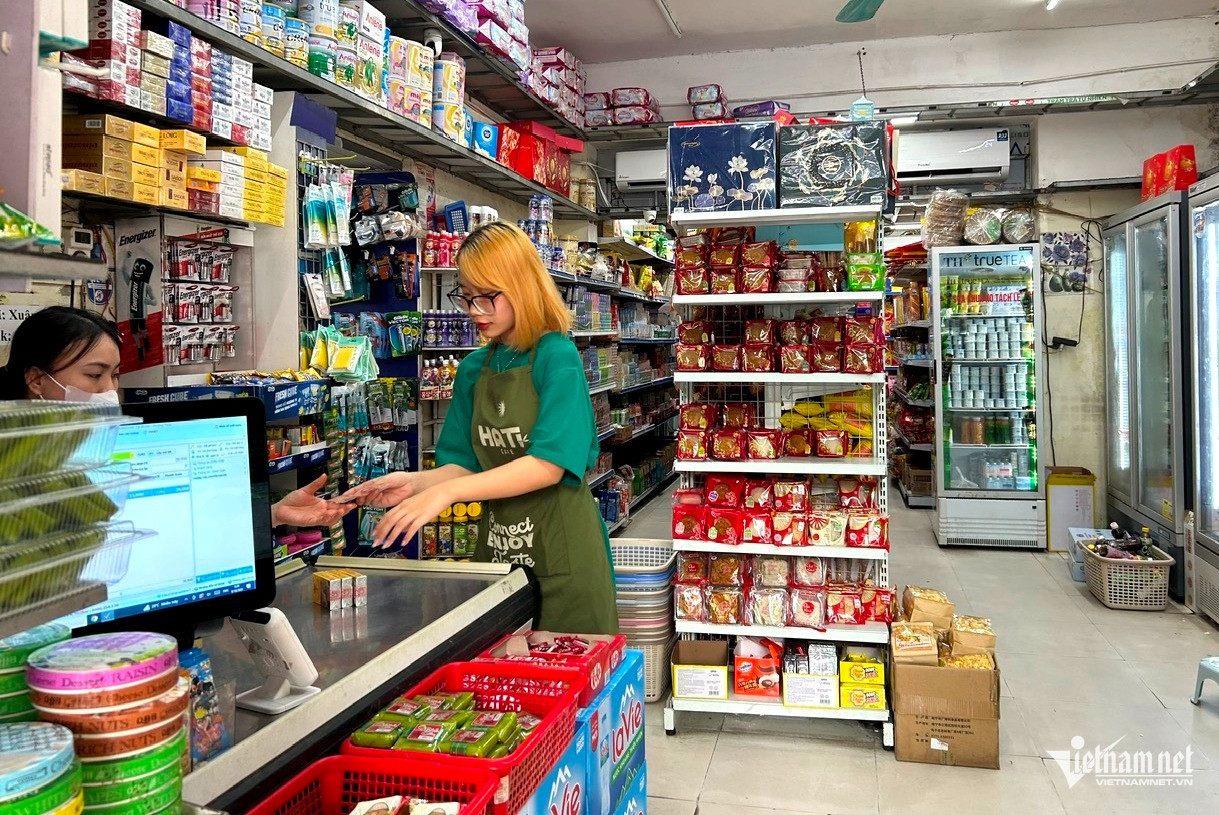
Responding to this proposal, Thu Huong, who runs a small grocery shop in Hoang Liet commune (Hanoi), expressed concern because she is not accustomed to keeping invoices or documentation for expenses.
“The 17 percent tax rate is too high for small-scale household businesses like ours. Besides, it’s hard to prove input costs. For example, when I hire someone to deliver beer or boxes of instant noodles to customers, how can I deduct that expense? If I can’t justify the cost, the taxable income gets inflated, and the tax burden might be even higher than the current presumptive method,” Huong said.
According to Le Thi Thuy, CEO of Bach Khoa Consulting Services, taxable income is calculated as total sales revenue minus deductible expenses, including cost of goods sold and other business-related costs like wages, rent, and advertising.
With this approach, the ministry would apply the 17 percent tax rate to individuals or households with revenue above a certain threshold, similar to how enterprises are taxed.
However, in practice, household businesses often lack proper invoices and receipts for many expense items due to their limited legal status compared to enterprises, making implementation difficult.
Thuy pointed out that household businesses lack full legal status like enterprises, and often do not have valid invoices or receipts for many expenses. This would make implementation difficult.
"This method is only suitable for enterprises. Business households that meet the criteria should convert into enterprises to operate with clearer legal footing and larger scale," she said.
"For individuals and household businesses, tax calculation methods should be simplified to encourage voluntary compliance," she explained.
What do experts say?
Nguyen Van Duoc, General Director of Trong Tin Tax Consulting & Accounting, commented that the proposal aligns with the idea of classifying individual and household businesses by sector and revenue scale for better tax management. Applying a 17 percent tax rate to those with high income would ensure consistency with the CIT Law.
However, Duoc suggested reviewing related regulations to design an appropriate classification framework.
He proposed dividing individuals and household businesses into two groups. Those above a certain revenue threshold would be taxed at 17 percent. Those below would continue with the current method: applying a fixed tax rate to revenue, using electronic invoices linked to cash registers. The specific revenue threshold would be defined by the government.
Currently, household businesses pay tax directly on revenue, calculated as revenue multiplied by a fixed tax rate. This applies to both registered and unregistered business households, using simplified accounting regime per Circular 88 of the Ministry of Finance.
"The current tax system for household businesses leads to tax overlap, i.e some have to pay tax even when they loose money, while others with high profits pay very little. This creates inequality and distorts economic transactions. It's a major burden, especially as we move toward eliminating the flat-rate system and increasing tax transparency," Duoc explained.
He recommended categorizing household businesses by field and revenue to manage taxes, invoices, and accounting obligations effectively.
Type 1: Household businesses with revenue under VND1 billion should be exempt from tax, electronic invoicing, and accounting requirements. This would ease compliance costs and reduce pressure on tax authorities.
Type 2 and 3: Those using the direct tax method (revenue × tax rate) must use e-invoices via cash registers connected to the tax authority under Decree 70. However, they are not required to maintain accounting records unless they voluntarily choose to do so for financial transparency.
This plan is highly feasible, ensuring accurate and fair tax collection while promoting transparency and reducing compliance burdens for taxpayers not yet ready to manage full financial reporting systems.
Nguyen Le
.svg)
