 Vietnamnet.vn

 Podcast



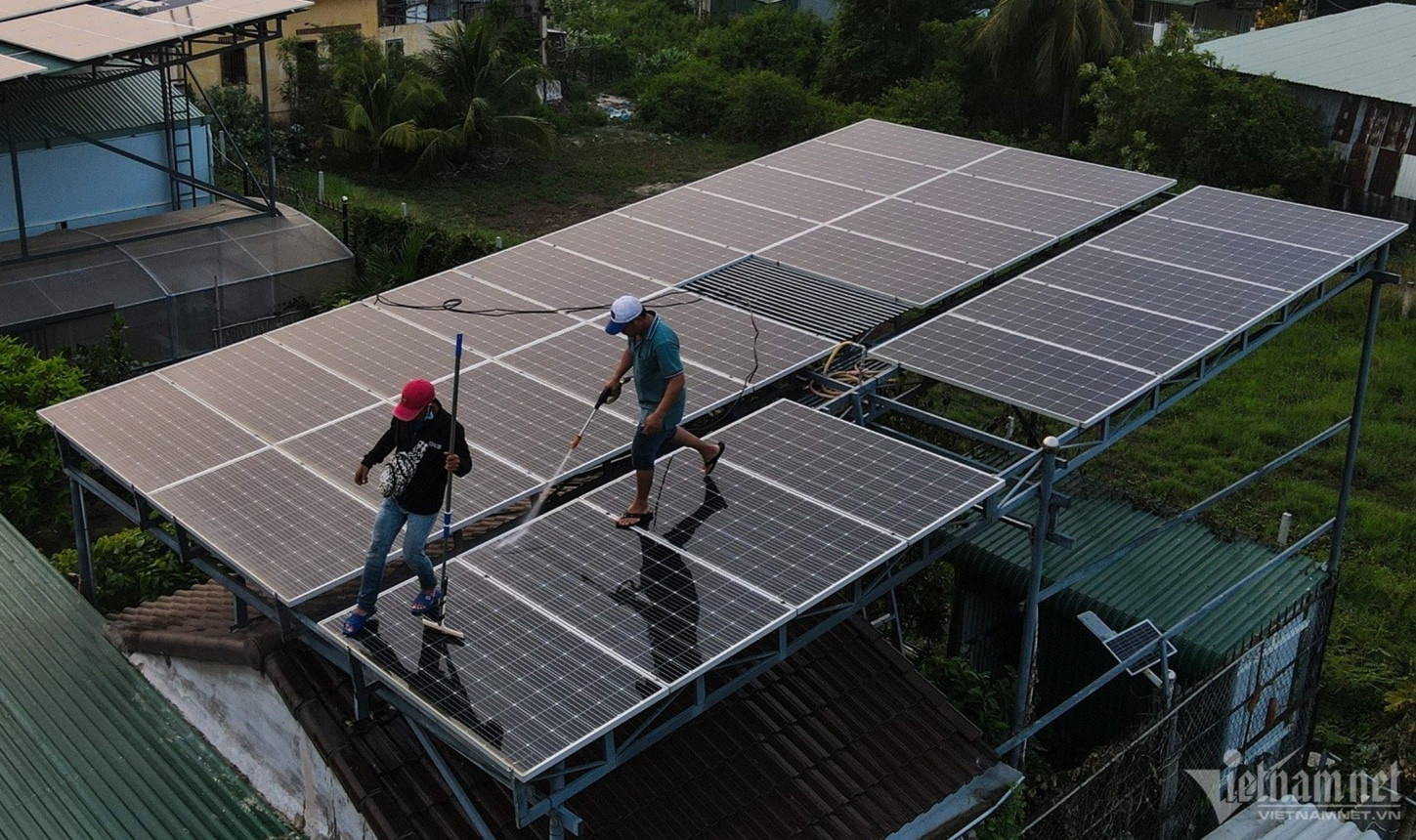
EVN has submitted a report to the Ministry of Industry and Trade (MOIT) addressing issues in the circular that stipulates the implementation of the Electricity Law.
EVN said that under Decree 58, organizations, individuals and households with self-produced, self-consumed rooftop solar systems (whether or not connected to the national grid, but with no sale of excess electricity) must notify local Departments of Industry and Trade, power units, and local construction and fire prevention authorities. This ensures proper management, monitoring, and guidance for rooftop solar installations.
However, many organizations, especially households, still are not notifying authorities or complying with guidance from power utilities, often neglecting to submit required documents.
EVN notes that without clear responsibilities and obligations under Article 37, identifying violations is challenging, leading to difficulties in enforcement under the Law on Handling Administrative Violations and related decrees.
EVN proposes adding regulations to impose administrative fines on organizations and individuals developing self-produced, self-consumed rooftop solar who do not notify or register, with penalties varying by violation severity.
EVN said this ensures legally binding notification obligations, prevents regulatory gaps, enhances state management, and aligns with the Law on Handling Administrative Violations.
Additionally, MOIT should consider adding guidelines for rooftop solar installed on the surface of irrigation dams, and on hydropower reservoir surfaces.
EVN reported that since 2020, about 1,300 MWp of rooftop solar has been installed without selling electricity to EVN. With electricity prices around VND1,000/kWh, selling to EVN is less attractive, so these systems are mainly for self-consumption.
International experience shows that for rooftop solar power, power control devices are required, but there is no need to require ‘zero export’ or anti-backflow systems’.
Requiring zero-export devices for systems above 100 kW, which already have monitoring and control equipment, causes unnecessary waste.
Moreover, self-produced, self-consumed rooftop solar has minimal impact on national grid operations, and systems above 100 kW are fully manageable.
At the end of August, MOIT introduced a proposal in the third draft of the PM’s decision, which stipulates that households installing rooftop solar systems for self-generation and self-consumption with battery storage will be eligible for various support policies, including cash subsidies and preferential loans.
With around 28 million households nationwide, to achieve the target of 50 percent of households installing rooftop solar for self-generation and self-consumption as outlined in the revised power development plan VIII, total direct support for the 2025–2030 period could reach VND42,000 billion. On average, each province would need to allocate about VND250 billion per year.
MOIT believes this figure is not too large compared to local budgets and will be balanced and allocated by the Ministry of Finance in the annual budget estimates of each province.
Tam An
.svg)
