 Vietnamnet.vn

 Podcast



A few years ago, the leadership of Tan Nhien Co., Ltd. (Tay Ninh) stood before a crucial decision: raising product prices. The founder of the enterprise spent those days practically sleepless.
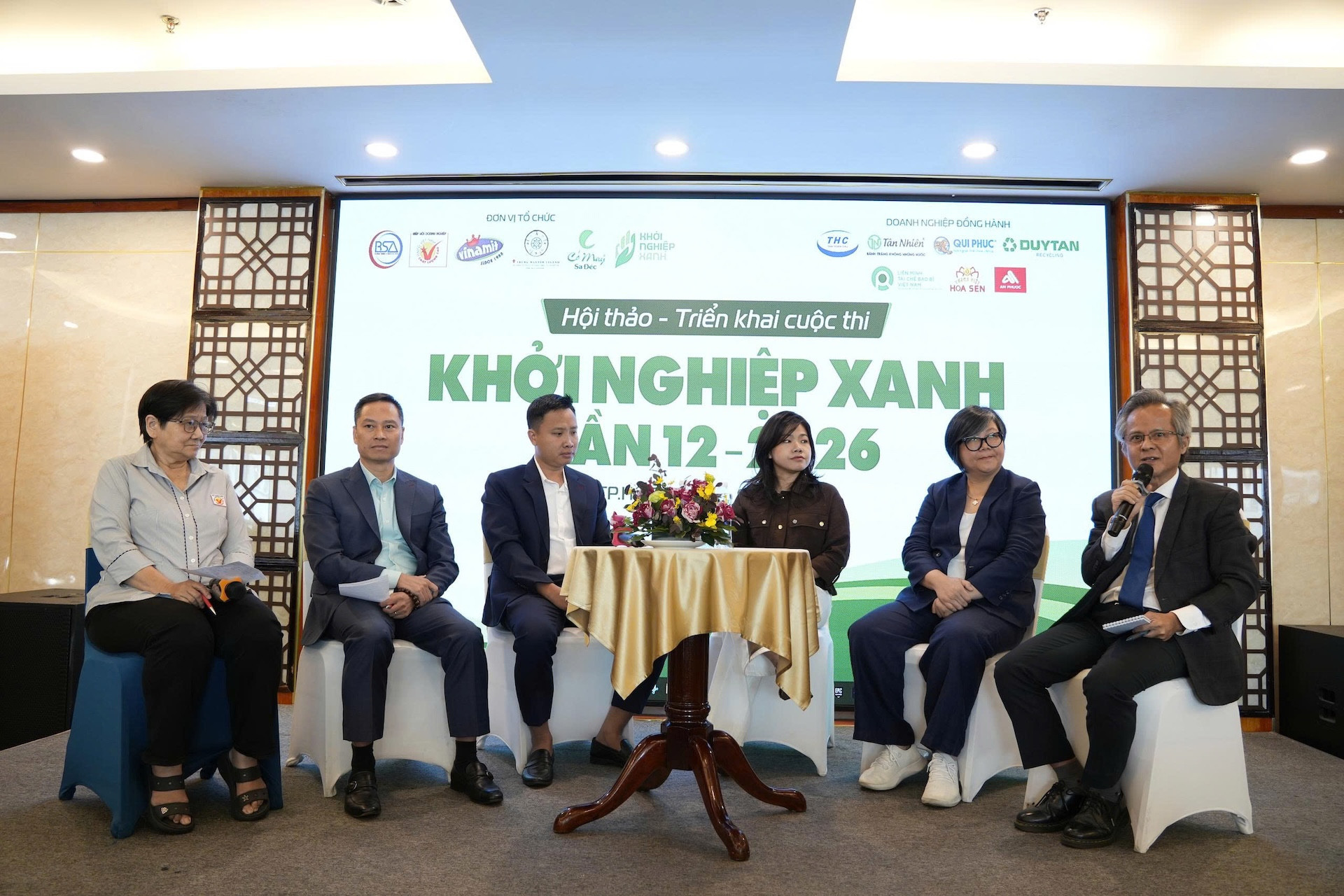
"Our products had low profit margins. If we sold each product at a price just VND3,000 higher than our competitors, we risked being unable to compete," Nguyen Ngoc Son, sales director of Tan Nhien, recalled at the workshop For the 12th Green Startup Competition 2026, held on June 5.
Nevertheless, company leaders felt confident in their production factory foundation and their full social insurance contributions for workers. They decided to adjust prices based on this confidence.
The surprise was that products sold in greater volumes after the price hike.
The enterprise realized that customers defined Tan Nhien within the mid-to-high-end product segment. Consumers accepted buying the products at a price slightly higher than the general market level.
From a startup entity, the rice-paper brand has grown increasingly famous and sells more than 2,000 tons of various rice paper types to the market each year.
In a contrasting story, Tran Thi Lan Anh, a strategic advisor on M&A and international market growth, spoke about the time she was a board member of a coffee brand. Back then, this brand had only five stores in Vietnam.
The "sleepless" turning point arrived when the corporate leadership team, including Founder & CEO David Thai, decided to adjust the coffee selling price down from VND49,000/cup to VND29,000/cup. Cutting a profit slice of VND20,000/cup, which seemed absurd, made this coffee brand popular among the middle class.
To date, this F&B brand has expanded exponentially, counting nearly 1,000 stores domestically and internationally. In 2025, the company's earnings before interest, taxes, depreciation, and amortization (EBITDA) reached over VND1,000 billion.
Comparing the two stories, Lan Anh argued that all business models encounter turning-point transformation moments. Tan Nhien raised product prices to scale up, contrasting with that coffee enterprise.
"Every business has a growth bottleneck. Only by resolving that bottleneck can an enterprise make leaps and bounds to expand its scale," she said.
Seeking product-market fit
The expert argued that during the initial years, most enterprises concentrate on the most vital mission: finding a product that fits the market.
The process involves validating product-market fit, the degree to which a product meets market needs. Only after passing this test can a company survive and grow.
Vietnam's startup ecosystem has continued to improve in both ranking and growth pace, according to the Global Startup Ecosystem Index 2026.
Vietnam climbed five places to rank 50th globally, marking its highest position ever. Among countries ranked between 21st and 50th, considered the world's most dynamic startup group, Vietnam and Thailand recorded the strongest growth.
Offering advice on product development for food and beverage (F&B) startups, Nguyen Thi Xuan Yen, a sustainable development specialist, highlighted changes in nutritional preferences, particularly regarding protein and fiber.
In many Asian countries, consumers are showing growing interest in protein-rich products. Meanwhile, in Western markets, research and promotion of higher dietary fiber intake are becoming prominent. The convergence of these trends presents opportunities for businesses to develop nutritionally balanced products that support overall health.
A second trend is the personalization of consumer experiences. Today's consumers no longer choose products solely based on functionality. They value the emotional, psychological, and lifestyle benefits associated with a product.
Consumers are seeking products tailored to their individual needs while helping them build healthier habits and improve their quality of life.
Another trend gaining momentum in international markets is the celebration of local resources and indigenous products.
According to Yen, this represents a major opportunity for domestic businesses, as Vietnam has a rich, diverse, and distinctive range of local ingredients and resources.
|
According to the organizers, after 11 editions, the Green Startup Competition has attracted nearly 1,800 projects from 32 provinces and cities across the country. Many projects from the competition have developed into enterprises, bringing Vietnamese agricultural products and local specialties deeper into domestic and international value chains. Vu Kim Hanh, Chair of the High-Quality Vietnamese Goods Business Association, stated that when the Green Startup Competition was launched 12 years ago, the core formula was "indigenous resources plus new technology." To date, this concept has expanded. Indigenous resources are no longer just raw materials, but also the workforce, knowledge, and cultural values accumulated within the community. |
Tran Chung
.svg)
