 Vietnamnet.vn

 Podcast



After the initial success of the Vietnam - France Festival co-organised by Hue City and Codev City (France) in 1992, Thua Thien - Hue Province had an idea to organize a festival on a larger scale with the aim of creating an opportunity and favourable conditions to popularize Hue, a cultural and tourist city of Vietnam.
In October, 1998, the Vietnamese Government allowed Thua Thien - Hue
Province to organize Hue Festival 2000. Since then, Hue Festival has
become a great cultural event of national and international stature. It
has been held seven times, attracting people from Vietnam and other
places around the world.
Hue Festival 2012 with the theme “Cultural Heritage with Integration and
Development – A Rendezvous of Historical Cities” was held from April
7-14, 2012. It featured many traditional cultural ceremonies, such as
the Nam Giao Ritual, Imperial Palace Nights, Ao dai Festival and
Oriental Nights.
In an ancient illusory atmosphere at the Hue National School Square, an
Ao dai fashion show with the theme “Lotus in Painting” was held with the
participation of 20 designers with 300 samples. The traditional Ao dai
with delicate lotus patterns was presented by 150 professional and
amateur models from all parts of the country. Among them there were Miss
Vietnam 2008 Thuy Dung, Miss Vietnam 2010 Ngoc Han, and the former
school girls of Dong Khanh School (Hue).
Imperial Palace Nights were artistic programmes featuring the beauty of
Dai Noi (Inner Palace) at night with the court activities from the past.
The performance of Nha nhac (court music), Hue songs, imperial dances,
games and gala dinners helped visitors learn about the culture of the
Hue court in the past.
On the Nam Giao worshipping platform, the Nam Giao Offering Ritual - a
court ceremony full of humanity, was also reproduced with all the
ceremonies and rites of the past. The audience was very interested in
the scene where the king chaired a ceremony of praying to Heaven and
Earth for peace for the country and good harvests.
Besides the typical Hue festival activities, this year’s festival had a
new feature. This was the theatre festival titled “Peace for the
Country”. With an idea to honour the aspiration of the Vietnamese nation
for a unified country, peaceful people and an affluent and happy life
for the people, a programme of performing arts with festive identities
was carefully staged.
A large, splendid, floating stage was established
in front of Thuong Bac Wharf on the Huong River. There were beautiful
dragon boats around. Nearby, the Truong Tien Bridge with sparkling
coloured lights reflected on the surface of the romantic river. Through
their singing and dancing performances, thousands of actors, actresses
and instrumentalists of the Hue Royal Traditional Theatre and many
amateur actors and actresses told the stories of the old imperial city
of Phu Xuan.
Besides the major ceremonies, many interesting artistic programmes were
also held in different places in Hue City and the surrounding communes
and villages. Over 700 artists of 25 artistic troupes throughout the
country presented unique acts, attracting tens of thousands of viewers.
As suggested by the Ministry of Foreign Affairs of Vietnam, Hue Festival
2012 was a special cultural activity within the framework of the Forum
for East Asia-Latin America Cooperation. So the event had greater
importance and influence. This was reflected in the fact that over 40
wellknown artistic troupes from 27 countries around the world had
registered to perform at Hue Festival 2012.
These artistic troupes were selected from international festivals with
art-forms that had been recognized as the representatives of the great
cultures. Some of them were well-known artistic Troupes, such as the
Dongguk Troupe (South Korea), Okinawan Troupe (Japan), Piatnisky Troupe
(Russia), Descendance Troupe of the Australian indigenes, and other
artistic troupes from Cuba, Venezuela, the UK, France, Colombia, Mexico
and the Philippines. They gathered at Hue City, creating an
international rendezvous of artists with multiple colours.
During the festival, all streets and stages in Hue were full of a
jubilant atmosphere with the performances by the foreign artists who
also talked with the residents, visitors and members of other troupes.
This cultural exchange created impressive images and left an
unforgettable emotion. Notable were the impromptu coordination between
the Tay Nguyen gong band and the drum band of the Australian indigenes
at the foot of the ancient citadel near Ngo Mon and the concert of the
two-chord fiddles of the Vietnamese instrumentalists and the electronic
musical instruments of the Jazz Combo Box Band (France).
These meetings
not only created a new and jubilant atmosphere, but also showed the
spirit of integration, interaction and development of the festival.
The street festival titled “Green Aspiration” was a fascinating event
highlighting this spirit. On the streets, thousands of visitors and city
residents watched and talked with the artists of the troupes from
Australia, Cuba, Venezuela, Argentina, the Philippines, Mongolia and the
host country.
The response of the visitors and local people during the nine days of
the festival has contributed to the success of the event. No ceremonies
and cultural activities were possible without the audience. The
activities of this year’s festival even extended to Hue Central
Hospital. Here, with their whole hearts, the international artists
entertained the patients with singing, wishing to share their pain.
It was the first time Alekxandra Andrevna Perminankova led the Russian
Piatnisky Troupe to participate in Hue festival. She was amazed with the
admiration of the Vietnamese people for the artistic programmes. At the
end of the last night she said with emotion: “I’d like to send my deep
love to Hue in particular and Vietnam in general. I do not say farewell
and surely I will meet you again at the next festival.”
Now talking about Hue, we not only mention a cultural heritage city of
the world but also think of the Ngu Mountain, the Huong River, palaces
and graves. The city has become a rendezvous of friends from all
continents.
At the festival, the beauty of the cultural features of each
country is shown and honoured, creating opportunities for cooperation,
friendship and co-construction of a peaceful and prosperous world on the
basis of multi-coloured cultures.
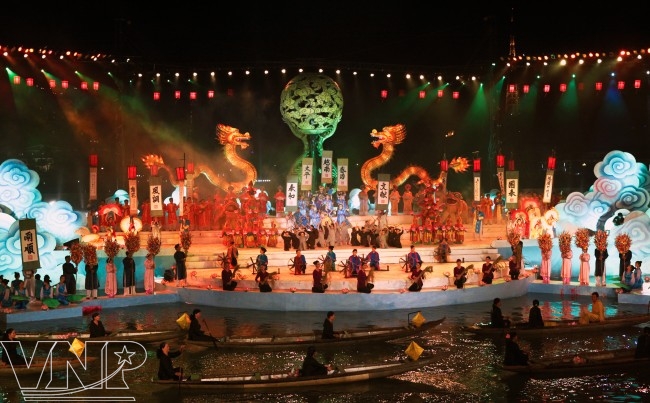 The "Peace for the Country" ceremony at Hue Festival 2012. 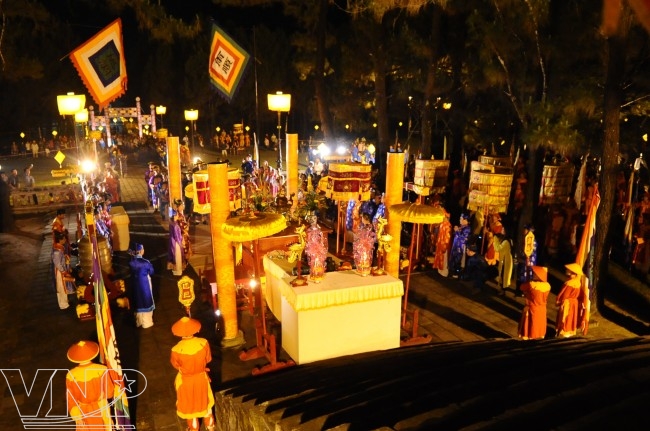 The Nam Giao Offering Ritual, a court ceremony is reproduced at Hue Festival 2012. 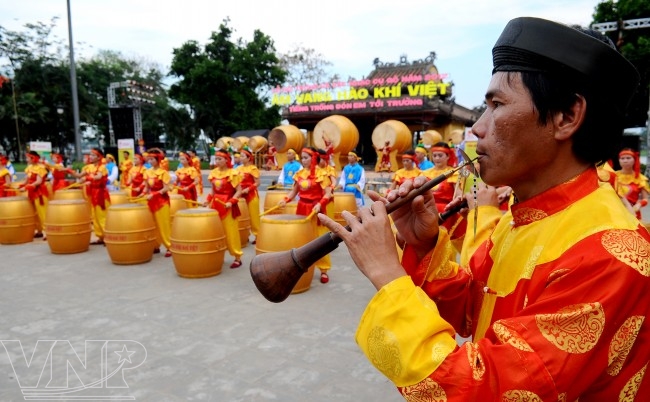 The traditional music festival at Hue Festival 2012. 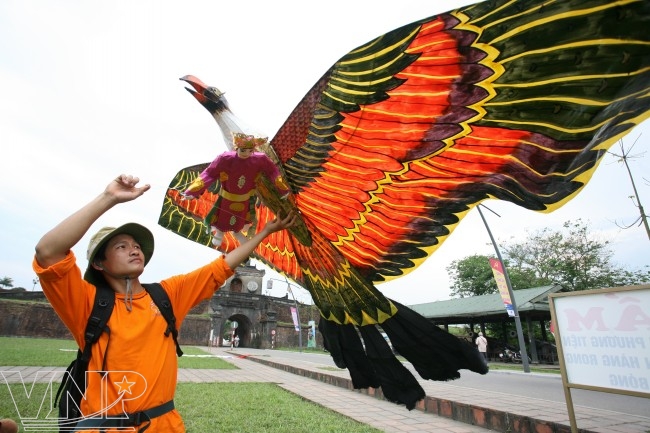 The imperial kite performance at Hue Festival 2012. 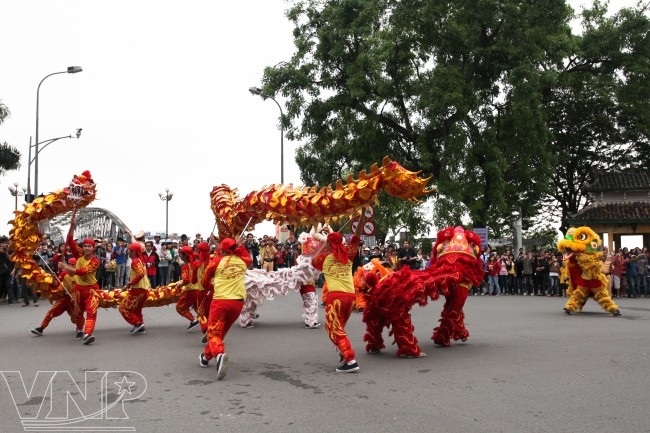 A dragon dance is performed by Hue artists. 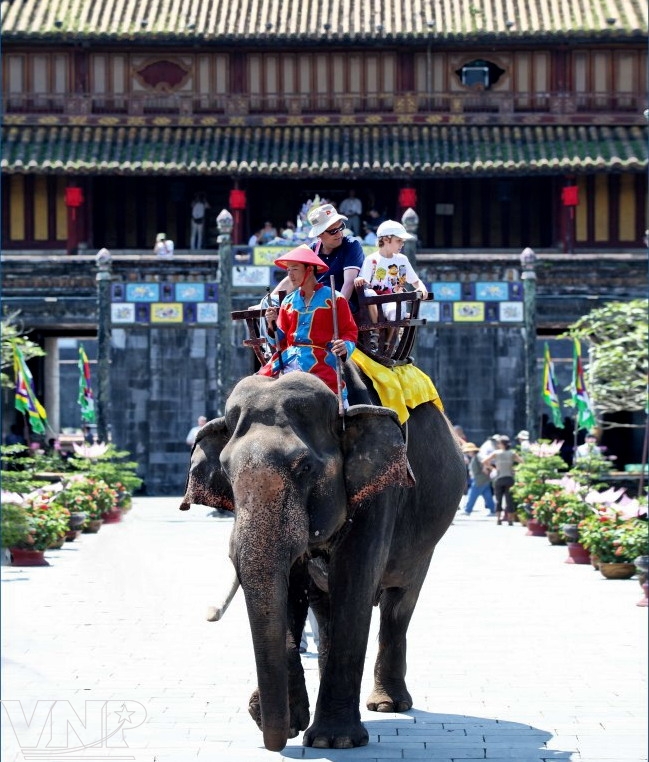 Tourists visit the Inner Palace during Hue Festival 2012. |
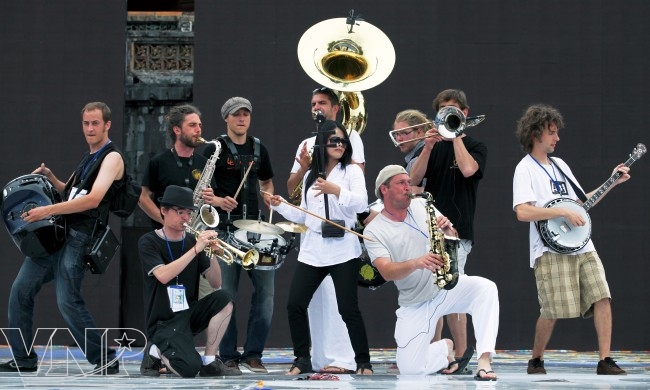 An interesting combination between the Jazz Combo Box Band (France) and a member of the Co La Band (Vietnam). 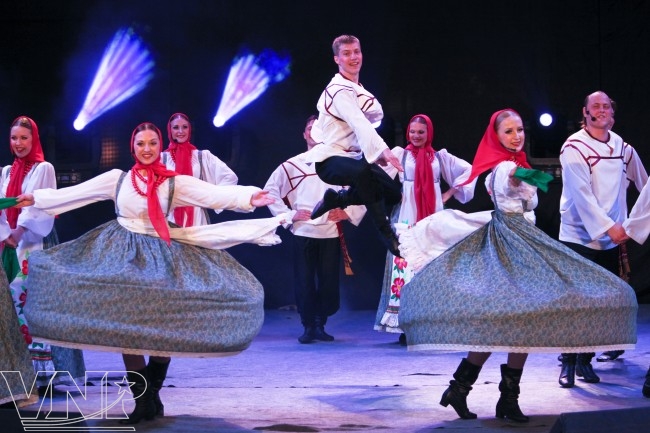 Exciting dances performed by Russian dancers. 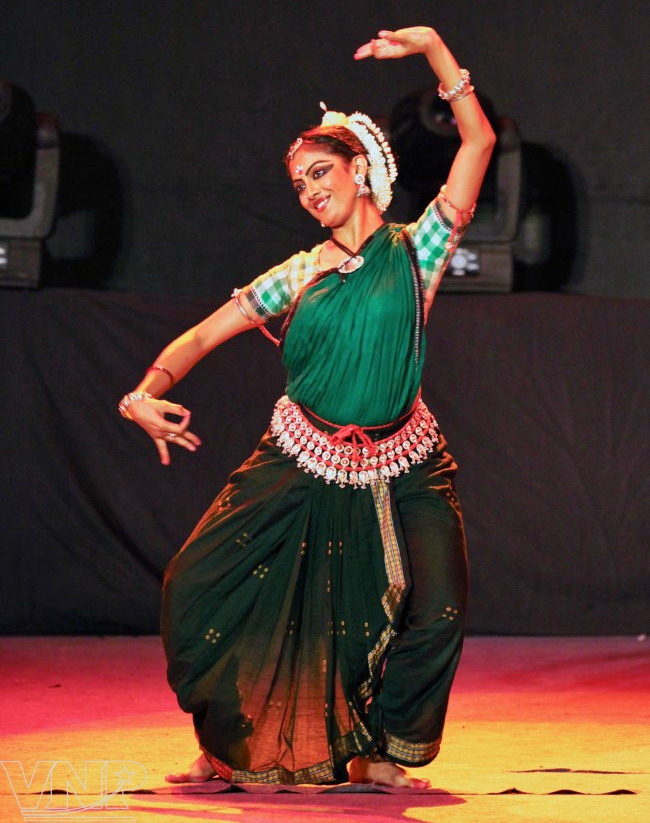 Mysterious dances of an Indian female dancer. 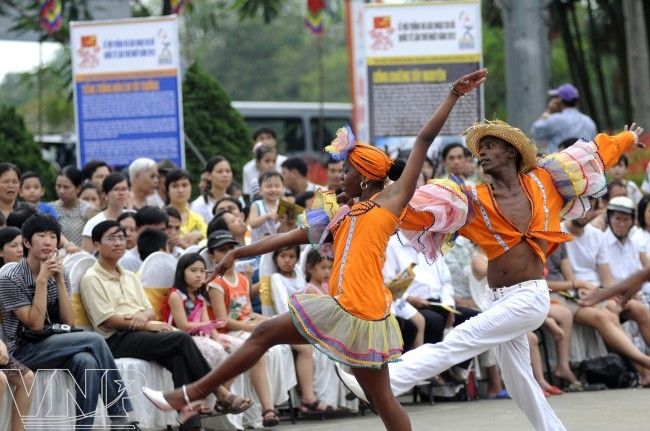 Cuban artists perform at Hue Festival 2012. 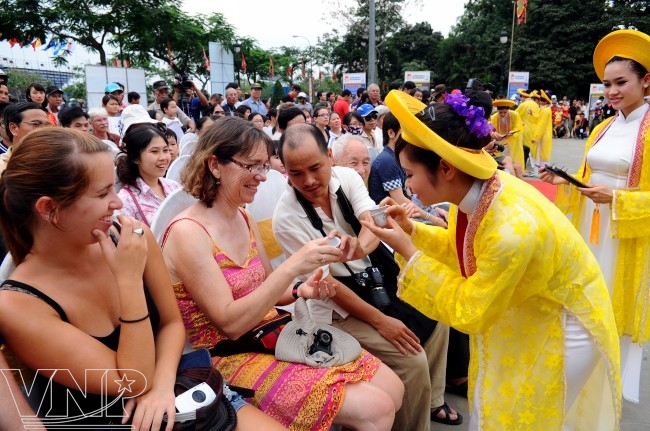 Vietnamese artists introduce folk music instruments to foreign tourists. 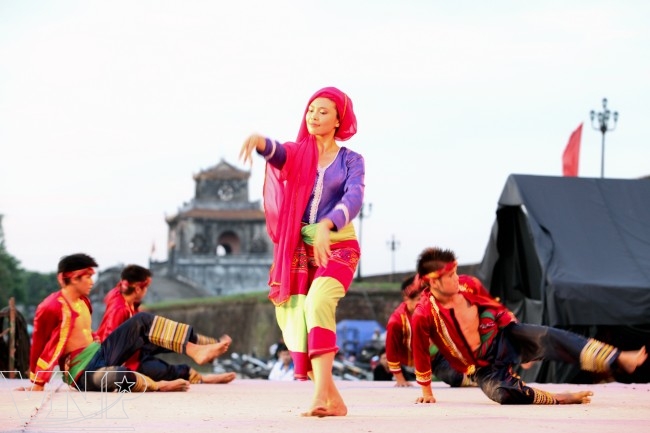 The Liceo Folkloric Dance Troup from the Philippines reproduces the community ceremony of the people on Sulu Island in the Philippines. 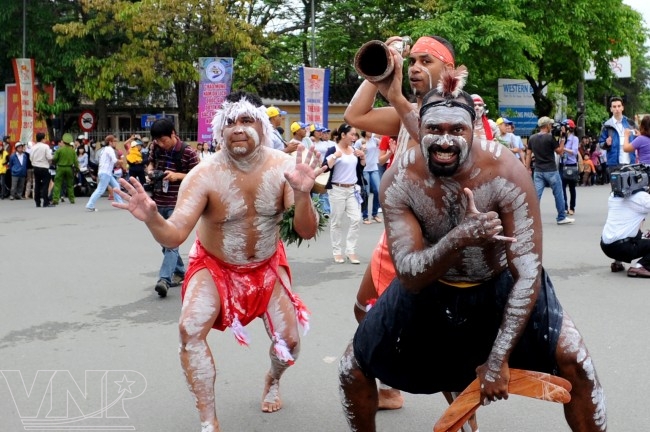 Aboriginal artists from Australia perform on a street in Hue. 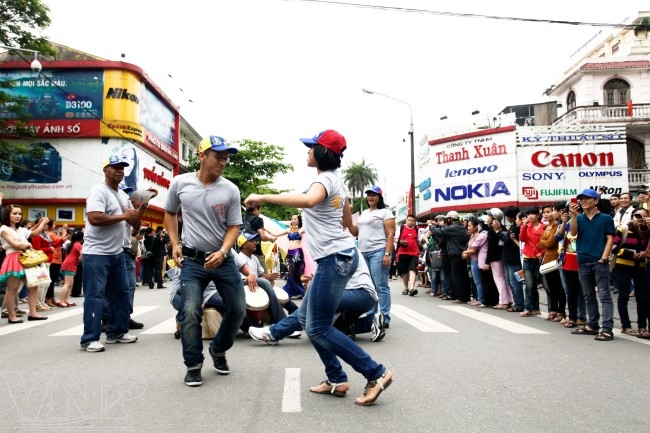 Venezuelan street artists perform on a street in Hue City. 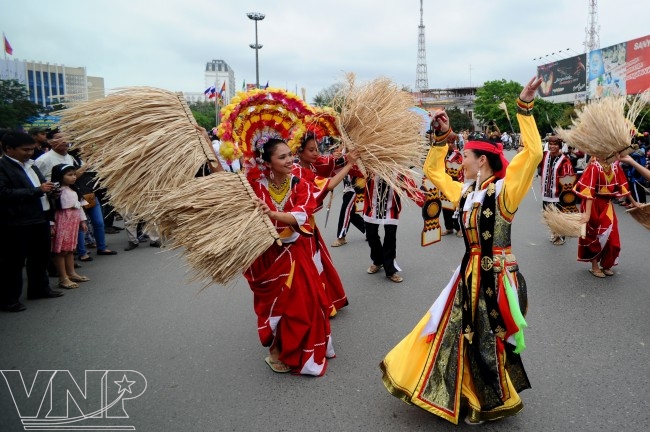 Mongolian and Filipino artists perform on the street. 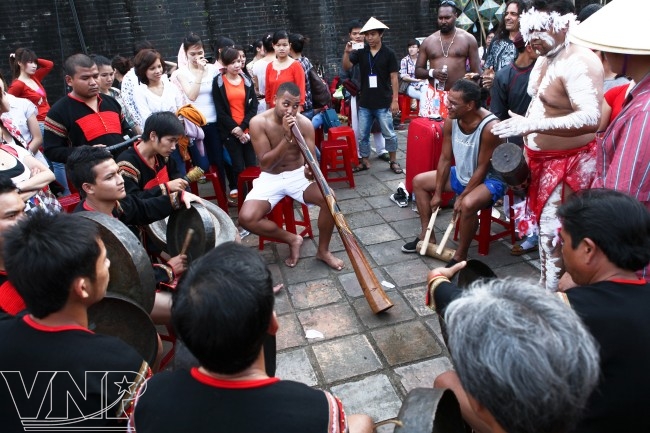 The harmony between musical instruments of Australian aborigines and gongs of artists in the Central Highlands, Vietnam. |
VNP
.svg)
