 Vietnamnet.vn

 Podcast



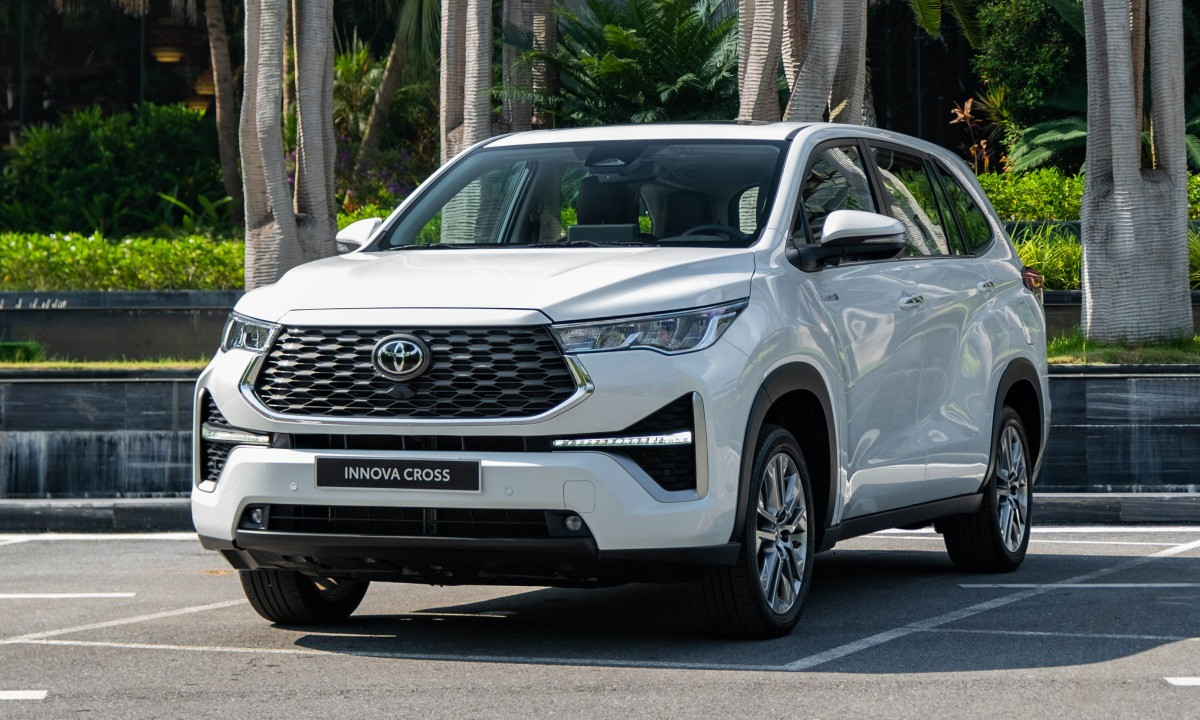
Hybrid market surges ahead of tax cut
The amended Special Consumption Tax Law, passed by the NA on June 14, 2025, marks a major turning point and opens strong growth opportunities for gasoline-electric hybrid vehicles in the coming years.
From January 1, 2026, hybrid cars, including both full hybrid electric vehicle (HEV) and plug-in hybrid electric vehicle (PHEV) types, will apply the luxury tax at only 70 percent compared to gasoline and diesel cars of the same type. Currently, only PHEV models enjoy this incentive, while HEV still bear tax equivalent to traditional gasoline cars.
This means that VAT and registration tax calculated on vehicle value will also decrease accordingly. According to calculations, HEV buyers will save from tens of millions to hundreds of millions VND compared to now.
For instance, a HEV with an import value of VND1 billion currently faces a 50 percent luxury tax (for 2,000–3,000 cc engines), or VND500 million. If including 10 percent VAT on VND1.5 billion (VND150 million) and 10-12 percent registration tax, the total on-road price exceeds VND1.85 billion.
Under the new tax regime effective January 1, 2026, this car will pay only 70 percent of the current special consumption tax, or VND350 million. VAT on the adjusted value (VND1.35 billion) will be VND135 million, and with a 12 percent registration tax, the total on-road price will drop to around VND1.66 billion, a reduction of nearly VND200 million.
Automakers ramp up to expand hybrid lineup
Experts say expanding incentives for all hybrid types is a strategic step to encourage consumers to adopt fuel-efficient, low-emission vehicles. This policy shift has drawn strong attention from Vietnamese buyers, many of whom plan to wait until 2026 to benefit from the price cuts.
In reality, hybrid car appeal has clearly shown throughout this year.
According to the Vietnam Automobile Manufacturers Association (VAMA), hybrid vehicle sales surged 73.1 percent year-on-year in the first nine months of 2025, reaching 9,785 units, compared to 5,652 units in the same period last year.
Car brands have been rushing to prepare for the new “race” by bringing more hybrid models to the country in recent months.
The models include Suzuki Fronx, KIA Sorento PHEV, BYD Seal 5, Lynk & Co 08, Mercedes-Benz E Class, Volkswagen Golf TSI versions and soon possibly Hyundai Santa Fe Hybrid, Mercedes-Benz GLE 400e, and Volvo XC90.
Seeing potential and large demand, some brands have begun assembling hybrids domestically.
Nakano Keita, General Director of Toyota Vietnam recently said the company will invest more than $360 million (about VND9,500 billion) to upgrade its factory and build first hybrid car assembly line in Vietnam, located in Phu Tho (former Vinh Phuc province).
“Hybrid cars will be the spearhead in Toyota's green vehicle strategy in Vietnam market. Domestic production will help reduce costs, proactively supply and expand market scale,” he said.
Honda Vietnam also confirmed starting domestic assembly of first hybrid model CR-V e:HEV RS, expected to roll out early next year.
Experts view hybrid cars as a practical solution while Vietnam’s EV charging infrastructure remains underdeveloped. Hybrids offer significant fuel savings compared to gasoline cars without depending on charging stations like EVs.
At the current growth rate, industry forecasts suggest hybrids could account for 10-12 percent of Vietnam’s passenger car sales by 2026, up from 3-4 percent today. Japanese brands continue to dominate, but Korean, Chinese, and European manufacturers are also preparing to introduce more affordable hybrid models.
Marketing expert Nguyen Van Phuong told VietNamNet that the new tax policy serves as a “double boost”, which both stimulates consumer demand and encourages automakers to shift toward greener production.
“Once hybrid prices drop sharply, the gap with gasoline cars will shrink to just tens of millions of VND. Consumers will find hybrids more appealing, and the market could double in size within a year,” Phuong said.
Honda Vietnam has confirmed that the CR-V hybrid version will be assembled domestically at its Phu Tho plant after two years of importing the model from Thailand.
Although the specific price has not yet been announced, local production is expected to help reduce import and tax costs, making the new model more affordable compared to the current imported version from Thailand, which is priced at around VND1.259 billion.
From next year, all CR-V variants, including G, L, L 4WD, and e:HEV RS, will be locally assembled, strengthening Honda’s position in the fiercely competitive C-SUV segment alongside Mazda CX-5, Hyundai Tucson, and Toyota Corolla Cross.
Hoang Hiep
.svg)
