 Vietnamnet.vn

 Podcast


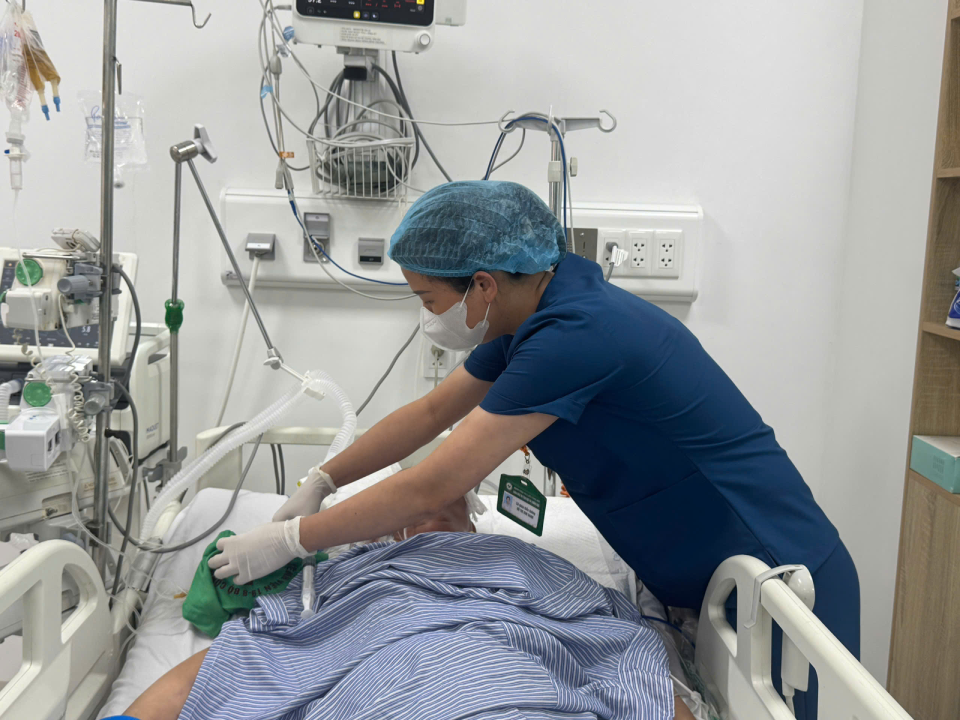
Inside the Central Intensive Care Unit (ICU), Department of Intensive Care and Clinical Toxicology at Hospital 19-8 (Hanoi), amid the beeping monitor sounds, nurses must constantly monitor patient conditions closely, coordinating interventions whenever an abnormal turn occurs. For critical cases, any delay can directly impact a patient's chance of survival.
According to Senior Lieutenant Do Thi Kim Oanh, the majority of patients admitted arrive in severe conditions.
After graduating from Nam Dinh University of Nursing, Oanh joined Hospital 19-8 in 2014. During her studies and clinical rotations across various departments, she was particularly drawn to emergency resuscitation, where a patient's condition can shift in a matter of seconds.
“There are times when you see someone smiling and talking one minute, and just seconds later, they might be gone,” she recalled.
That choice was tied to memories of her cousin, who was treated in an intensive care unit but passed away. The grief left Oanh reflecting deeply, desiring to one day do something better for patients and their families.
Since then, she has remained dedicated to the Department of Intensive Care and Clinical Toxicology for over 12 years. The work demands not only a love for the profession but also technical competence, intense focus, and the capacity to continuously update knowledge. Every minute change in a patient's state requires attention, because there are moments when the medical team has little time to hesitate.
Long night shifts
When hospital corridors quiet down, amid the sounds of ventilators and vital sign monitors, nurses remain diligently focused on their routine duties.
They are present when patients experience the greatest pain in the middle of the night, when a sudden wave of breathlessness strikes, or when a vital sign changes. Their duties extend far beyond changing dressings, administering IV fluids, and dispensing medication; they involve vigilant observation, early detection of risks, and ensuring any abnormal development is handled promptly.
Many patients are completely immobile, leaving all daily living and treatment needs entirely dependent on the department's team of nurses and doctors. Patient communication is severely limited due to comas or extreme weakness.
"Feeding patients three regular meals a day, washing their hair, bathing them, changing their clothes, changing diapers... oh, there is so much, counting them all would be endless," Oanh shared.
A critically ill patient arrives in emergency care at night, his eyes still scanning for a familiar face before falling into a deep sleep under the effect of intubation, at which point Oanh and her colleagues continue their work.
There are very young patients brought in after traffic accidents who do not survive despite the medical team's best efforts. Such cases leave lasting remorse, not only because a life could not be saved, but because behind the patient is a family waiting.
“Behind the overwhelming pressures, if there were no signs of recovery or words of encouragement from family members, it would be very difficult for us to find the energy to push through a night shift,” Oanh confided.
Yet the ICU is also a place where small improvements can bring immense hope. Among the patients she has cared for, Oanh recalls a young man serving in the police force who suffered a traffic accident, arriving in a coma, requiring mechanical ventilation and brain surgery.
Following treatment and dedicated care, the patient's condition gradually improved. He regained consciousness, was weaned off the ventilator, and could breathe independently. However, not every family receives such a fortunate outcome.
For nurse Oanh, the most difficult moment is not only when a patient passes away, but also witnessing the grief of their family. Particularly when the deceased is young, the remorse cuts deeper.
Through her years in the profession, she has learned to maintain composure in heartbreaking situations to continue caring for other patients. But composure does not mean apathy. She still remembers the sharp pain every time she hears the cries of a patient's family.
After every shift, Oanh finds balance through walking, playing sports, and learning English. She also maintains professional exchanges with colleagues and senior professionals at major hospitals to consult on complex cases. The female nurse remains confident in her choice, nurturing her love for the profession as it grows day by day.
Phuong Thuy

